BTU opens an international technology showroom for the circular economy in Georgia
The modular demonstration concept developed by BTU and inter3 shows how agricultural waste can be turned into valuable resources, whilst also promoting the international transfer of Brandenburg’s innovations.
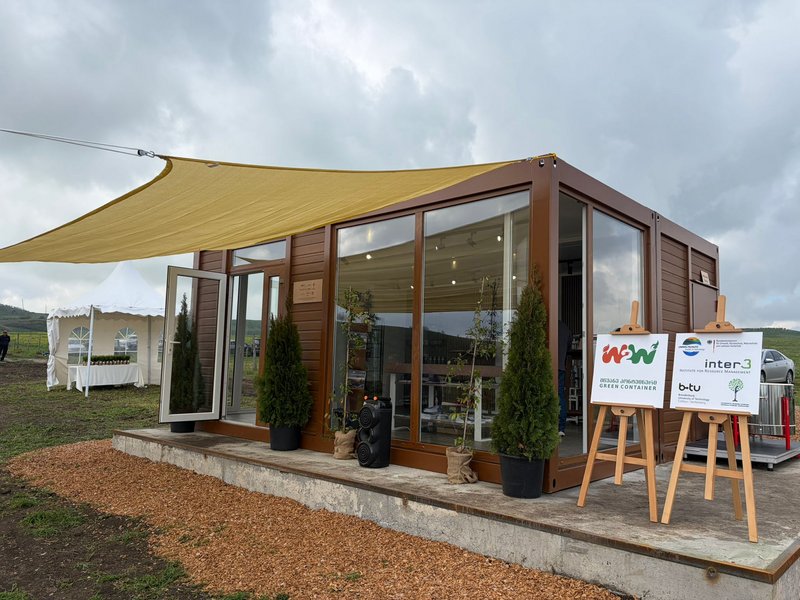
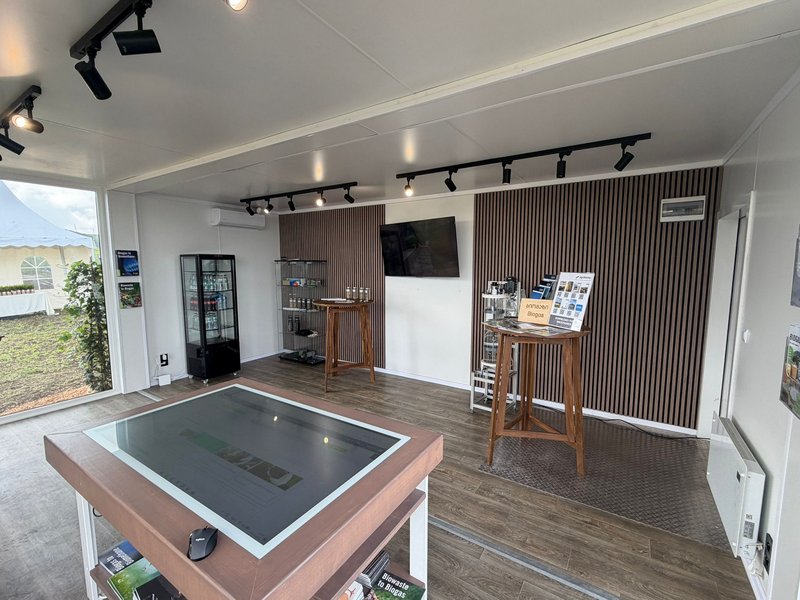
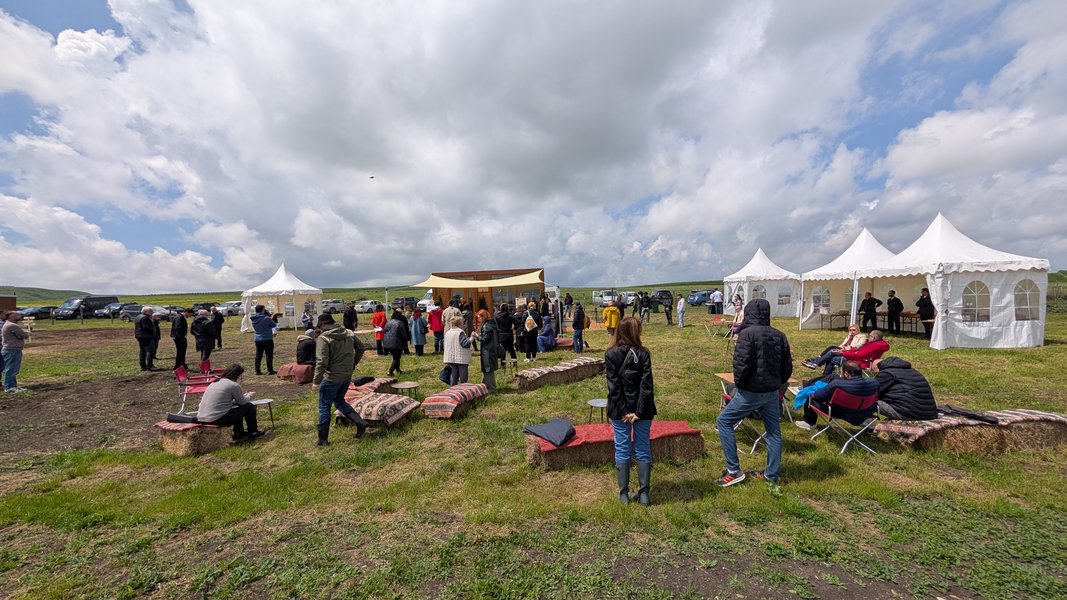
Near Tbilisi in Georgia, the Brandenburg University of Technology Cottbus-Senftenberg (BTU) and the inter3 Institute, together with partner organisations from research, industry and the agricultural sector, opened an innovative demonstration showroom for technologies to treat agricultural residues at the beginning of May 2026. A digital platform provides Georgian partner organisations with permanent access to the expertise of the cooperating institutions through formats such as short films, 360-degree photos and interactive quizzes. On site, the facility will be supervised in the long term by the Georgian Farmers’ Association (GFA). As the largest non-profit association in Georgia’s agricultural sector, the GFA will organise regular visits by national stakeholders. The Waste2Wealth (W2W) project aims to demonstrate sustainable technologies for agriculture, energy generation and the circular economy in the South Caucasus in a practical manner.
“With Waste2Wealth, we combine application-oriented research, international knowledge transfer and concrete technological solutions for a sustainable circular economy,” says Prof. Dr Christian Abendroth, head of the Circular Economy chair at the BTU. “The showroom in Georgia demonstrates how innovative processes for recycling agricultural residues can strengthen regional value creation, reduce emissions and open up new prospects for resource-efficient agriculture.”
Georgia’s agriculture in transition
Agriculture is one of Georgia’s most important economic sectors and makes a significant contribution to employment and the country’s economic development. At the same time, agricultural residues have so far often been incinerated or sent to landfill, with negative consequences for the environment and climate. This is precisely where the Waste2Wealth project comes in: Through modern technologies and international knowledge transfer, biogenic waste is to be used as a valuable resource in future – for example, for biogas, compost, pellets or other bio-products. In this way, the project supports both Georgia’s sustainable development and the establishment of a circular bioeconomy.
Modular concept for sustainable waste utilisation
A key contribution within the international project consortium comes from BTU Cottbus-Senftenberg: researchers developed and implemented the modular W2W container concept, which combines two converted shipping containers into an integrated demonstration and exhibition unit. The new showroom presents a modular technology concept for biomass processing, ranging from shredding through composting and pelletisation to biogas production. Visitors can not only view the annexes but also experience them in live operation.The flexible container design allows for easy adaptation to different regional requirements, thereby laying the foundation for further international applications.
The concept was preceded by extensive research and development work on the sustainable use of agricultural residues, decentralised bioeconomy solutions and practical knowledge transfer in an international context. The insights gained from this were directly incorporated into the technical design of the showroom and form the basis for its deployment in Georgia.
“The Waste2Wealth showroom impressively demonstrates how waste materials can be transformed from an environmental burden into a valuable resource,” explains Prof. Dr Christian Abendroth. “Our aim is to translate scientific findings into practical solutions and thus support sustainable agriculture, renewable energy production and circular bioeconomy strategies in Georgia and beyond.”
International cooperation with a regional impact
The project, which has been in preparation since 2024, is funded by the Federal Ministry for the Environment, Climate Action, Nature Conservation and Nuclear Safety until 30 June 2026. With technical support from Reichmann Biotechnik, a fully integrated demonstration facility has been created, combining information materials, training content and functioning technologies in a practical format.
The initiative is supported by the Georgian Farmers’ Association (GFA), which is providing a permanent site on an agricultural trial field near Tbilisi. This ensures that the showroom remains accessible in the long term for demonstrations, specialist visits and knowledge transfer.
“In Georgia, there is a significant rise in interest in economically viable solutions for the utilisation of agricultural residues,” emphasises Rati Kochlamazashvili, deputy chairperson of the Georgian Farmers’ Association. This is driven by stricter national requirements for sustainable waste management, as well as the need for alternatives to the previously widespread incineration or landfilling of residues.
Knowledge transfer and next project steps
Project coordinator Dr Ali Asghar Besalatpour announced further outcomes of the project: in the coming months, a specialist book on agricultural residues in Georgia, digital training modules and several ‘training-of-trainers’ programmes will be published. These will provide Georgian stakeholders with practical knowledge on biogas production, biochar technologies, composting processes and logistics solutions.
Through the Waste2Wealth project, BTU Cottbus-Senftenberg is making an important contribution to international research transfer in the fields of sustainable resource management, renewable energies and the circular economy. At the same time, the project demonstrates how scientific innovations from Brandenburg can generate concrete solutions to global challenges and be successfully transferred to international application contexts.
Subject contact
Press contact