How change comes about
He is an example of a key question in her work: under what conditions do people act more sustainably?
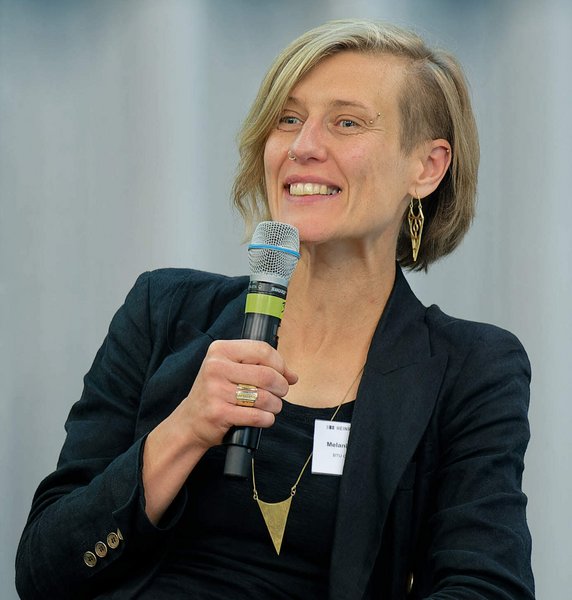
“If you can’t open it, you don’t own it”, says the researcher on the chair of Technology and Environmental Sociology at the Brandenburg University of Technology Cottbus-Senftenberg (BTU), quoting a key slogan of the repair movement. If you can’t open something, it doesn’t really belong to you. This refers to smartphones, speakers or other devices that cannot be repaired. For Prof. Melanie Jaeger-Erben, this is a symbol: of control and dependence, but also of missed opportunities to take matters into one’s own hands.
A path that was not pre-determined
Yet her own path was anything but a foregone conclusion. She is the first in her family to have passed her A-levels, the only one to have studied at university and completed doctoral studies. “If it had been up to my parents, I’d probably have become a tax advisor,” she says and laughs.
She actually wanted to be a journalist. She read a lot and was fascinated by literature, particularly the psychological depths in Dostoevsky’s novels. So she decided to study psychology – without knowing exactly where that would lead. But she soon realised that she was even more interested in society than in the individual.
Between people, society and technology
Today, she works precisely at this intersection. Her research combines Psychology, sociology and technology. The scientist investigates why well-planned solutions often fail in everyday life – such as energy-efficient buildings that are not used as intended, or infrastructure projects that fail to meet people’s needs.
Transformation – more than just change
At the heart of this lies a major theme: transformation. For her, this means more than just minor changes. It is about fundamental upheavals – about how complex structures change.
She is particularly interested in when such changes become possible. “I’m interested in the moment when something suddenly starts to move,” she says. When people start doing things differently.
Why some regions embrace change
But rather than focusing solely on individual “pioneers”, she turns her attention to the conditions. Why do new ideas, initiatives and a spirit of optimism emerge in some regions – and not in others?
In Lusatia, she is investigating precisely that. Places like Lübbenau show how change can succeed: through open administrations, collaboration and a willingness to try new things. Other places struggle – often because these structures are lacking.
For Prof. Melanie Jaeger-Erben, one thing is clear: change does not happen by itself. It needs spaces, opportunities and people to make use of them.
Research that makes a difference in everyday life
This is another reason why she puts her research into practice. Repair cafés, swap shops, projects with students – small experiments that show things can be done differently.
And even her future research topics remain close to everyday life: for example, the question of how a resource-efficient circular economy can be practised more widely in daily life – through sharing and swapping, but also through infrastructure that is still not very widespread, such as separation and composting toilets
One central question remains
What drives Prof. Melanie Jaeger-Erben is always the same question: How can people not only experience change, but shape it themselves?
Subject contact
Press contact