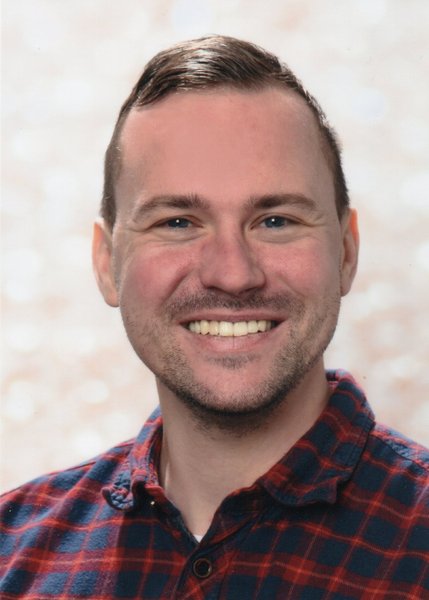
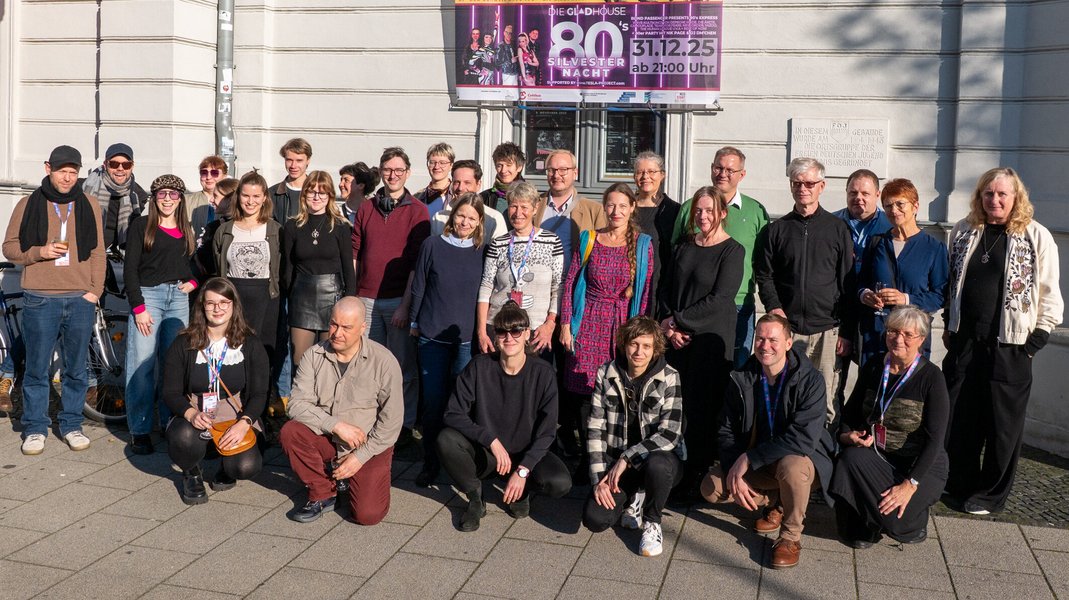
Interview with BTU alumnus Daniel Kubik
Hello Mr Kubik, you studied for a Bachelor’s degree in Media Studies in Potsdam and then a Master’s degree in Cultural Studies in Cottbus. How did that come about, and what was your experience at the BTU like?
After completing my Bachelor’s degree, I wasn’t yet sure exactly what career I wanted to pursue. The humanities open up a range of different career paths. As an academic career was also an option for me at the time, I thought it couldn’t do any harm to go on and do a Master’s. I chose Cottbus partly because I was homesick for the place where I went to school and grew up, and partly because of the course content. I was looking forward to the technical subjects. Looking back, my experiences at the BTU were very important for my personal development. I think back to the exchanges with fellow students and lecturers, as well as the work at the Chair of History of Technology. I am very grateful to Prof. Bayerl for offering me and other students opportunities for development. In particular, during my Master’s internship at the Cottbus branch of the Sorbian Institute, I made contacts that significantly influenced my future work. I would like to express my sincere thanks to my internship supervisor, Pětš Šurman (Peter Schurmann), for his support. During the internship, I combined my interest in film from my media studies with an exploration of my own Sorbian/Wendish roots. This led to an overview article in which I documented my research findings. It is held at the Lower Sorbian Library in the Wendish House. This was followed by several newspaper articles and, in 2018, a career change following project-based and freelance work.
Many people shy away from such study programmes for fear of a lack of career prospects. What has been your experience in this regard, and what would you say to prospective students interested in cultural topics?
With a wink, I can say in hindsight that I fell into the ‘anything to do with media’ trap. After leaving school, I was interested in the media landscape and, at the open day at the University of Potsdam, I sat in the lecture theatre where my first study programme was being presented. The presentation there convinced me. It wasn’t until towards the end of my studies that the questions started to arise: Where do I want to work? What do I want to do? Can I make a living from it? When it came to finding a job in the region, the opportunities were limited, in my view. Anyone who can imagine living in Berlin, Hamburg, Munich or Cologne has far more options open to them. As I wanted to stay in Lusatia, I had to search very specifically. I didn’t find the job placement service provided by the employment agency to be very helpful. I would have liked more time to explore, through discussion, what might be right for me. Instead, I felt like a number in the system, expected to send out a certain number of applications each month. My advice would be to get a clear idea in advance of where you want to go. You should devise a strategy for how you want to enter the workforce after your studies. I neglected to make use of the flexibility during my studies to gain more practical experience through internships or to get a foot in the door via part-time jobs. For those who are resourceful, and who don’t mind irregular working hours and project-based work, there are plenty of opportunities to shape your own career path. On the other hand, there is financial uncertainty if it is not a traditional 9-to-5 job as a salaried employee. That was also the reason why I changed career direction in 2018. I had applications running in three different areas: as a project assistant, a research assistant and as a primary school teacher via a lateral entry scheme. I joined the Saxon teaching service on a part-time contract, as I had to undertake further training alongside my job to obtain a qualification equivalent to that of a teacher with a standard teaching degree. At the same time, I kept in touch with media professionals and cultural figures in Lusatia.
You’ve made a lot of films with a Sorbian connection. What would be the key message people should know about this, and how do you view current developments in the field?
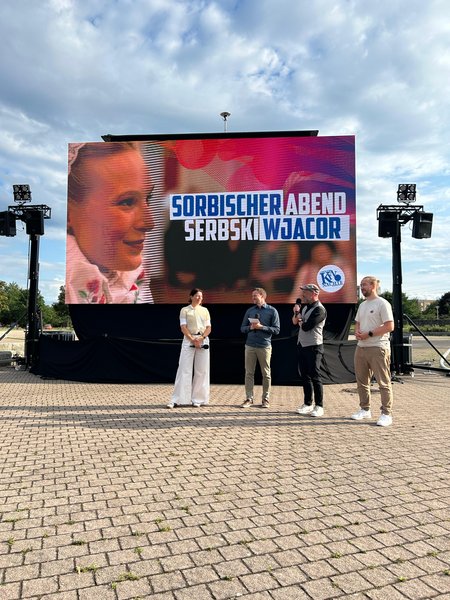
The starting point was my internship at the Sorbian Institute’s Cottbus branch. That’s when I became aware of my Sorbian/Wendish roots. I wondered whether there were any Sorbian/Wendish films at all. I didn’t know of any personally. After doing some research, I was proven wrong. There are more Sorbian/Wendish films than I’d first thought. They’re mainly documentations, documentary-style films or cultural films. Initially, they tended to be films about the Sorbs that reinforced stereotypes. The films reinforced the impression of a people who are always singing and dancing, as film scholar Dr Alfred Krautz puts it. There are contemporary examples and other artistic forms. Fictional formats in the Sorbian/Wendish language are still few and far between. However, for more new and fresh work to emerge, the political framework regarding funding structures must be in place. This is where the Łužycafilm network comes in. It takes a stance on media policy issues. Primarily, it offers a platform for the exchange of ideas and projects. This takes place twice a year: once at the Neiße Film Festival and once at the FilmFestival Cottbus. It was founded in 2015 and has been connecting, supporting and funding Sorbian-German media professionals from Lusatia ever since. The initiative is aimed at professional and semi-professional film and media professionals. It also offers networking opportunities for emerging talent.
What do you miss most about your period of study in Cottbus?
Above all, I miss the freedom that came with being a student. I miss burying myself in books and discovering new material. I’ve always felt it was a great privilege to be able to study and acquire new knowledge.
Contact