Culture strengthens democracy and social cohesion in rural areas – long-term impact requires reliable funding
At the same time, the study makes it clear that sustainable impact can only be achieved where long-term commitment is matched by reliable funding structures.
With the successful completion of the research project LANDKULTUREN: Participation – Future (LaKuTeZu), the Urban Planning chair at the Brandenburg University of Technology Cottbus-Senftenberg (BTU), led by Prof. Dr Nina Gribat, presents new findings on the significance of culture in rural areas undergoing transformation. The three-year research project in the Oder-Spree district, funded by the Federal Ministry of Agriculture, Food and Home Affairs (BMLEH), shows that cultural actors do far more than simply provide cultural activities: They create meeting places, fund social participation, foster local engagement and strengthen their regions’ resilience to social change.
The study thus highlights the social relevance of cultural infrastructure. In rural areas in particular, cultural actors are increasingly taking on roles that are of central importance for community cohesion and shaping regional prospects for the future.
At the same time, the research identifies a crucial conflict of objectives: trust, cooperation and local networks develop over many years. However, many funding programmes are designed for short project durations. The findings suggest that cultural networks can only realise their social potential in the long term if funding structures enable long-term development.
“Our research clearly shows that, in rural areas, culture is not a supplementary offering but part of the social infrastructure,” says Christoph Muth, a researcher and project coordinator in the Urban Planning chair. “Cultural actors create spaces for exchange, participation and collective action. In doing so, they make an important contribution to social cohesion, participation and sustainability.”
Different approaches, same impact
The study focused on two cultural projects in the Oder-Spree district, which are funded by the Ministry of Science, Research and Culture of the State of Brandenburg as ‘Regional Cultural Anchor Points’:
- Campus Kultur, initiated by Beeskow Castle: a decentralised model that brings cultural participation directly to the villages through temporary formats.
- DoK15518: a collaborative network of independent cultural practitioners which, through shared resources and long-term cooperation, is developing a sustainable cultural hub in a rural area.
Despite their different approaches, both projects have arrived at a shared realisation: cultural impact arises where people are connected with one another on a lasting basis and resilient networks can grow.
Key findings at a glance
- Cultural networks strengthen social participation through low-threshold access and new forms of engagement.
- Culture funds regional development by unlocking local potential and enabling collective engagement.
- Cultural venues strengthen democratic resilience because they fund encounters, exchange and collective action.
- Many cultural practitioners work in a ‘mixed economy’ combining cultural work with other gainful employment – an indication of structural challenges in the cultural sector.
- Long-term impact requires continuity: trust and cooperation do not arise within project cycles, but are built up over many years.
“Our case studies illustrate two different, yet equally effective, models of cultural practice in rural areas,” explains Prof. Dr Nina Gribat, head of the Urban Planning chair. “Whether it’s temporary cultural offerings in villages or permanently established cultural venues – what matters most are stable networks, long-term prospects and strong local roots. Only then can culture strengthen social participation and contribute to the sustainable development of rural areas.”
Research as collaboration on an equal footing
LaKuTeZu adopted a participatory research design. Academics and practitioners worked closely together in workshops, interviews and mapping processes. The methodology developed not only strengthens the transfer of knowledge between the university and the region, but also enhances the scope for action available to local stakeholders.
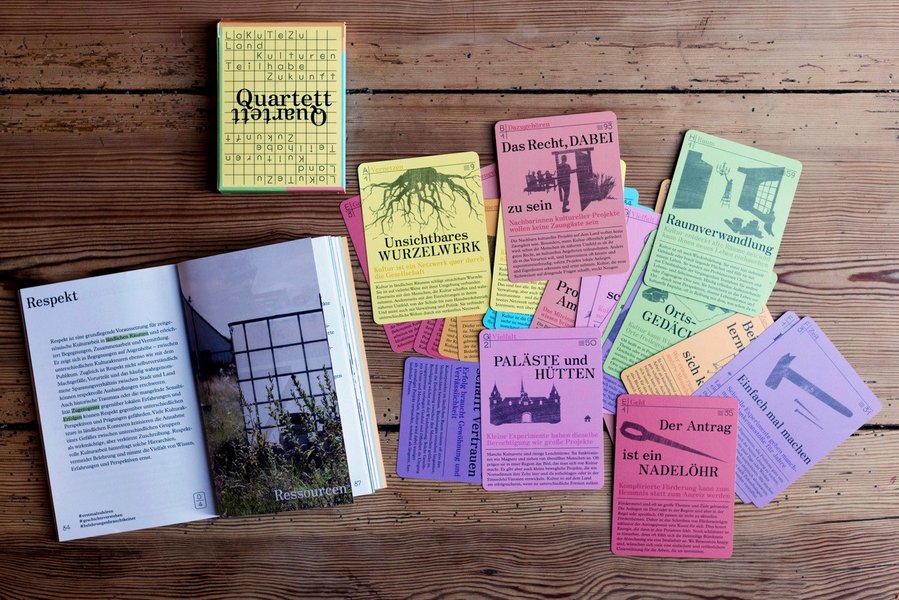
One concrete outcome is the practice-oriented “Quartet of Rural Cultures” and the accompanying “Glossary of Conditions for Success”, which were developed in collaboration with co-researchers Gerrit Gohlke and Lea Kontak from Ideenorte. These resources make key research findings accessible and support local authorities, initiatives and cultural stakeholders in further developing their work.
BTU research provides impetus for policy and regional development
With LaKuTeZu, BTU Cottbus-Senftenberg is filling an important research gap regarding the role of culture in rural areas undergoing transformation. The findings provide concrete guidance for policy-makers, public administration and regional development on how social cohesion and regional development can be sustainably strengthened.
The study’s key message is this: anyone wishing to shape rural areas for the future should not view culture as a voluntary service, but as an essential component of social infrastructure and regional development.
Subject specialist
Press contact