EUNICE Student Research Clubs (SRCs): Innovative projects to tackle global challenges
The EUNICE Student Research Clubs (SRCs) initiative launched in March this year with a new bottom-up approach, designed to inspire students to work on their own research ideas with other EUNICE students in interdisciplinary research clubs. The aim was to recruit fellow students to support the research idea, develop a research project with an accompanying budget, and submit an application for the €3,000 grant, which the other research clubs and their projects would also be competing for. This was earmarked for the implementation of the selected research idea.
Initially, interested EUNICE students from all disciplines and study programmes were given the opportunity to select up to three areas of interest from topics such as the UN’s 17 Sustainable Development Goals (SDGs), the digital and green transitions, and the integration of women into STEM subjects, to select up to three areas of interest that best suited their research idea. Based on this selection, they were provided with the contact details of other applicants with similar interests and were then able to form their own topic-specific Student Research Clubs.
Implementing this approach required a high level of specialist knowledge, organisational skills and the ability to work in a team from the participants. It is therefore all the more gratifying that 16 of the 60 applicants succeeded in forming four dynamic Student Research Clubs. Each of these clubs pursued a specific key research area, with the rules stipulating that at least two club members should come from different EUNICE universities. This was intended to strengthen intercultural and interdisciplinary collaboration.
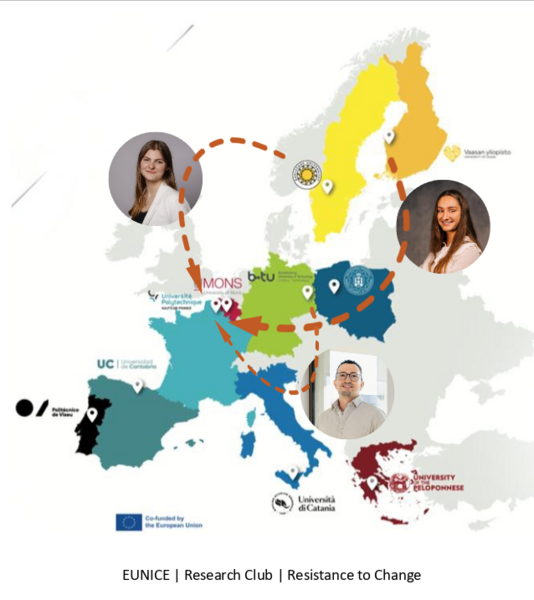
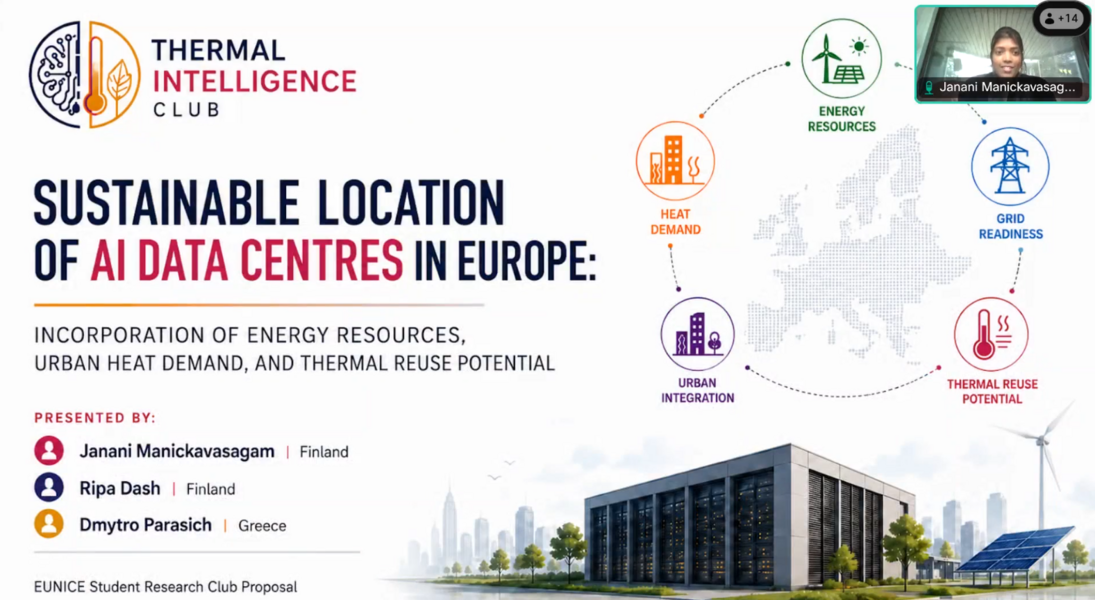
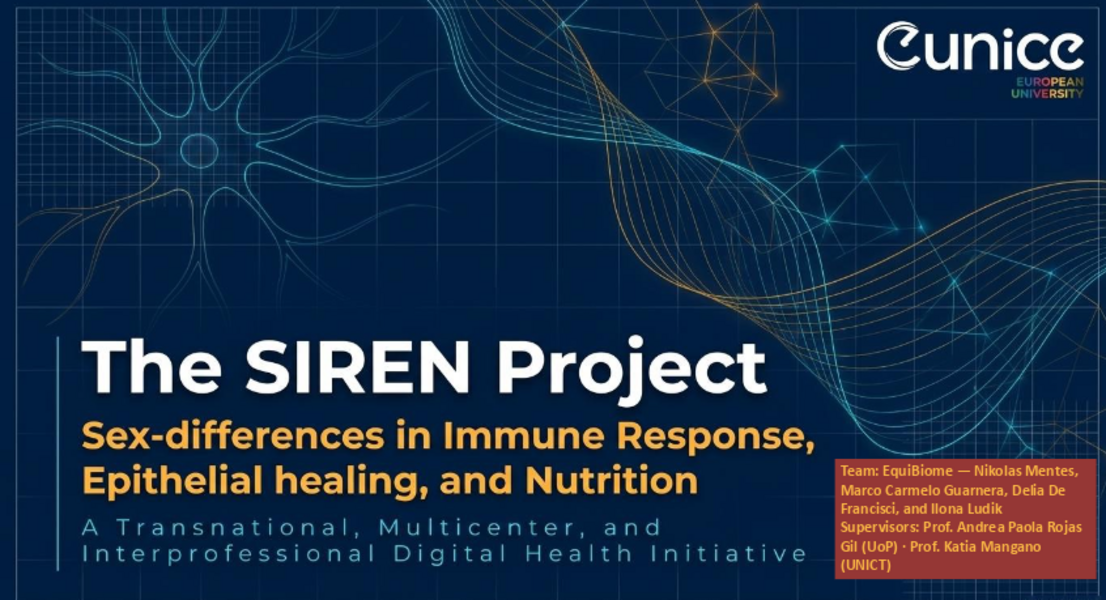
The projects undertaken by the four clubs were remarkably diverse, and the individual clubs presented the following research ideas: The Thermal Intelligence Club has set itself the goal of developing concepts for sustainable locations for AI Computing Centres. The Magnus Club aims to collaborate within the ‘Green Cities’ software ecosystem to promote inclusive urban development. The EquiBiome Club aims to investigate gender-specific differences in immune response, epithelial healing and nutrition. The Resistance to Change Club wishes to investigate resistance to sustainable changes in food policy. With its well-thought-out concept and a clear implementation plan, this club ultimately prevailed over the competition and convinced the EUNICE jury. The team has until the end of October to put its research idea into practice.
The Student Research Clubs play a crucial role in promoting multidisciplinary collaboration and the development of cross-disciplinary scientific skills within the EUNICE Alliance. The initiative takes place twice a year and is characterised by an alternating approach. As the bottom-up approach was implemented in the spring, the top-down approach will begin in September in collaboration with a Spanish company in Santander, Spain, which specialises in the distribution of exclusive regional Spanish products. Preparations are already in full swing, and interested students are invited to keep an eye on the EUNICE platform in September so as not to miss out on this new opportunity. The website also features descriptions of the two approaches adopted by the EUNICE Student Research Clubs.
Contact