What is in the microalgae? The search for new active compounds to combat liver cancer
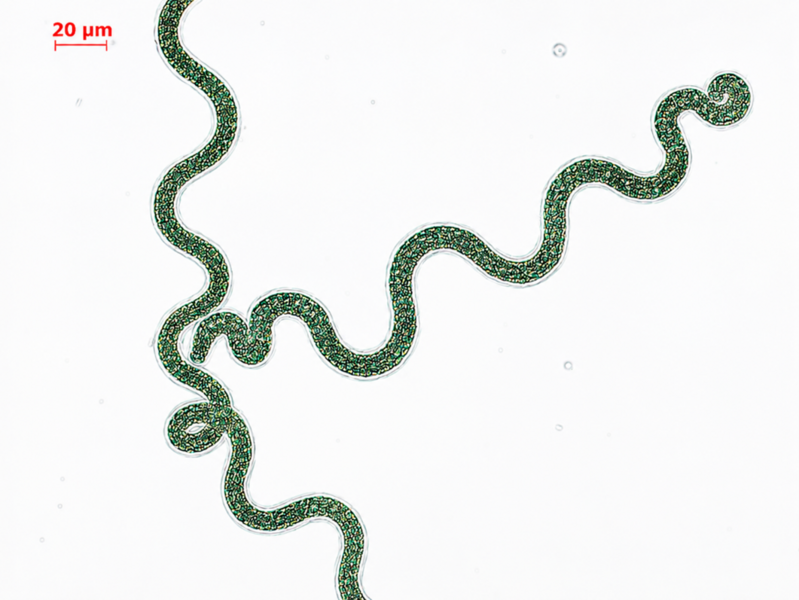
This is precisely what is changing: as part of the “AVantiLT” project, a research team at the university is investigating whether compounds found in the microalgae can inhibit the growth of liver tumour cells without damaging healthy tissue.
The starting point is an observation that has cropped up time and again in cell and animal experiments but has never been systematically investigated: compounds from spirulina appear to slow down cancer cells whilst sparing healthy cells. The BTU is now addressing this question using the liver as a case study – and not by chance, as liver cancer ranks among the tumour diseases with the poorest prognosis worldwide, and the number of cases is rising. For five years, until 2027, the Federal Ministry of Research, Technology and Space (BMFTR) is funding the work with just under 1.85 million euros.
Tracking microalgae and liver cells
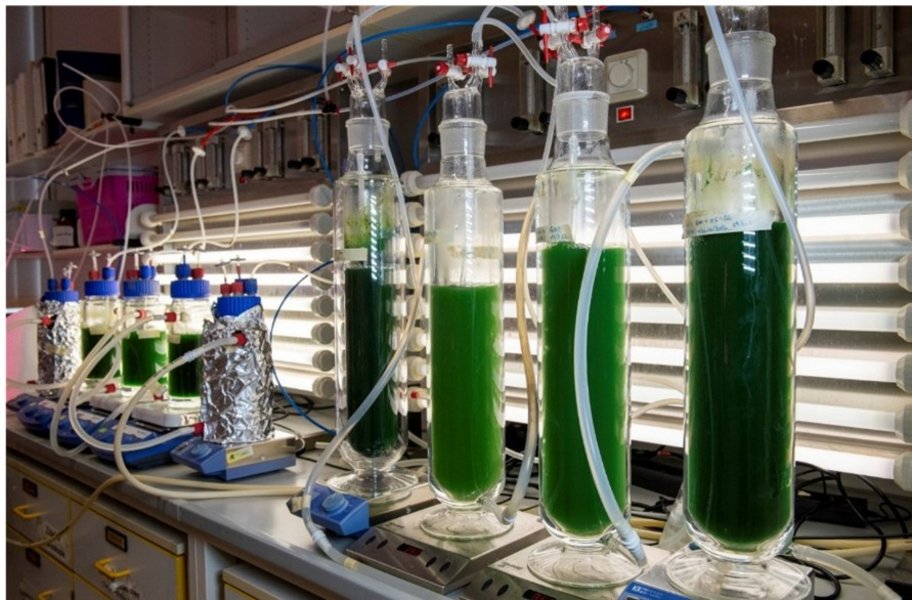
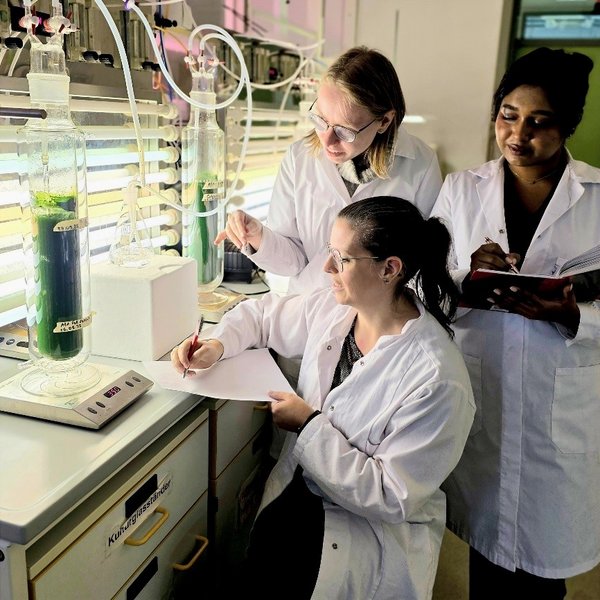
Why a spirulina extract appears to target cancer cells more specifically than healthy cells remains unclear. It is a mystery that a research team in Senftenberg is tackling from two angles simultaneously. In the Department of Molecular Cell Biology, chaired by Prof. Dr Jan-Heiner Küpper, the search for the active substance is being combined with testing on human liver cells: Dr Steffen Braune is tracing the potential active substances in the microalgae. In the laboratory, Dr Sarah Kammerer is using human liver cells to investigate what these substances actually trigger in the cells. Only by combining both perspectives can the crucial question be answered: does an extract really target only the tumour cells, or does it also affect healthy tissue?
“We have observed an interesting effect, but have not yet identified any active compound,” says Prof. Dr Jan-Heiner Küpper. “Spirulina extracts can inhibit cancer cells, but we do not yet know which components are responsible for this. It is precisely this mystery that we want to solve.”
A key question also arises regarding the effect on healthy tissue:
“The crucial question is: does the extract actually cause less damage to healthy liver tissue than to tumour cells? Only when we know just how great this difference actually is will we be able to make a reliable assessment of its therapeutic potential,” adds Dr Sarah Kammerer.
Not just phycocyanin in the spotlight
Phycocyanin, a blue pigment found in the microalgae, is considered the most promising candidate. However, it has not yet been proven that this is in fact the key active ingredient. Other substances in the extract could be just as important. For this reason, the research team is not initially focusing on a single substance. The entire spirulina extract, including its water-soluble components – one of which is phycocyanin – is being investigated.
For now, the microalgae remains primarily a subject of research. However, this investigation could ultimately lead to a highly pure active ingredient. Until then, the researchers must determine which molecules in the spirulina extract trigger the desired effect and which biological processes they influence. To this end, they are combining natural product chemistry analyses with systems biology and bioinformatics.
Through the Senftenberg-based start-up Carbon Biotech GmbH, the aim is to eventually establish a regional value chain – from the extraction of highly pure spirulina raw materials through to potential applications in medicines and food supplements.
No treatment yet
Despite these promising prospects, it must be noted that there are as yet no clinical trials in patients to demonstrate an effect on liver cancer. The findings to date – both from the AVantiLT trial and from research into spirulina in general – are based on cell culture and animal studies. Commercially available spirulina supplements are therefore not suitable for the treatment of cancer.
Expert contact
Dr Sarah Kammerer
Chair of Molecular Cell Biology
sarah.kammerer(at)b-tu.de
Dr Steffen Braune
Chair of Molecular Cell Biology
steffen.braune(at)b-tu.de
Press contact