What does ‘ageing well’ sound like? BTU launches a podcast based on real-life experiences
What is loneliness like in old age? What does it mean when, at some point, having a driving licence is no longer a given? And who actually ensures that a cluster of houses becomes a village with a sense of community? These are the questions that kick off the new podcast from the Brandenburg University of Technology Cottbus-Senftenberg (BTU). The podcast doesn’t answer them from behind a desk, but rather where they arise in everyday life: in sports groups, on on-demand buses, within village communities and at local meeting places across the region.
Perspectives on ageing well
The first episode focuses on loneliness in the Sachsendorf district of Cottbus. For many older people, the weekly sports sessions for senior citizens have become a social anchor – a source of stability following the transition into retirement and the loss of familiar relationships. The episode centres on an uncomfortable question: what about those who can no longer even take this first step out of isolation and are simply not reached by existing services?
The second episode follows Nicole Haustein from Schenkendöbern, who has consciously chosen not to own a car and instead uses an on-demand bus service for the roughly 15-kilometre journey to Guben. What appears to be a simple question of mobility quickly becomes a fundamental issue: How can independence be organised in rural areas when bus services are becoming increasingly scarce? Can an on-demand bus service really ensure social participation? What is remarkable about the underlying research is that older people are not merely respondents; their experiences are actively incorporated as knowledge into further academic work.
Episode three takes us to Heinersdorf and Hasenfelde, where a new community space is currently taking shape – literally on a building site and, at the same time, as part of a research project. At the same time, a visit to the local ‘Quasselcafé’ shows what community life looks like today: chatting, laughing, dancing, playing bingo. The episode raises a question that extends far beyond the local area: what is needed for people to remain actively involved in the long term, without their commitment eventually waning? An answer from the podcast sums it up: “Volunteering needs full-time support.” A second insight is that community cannot be imposed from the outside, but can only grow together with the local people.
Research that gets involved
Behind the podcast is AlterPerimentale, a project run by the BTU Cottbus-Senftenberg, which deliberately conducts research into ageing not about, but with, the people of the region. The project is funded by the Federal Ministry for Research, Technology and Space (BMFTR) and by the T!Raum programme – Transfer Spaces for the Future of Regions.
The podcast is explicitly designed as a bridge between academia and everyday life: in it, people from Lusatia become experts on their own lived experiences, whilst AlterPerimentale’s practical research centres serve as spaces for experimentation, listening and collaborative reflection. The focus is not on a finished result, but on the question of what a good life in old age might actually look like locally and what is needed to achieve it.
At the same time, the podcast is intended as an invitation to join in the discussion: How do people in their own region get from A to B? Where do they meet one another? And who has not yet been reached by existing services?
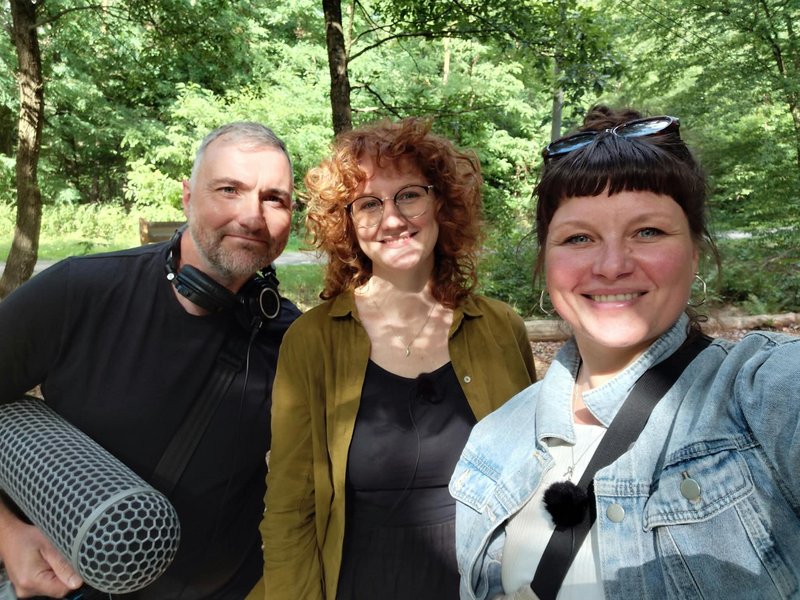
Editorial responsibility for the podcast lies with the researcher Claudia Arndt. The idea and concept come from Jan Schilling, who also acts as author and presenter. Post-production is handled by Media Winter.
The first three episodes of “Zukunft.Gestalten.Leben” are now available.
Subject specialist
Press contact