Interview with BTU alumnus Paul Faltin (Urban Planning)
Hello Mr Faltin, how did you come to study Urban Planning at the BTU, and what was your experience like there?
I was one of those people who, after finishing school, didn’t really know what I wanted to do. Originally, I’d always wanted to be a pilot, but I couldn’t do that for financial reasons and because I wanted to study something more secure for a start. When, even after my year abroad, I still didn’t know which career path to take, I looked for parallels between my chosen study programme and the school subjects I’d enjoyed the most. Because of its similarity to geography, combined with good career prospects, I then decided on Urban Planning. The BTU and its location in Cottbus were the best option for me because of its proximity to my home town of Berlin, the low cost of living and the size of the university. I had a brilliant time both in Cottbus and at the BTU. I found the size of the university very pleasant, and Cottbus actually offers more opportunities for student life than you might initially think.
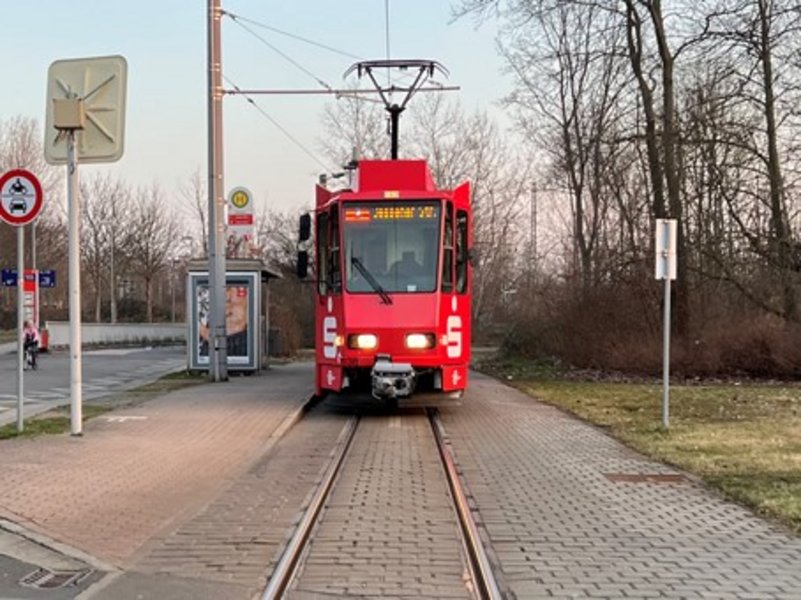
You worked part-time as a tram driver – how did that come about, and did the job perhaps even give you a different perspective on Urban Planning?
Cottbusverkehr regularly looks for students to work as temporary drivers on regular tram services. This is always on an as-and-when basis, whenever there’s a staff shortage. I came across the advert by chance and submitted my application straight away. Even before I wanted to become a pilot, I’d wanted to be a train driver, so this allowed me to fulfil that little childhood dream. For me, it was the perfect part-time job, as the shifts tended to be at the start or end of the day, so I could still go to university despite working. And indeed, the job gave me a new perspective on Urban Planning. In many cities, trams automatically perform registration at traffic lights to be given priority, meaning they get the green light more quickly. During my time at Cottbusverkehr, this technology was also introduced on a trial basis on Line 4. It was immediately apparent just how much time this could save, which ultimately makes public transport significantly more attractive than private transport. This is a small but very important aspect of Urban Planning and Mobility Planning that I hadn’t been aware of before.
You’re currently working as a Network Planning Manager at Flix – how did that come about?
During my studies, I realised that I was particularly fascinated by Mobility Planning. So, shortly after graduating, I came across a job advert at Flix and simply decided to submit an application. As part of the selection process, I had to draw up a proposal for a new bus route, and that’s when I realised this was exactly my thing. When I actually got the job, it was clear to me that a career in Mobility Planning was the right path for me. After four fantastic years at Flix, however, the next mode of transport is now waiting for me: in September, I’ll finally be fulfilling my childhood dream and starting an apprenticeship as a commercial pilot with Lufthansa.
How exactly would you describe your job? What do you actually do, and what are the specific tasks you’re responsible for?
I’m part of the team at Flix that designs the timetables according to which Flixbuses travel across Europe (and now beyond too). What might sound trivial at first is actually surprisingly complex, as our network is very tightly interwoven and our routes, with their many stops, introduce a lot of variables. I am the supervisor for around 50 bus routes with the aim of constantly optimising them and adapting to external circumstances (such as roadworks). This is always done in consultation with other departments, so that the planning process becomes a real team effort. I really enjoy that!
What do you miss most from your periods of study at the BTU?
During my studies, I was constantly in situations where I could – and had to – try out new things. That meant I learnt an awful lot. In day-to-day work, that sort of thing sometimes gets lost, but with my upcoming training, I’ve got a lot of new things to look forward to again.
Contact