“Take your hobby seriously!” – Dirk Wiedenhaupt on starting a business, university and the courage to just get started
The Elbenwald Festival has been running since 2018. How has the festival changed since its early days, and what has remained the same to this day?
Dirk Wiedenhaupt: Above all, the whole set-up has grown. When we started out, it was more like a big fan meet-up, but today it’s an event with everything that goes with it: a safety plan, traffic management, technical support, and coordination with local authorities. That involves a different level of effort than before, and a different budget too.
The audience has changed too. Pop culture is no longer a niche interest. In the past, it was the hardcore fans who came; today, we have families, people who are simply curious, and – something we’re particularly pleased about – more and more people from Cottbus and the surrounding region. The proportion of tickets sold to people from the surrounding area is rising every year.
What’s stayed the same is the core: we organise the festival ourselves, directly through the company, with no agency involved. It’s a festival by fans for fans, and people can tell the difference.
What can guests expect in 2026? What’s new? Will existing traditions continue?
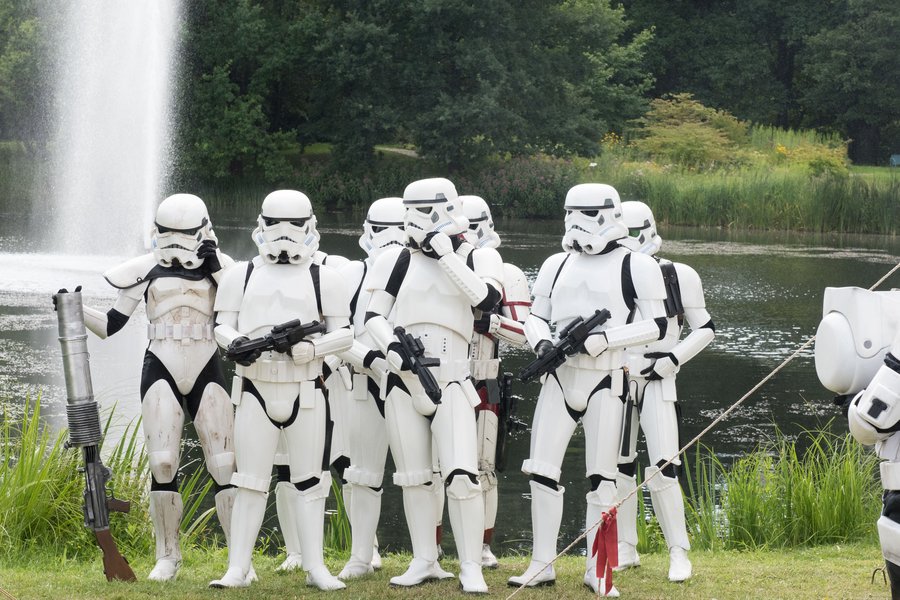
Dirk Wiedenhaupt: Our line-up thrives above all on its diversity. Of course, we’ve got musical highlights such as dArtagnan, Fiddler’s Green and our live orchestra on Sunday. But just as much a part of it are cosplay competitions and workshops, pen-and-paper gaming sessions, film talks and impressive show acts.
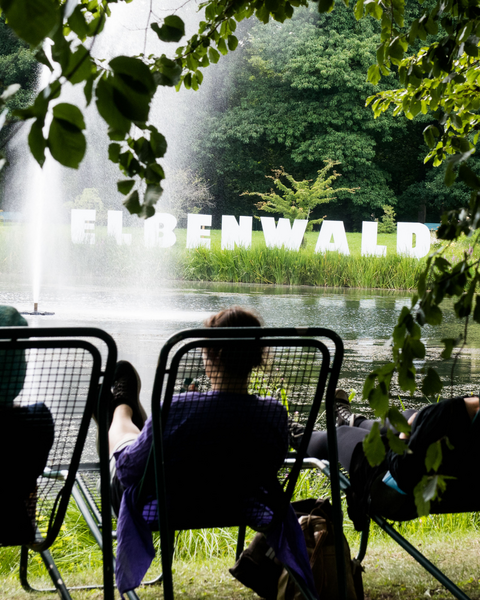
There are a few elements in the programme that the community would be up in arms about if we were to remove them – and quite rightly so: the Spreeauenpark itself, our love of cosplay, the unique stage programmes, and that campfire atmosphere in the evening.
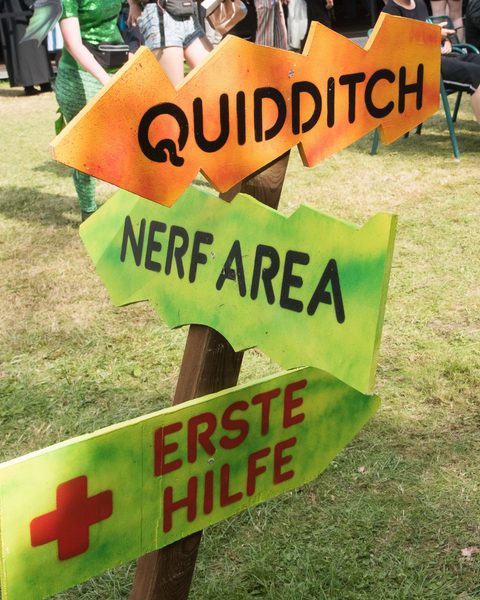
What’s new every year is that we make a few tweaks to areas that guests don’t notice at first glance: paths, queuing times, catering, signage. The greatest praise after a festival isn’t just ‘it was spectacular’, but also ‘everything worked’.
In our last interview in 2021, you said that luck was part of the recipe for success. Would you still say that?
Dirk Wiedenhaupt: I wouldn’t take back the bit about luck, but I’d put it more precisely today: luck happens to everyone. The difference is whether you’re able to act in that moment. If you’re struggling to breathe – whether mentally, within your team or financially – you can’t seize a good opportunity, even if it’s right in front of you.
What I underestimated in 2021 was perseverance. The years since the pandemic have not been easy for the retail sector as a whole, and it has become clear that tenacity is at least as valuable as a good idea. This also involves taking an honest look at your own figures and bringing an end to things you’re emotionally attached to.
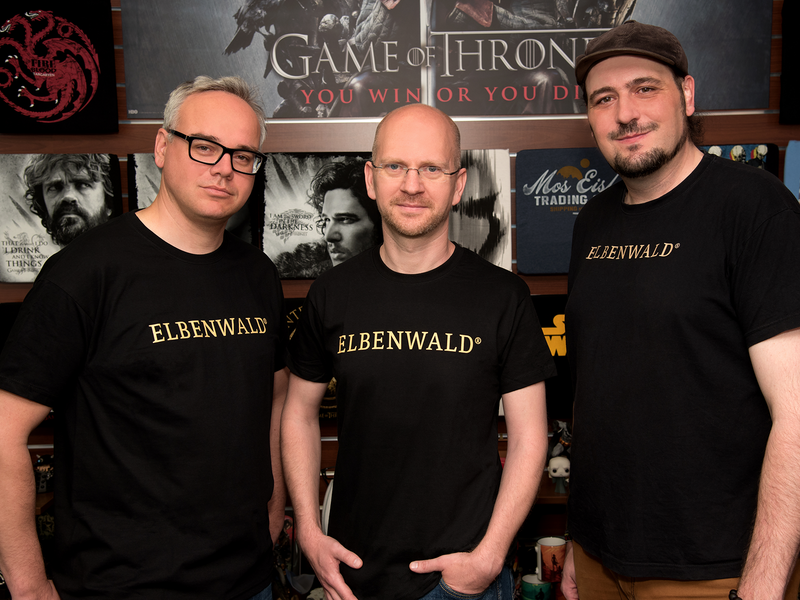
And thirdly: we’re still the same three partners. It’s rare to be able to say that after more than 25 years, and it was the real driving force behind many of our decisions.
Dirk and Jens, you both studied at the BTU – what brought you to Cottbus back then?
Dirk Wiedenhaupt: For Jens (Geppert) and me, it was the Process Engineering study programme. I’m from Berlin, and the TU Berlin would have been the obvious choice, but Cottbus was smaller, more manageable, and the student-to-lecturer ratio was much better. Here, you weren’t just one of a thousand. For Jens, who comes from Frankfurt (Oder), the reasoning was similar. Alex studied music in Berlin and actually came to Cottbus because of Elbenwald.
What I couldn’t have imagined back then was that, over 25 years later, I’d still be sitting here, running a company whose central warehouse is based in Cottbus. Looking back, choosing this city was one of the best decisions I’ve ever made – and the decision regarding the Spreeauenpark in 2020/21 was the second.
Did your studies at the BTU prepare you well for entrepreneurship, or did you have to forget much of what you learnt?
Dirk Wiedenhaupt: Both – and that’s no excuse. What has stayed with me is the ability to get to grips with a new subject without panicking. Whether it was Computer Science, law or Business Administration: we were given a basic framework on which to build. And Process Engineering is conceptually closer to business than you might think, because a central warehouse with a robotic system is, at the end of the day, a process involving throughput, bottlenecks and buffers. That way of thinking still helps me today.
I had to let go of the quest for the optimal solution. At university, you keep calculating until you get the right result. As an entrepreneur, you make decisions based on 60 per cent of the information, because the other 40 per cent only becomes available when it’s too late. That shift took me longer to get used to than any exam.
You’ve already gained quite a bit of experience by now. What advice would you give your younger self today – the first-year student who has no idea what’s in store?
Dirk Wiedenhaupt: Firstly: Take your hobby seriously. Elbenwald grew out of something that nobody at the time would have considered a business model – myself included. A topic you can talk about for an hour without being asked is a sign of potential, not a waste of time.
Secondly: learn early on how to read a balance sheet and a profit and loss account. Not to become an accountant, but because otherwise, at some point, someone else will explain to you how your company is doing. That’s an unpleasant feeling.
Thirdly: the people you meet in your first few semesters are more important than your grades. I still work with people I met in Cottbus.
And fourthly, to my 20-year-old self: just get some sleep. It won’t get any better.
Many students develop their own ideas during their studies. What advice would you give to students who also want to turn their own ideas into reality?
Dirk Wiedenhaupt: Start small, but start with real customers. No business plan to be filed away, no round of feedback from people who like you. Sell the product for real money to someone who doesn’t know you. That’s the only feedback that’s worth anything. And don’t wait for the perfect moment – it doesn’t exist. Start a business because of the idea, not because of an EXIST grant.
Also, look for co-founders who challenge you. There are three of us, and we’ve often disagreed – and that’s exactly what’s saved us from making mistakes. A team where everyone thinks the same isn’t a team at all – it’s just an echo chamber.
And to be honest: think carefully about when you let other people’s money in. Without investors, you grow more slowly and bear the risk yourself. In return, you decide what you think is right, rather than what will look good in a presentation four years down the line. For us, that was the crucial difference.
Contact