If exclusion has a history – and continues to have an impact to this day
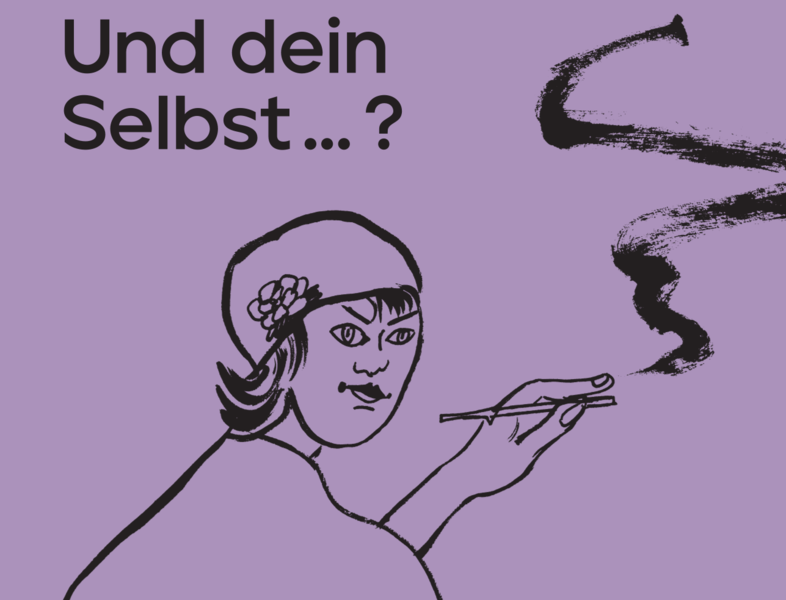
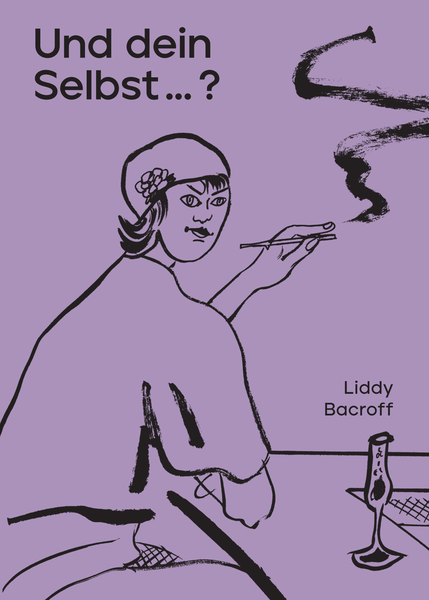
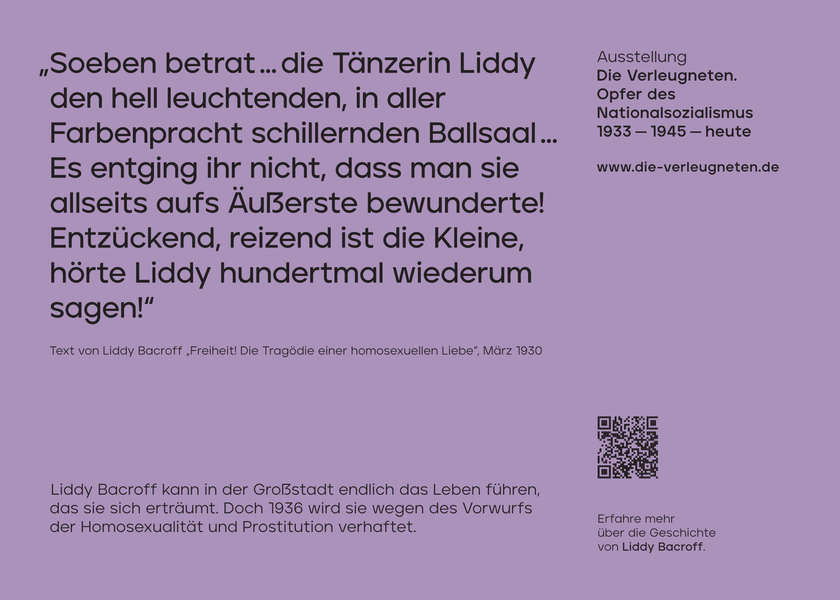
Who decides who belongs to society? Who is marginalised, stigmatised or labelled as ‘different’ – and what happens when such labelling becomes state policy? – These are the questions addressed by the exhibition ‘The Denied: Victims of National Socialism 1933–1945–Today’. The BTU Cottbus-Senftenberg is an institutional partner of the exhibition and, together with other partners, is bringing the theme to the city and into the present day.
As part of the exhibition opening, BTU president Prof. Dr Gesine Grande will deliver a welcome address.
As part of its collaboration with the Cottbus City Museum, the Justus Delbrück Haus | Academy for Co-determination in Jamlitz and KARUNA e.V., the BTU is organising its own public programme to accompany the exhibition: The BTU Open Campus is hosting three events in November and December that link historical memory with contemporary experiences of exclusion. Lectures, a ‘Public Listening’ session with a panel discussion, and a ‘Wandelkonzert’ will offer different perspectives on a theme that extends far beyond the historical reappraisal of National Socialism. The central question is: what can we learn from history when people are still marginalised today due to poverty, homelessness or unemployment?
“Stigmatisation and violence against people experiencing poverty, homelessness and unemployment continue, sadly, to this day. How and where does this violence manifest itself? What perspectives do people who have experienced exclusion themselves have?” asks co-organiser and BTU Professor Stefanie Kiwi Menrath, who has the chair for Media Education: Aesthetic Practice in Social Work.
From a historical review to the present day: three events as part of the BTU Open Campus
The BTU Open Campus kicks off on 4 November with the lecture ‘A Hundred Years of Sanction Law against “Work-Shy” Individuals: A History of Radicalisation’ by Prof. Dr Rosenow (University of Freiburg). In the subsequent panel discussion, historical developments will be linked to issues in Social Work and the present day. The session will be moderated by Martin Bock from the Cottbus Youth Welfare Office, with an opening address by Prof. Dr Jens M. Schubert, Dean of the Faculty of Human Sciences at BTU Cottbus-Senftenberg.
On 24 November, the focus will shift to contemporary experiences: at thepublic listening session and panel discussion ‘Violence in the Lives of Homeless People’, people with personal experience of homelessness will have their say. Together with Stefan Schneider (Wohnungslosen_Stiftung), the experts Janina Berthold and Piet Paco, and radio writer Johanna Tirnthal, the discussion will focus on violence, stigmatisation and social exclusion. Moderator: Anett Quint.
“The stigmatising use of the term ‘anti-social’ has never gone away,” says Anett Quint. “We should raise awareness, through the exhibition and in discussions, and make it clear where this way of thinking leads.”
To conclude, on 12 December, remembrance will be brought to life through music. At the ‘Verurteilte Klänge – ein Konzert zur Erinnerung’ (Condemned Sounds – a concert in remembrance) concert, students of Instrumental and Vocal Performance and Teaching at the BTU will perform alongside Immanuel de Gilde in the exhibition rooms of the City Museum.
“We are currently witnessing a rise in social divisions in Germany,” says Dr Kevin Stützel, Deputy Professor on the BTU’s Social Work Methods chair, specialising in community work. “We must discuss the causes and consequences of social division at universities, as well as ways to achieve a more socially just society.”
Remembrance as a starting point for the present and the future
The exhibition ‘The Denied’ commemorates people who were persecuted under National Socialism as so-called ‘asocials’ and ‘professional criminals’. Tens of thousands were deprived of their freedom; many were murdered. It was not until 2020 that the German Bundestag recognised these people as victims of Nazism. Following this resolution, Parliament commissioned the Foundation for the Memorial to the Murdered Jews of Europe and the Flossenbürg Concentration Camp Memorial to create an exhibition, which is now on display in Cottbus after having been shown in Berlin, Leipzig, Cologne and various memorial sites, amongst others.
The BTU Open Campus is using the exhibition as an opportunity to explore the continuities of exclusion right up to the present day.The event will examine history, listen to accounts of contemporary experiences of violence, and bring remembrance to life through music.
BTU Open Campus: An overview of the programme
Wednesday, 4 November 2026, 6–8 pm “A Hundred
Years of Sanctions Law against ‘Work-Shy’ People: A History of Radicalisation”
Lecture and panel discussion with Prof. Dr Rosenow
Venue: Cottbus City Museum, Large Seminar Room, 3rd floor
Tuesday, 24 November 2026, 5–8 pm
Public Listening & Panel Discussion “Violence in the Lives of Homeless People”
Venue: Studio Freies Radio sternchen.fm, Burgstraße 22
Saturday, 12 December 2026, 6.00 pm
‘Verurteilte Klänge’
– a concert in memory With students of Instrumental and Vocal Performance and Teaching from the BTU and Immanuel de Gilde
Venue: ‘Die Verleugneten’ exhibition spaces, Cottbus City Museum
Contact:
Anett Quint,
Justus Delbrück Haus,
jamlitz(at)karuna-ev.de,
Tel. 0176 10612789
Contact
Medienpädagogik: Ästhetische Praxis in der Sozialen Arbeit
T +49 (0) 355 5818 410
menrath(at)b-tu.de
Press contact