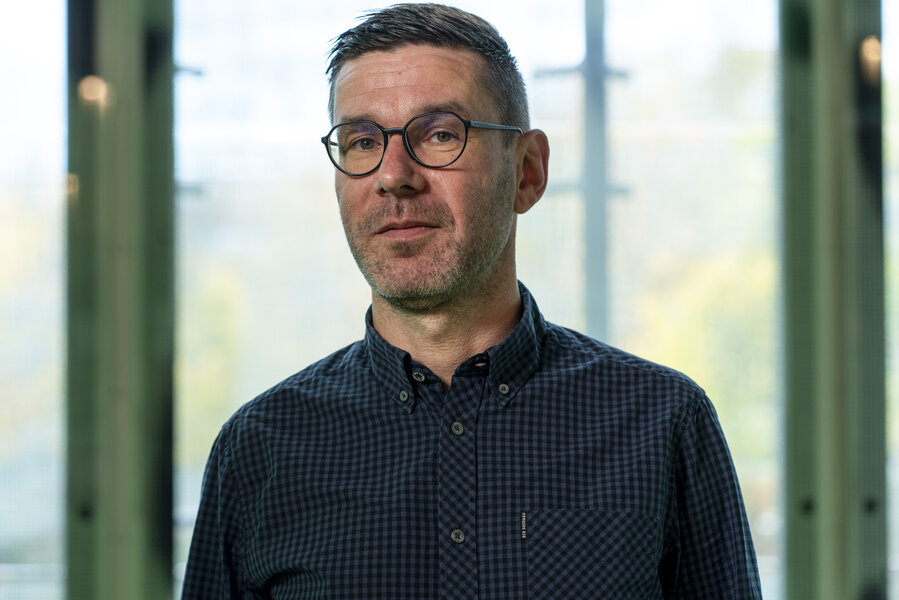
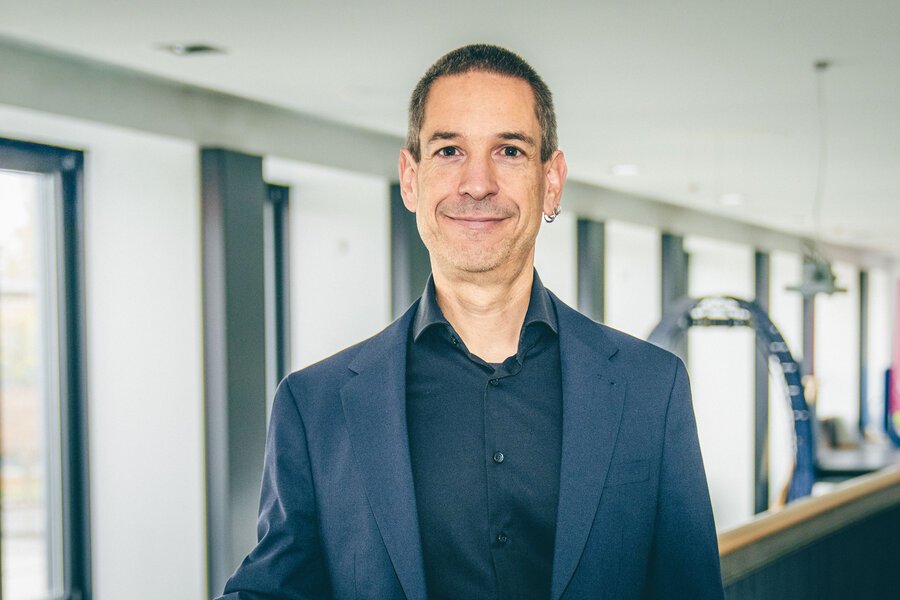
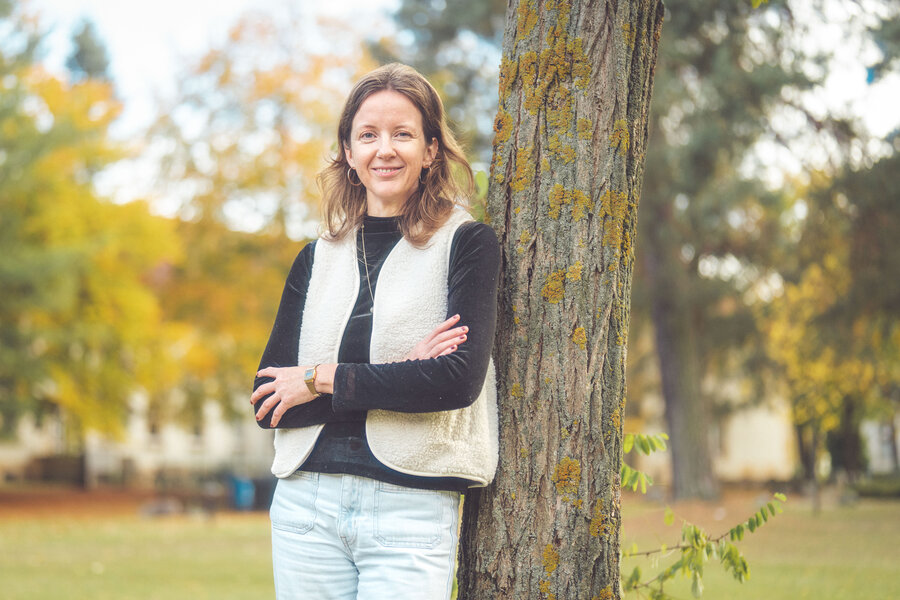
Five new professors: BTU attracts internationally acclaimed academics
Together, they are making the BTU even stronger in the Lusatia region’s sectors of the future.
Five minds, one vision
The appointments follow a common thread: the Brandenburg University of Technology Cottbus-Senftenberg (BTU) is systematically expanding the fields in which Lusatia is developing into a region of future technologies and future challenges. In Materials Research, it is strengthening its cutting-edge research into electronics, AI hardware and climate-friendly construction. In nursing and Social Work, it is focusing on the health of an ageing society, whilst in teacher training, it is focusing on the future of local schools.
An overview of the new professorships
- Prof. Dr Aleksandar Matkovic: Chair of Nanostructures, 2D Systems and Layers (joint appointment with the Leibniz Institute for Crystal Growth, IKZ), previously at Montanuniversität Leoben, ERC Starting Grant holder
- Prof. Dr.-Ing. Gregor Gluth: Chair of Civil Engineering Materials and Chemistry, previously at the Federal Institute for Materials Research and Testing (BAM), Berlin
- Prof. Dr. rer. medic. Ralph Möhler: Chair of Nursing Science, previously University of Düsseldorf
- Prof. Dr. Cordula Endter: Chair of Counselling, Communication and Intervention in Social Work, previously at the Catholic University of Applied Social Sciences, Berlin
- Prof. Dr Nadine Tramowsky: Chair of General Studies with a focus on natural sciences and technology, previously at the University of Education, Freiburg
Aleksandar Matkovic: Ultra-thin materials for the electronics of tomorrow
Prof. Dr Aleksandar Matkovic has held the chair in the Department of Nanostructures, 2D Systems and Thin Films since 1 October 2026. The professorship is a joint appointment with the Leibniz Institute for Crystal Growth (IKZ) in Berlin-Adlershof, where he also heads the Department of Nanostructures & Thin Films. Matkovic brings with him his ERC Starting Grant and part of his team.
Research: The physicist is investigating two-dimensional (2D) materials, thin films and hybrid van der Waals heterostructures. These are crystals that remain stable even as a single atomic layer. With his ERC Starting Grant, he is developing a new class of two-dimensional clay minerals as ultra-thin, storable insulators for neuromorphic electronics. This work is intended to lead to the development of memory transistors that mimic certain functions of the human brain and can make AI hardware more powerful and energy-efficient. At the IKZ, the focus is on artificially created heterostructures, for example through layer transfer or twisted epitaxy, with applications in nanoelectronics, plasmonics, and neuromorphic and synaptic electronics. Matkovic intends to gradually expand his team at the BTU and strengthen collaboration with the IKZ. The appointment forms part of the structural change strategy in Lusatia and is embedded within the planned collaboration in the ‘Leibniz@Lausitz’ building.
Career to date: Matkovic was awarded his PhD in 2015 at the University of Belgrade for his thesis on the optical properties of graphene. Most recently, he led his own research group at the Montanuniversität Leoben (Austria). His work has received numerous awards: a Lise Meitner Fellowship, the START Prize from the Austrian Science Fund (FWF) and the Fritz Kohlrausch Prize (both in 2020), as well as the ERC Starting Grant in 2022. He has been a member of the Young Academy of the Austrian Academy of Sciences since 2023.
Gregor Gluth: Concrete that protects the climate
Prof. Dr.-Ing. Gregor Gluth has been chair of the Department of Civil Engineering Materials and Chemistry at the BTU since 1 October 2026.
Research: Key areas of focus for his chair will be climate-friendly binders, the durability of concrete and CO₂ storage in building materials. Gluth is investigating the chemical processes that take place during manufacture and processing, and how materials are damaged. To this end, the BTU is expanding its capacity and expertise in instrumental analysis at the Institute for Materials Research and Testing (FMPA), particularly within the ‘Chemical-Physical Analysis’ and ‘Concrete Technology’ specialist groups. This is intended to enable experimental research at the very highest international level.
Career to date: Prof.Gluth conducted research into cement-bound and ceramic materials at the Federal Institute for Materials Research and Testing (BAM) in Berlin. There, he established a research group on climate-friendly cements and raised its international profile. He collaborated with numerous research partners worldwide and with raw materials companies from southern Brandenburg. Gluth has served on committees of the International Union of Laboratories and Experts in Construction Materials, Systems and Structures (RILEM) and the European Federation of Corrosion (EFC), and is a member of editorial boards for international journals in the field of Materials Science. He currently chairs a RILEM Technical Committee on CO₂ storage in concrete. He has also served on three other RILEM committees dealing with the durability of alkali-activated materials, the carbonation of concrete with admixtures, and chloride transport.
Ralph Möhler: Nursing with a regional focus
On 1 October, Prof. Dr. rer. medic. Ralph Möhler took up the Chair of Nursing Science at the BTU.
Research: Möhler develops and evaluates complex interventions in nursing care. His focus is on avoiding measures that restrict freedom, such as bed rails or restraints, in care homes and hospitals. “Such measures are frequently used, even though they often pose more risks than they offer benefits,” says Möhler. Together with colleagues, he is drawing up guidelines with recommendations for care staff. “The Senftenberg campus offers excellent conditions for this. Together with regional stakeholders, we can identify and address relevant issues to improve the quality of care and support locally.” Cooperation with the Medical University of Lusatia – Carl Thiem is also set to grow, through joint projects on the quality of care and in interdisciplinary teaching. Since this year, students on the Bachelor’s degree programme in Nursing Science have also been acquiring the newly regulated, extended clinical competencies required by law.
Previous career: Since 2020, Möhler has been Professor of Health Services Research, specialising in complex interventions, at the Institute for Health Services Research and Health Economics at the University of Düsseldorf. Other positions included the Institute of Health and Nursing Science at Martin Luther University Halle-Wittenberg and, from 2018 to 2020, the University of Bielefeld. He played a key role in the IMPRINT study on the prevention of physical restraints in care homes, a pragmatic, randomised trial conducted in care homes. Its findings were published in 2019 in the *International Journal of Nursing Studies*, whilst the accompanying process evaluation appeared in 2021 in the *Journal of Advanced Nursing*. Möhler is chairperson of the Guidelines Commission of the German Society for Nursing Science (Deutsche Gesellschaft für Pflegewissenschaft e.V.) and deputy chairperson of the German Network for Evidence-Based Medicine. He is also a Fellow of the European Academy of Nursing Science, a network comprising nursing scientists from over 20 European countries.
Cordula Endter: Living Well Together in Old Age
Prof. Dr Cordula Endter has been appointed to the chair of Counselling, Communication and Intervention in Social Work with effect from 1 October 2026.
Research: Endter’s work focuses on the lived experiences of people in the second half of life: on health and care, participation and education, as well as ethical issues surrounding a dignified life in old age, including in situations of vulnerability. The aim is to strengthen the psychosocial health of older adults in Cottbus and the surrounding region through new approaches and collaborations. Digitalisation can help in this regard, but it is not enough. In view of demographic change and the shortage of skilled workers, the focus is on the public-interest question of how we can live well together in the future. Counselling and communication play a central role in this. Endter is therefore planning to set up a counselling laboratory at the BTU’s Sachsendorf campus. Her key research areas also include the participation of vulnerable groups in the digital transformation, digitalisation in care, and essential public services in rural areas.
Career to date: Most recently, Endter was Professor of Social Work in the Digitalised Society at the Catholic University of Applied Social Sciences in Berlin. Prior to that, she worked, amongst other things, in the geriatric psychiatry department of a hospital, as a trainee psychologist and psychotherapist, and as a research assistant at the German Centre for Ageing Studies. At Zittau/Görlitz University of Applied Sciences, she was a visiting professor of social gerontology and established contacts within the region’s health, care and social economy sectors. In 2021, she received the Cäcilia Schwarz Award for Innovation in Elderly Care from the German Association for Public and Private Welfare for her doctoral thesis ‘Assisted Ageing’, which focused on the development of digital technologies for and with older people. As a member of the federally funded ‘Alterperimentale’ transfer initiative, she is already active in the region, for example in Guben, Schenkendöbern, Spremberg and Cottbus.
Nadine Tramowsky: From children’s questions to effective teaching
Since 1 October 2026, Prof. Dr Nadine Tramowsky has been Professor of General Studies with a focus on science and technology at the Campus Senftenberg. She trains future primary school teachers. In the winter semester, 398 trainee primary school teachers are enrolled there: 359 on the Bachelor’s programme and 39 on the newly launched dual Master’s programme.
Research: Tramowsky investigates the ideas that children and young people develop about nature, animals and the environment, and how these can be built upon in the classroom. One example is the different ways in which we treat pets and farm animals: why do we stroke a dog but eat a pig? Children’s ideas are not simply right or wrong. “They show us how children understand the world and offer valuable starting points for learning.” This approach is known as didactic reconstruction. Above all, she wants her students to learn to listen to children and to develop learning opportunities based on their questions. Together with her team, she has developed the MuxBooks, multimedia research workbooks on topics such as air, the water cycle and animals in winter. She has also investigated how even primary school children understand the interrelationships of climate change and has published work on, amongst other things, animal ethics in biology and religious education lessons. In Lusatia, she plans to work closely with schools and teachers to jointly develop teaching ideas and test them with children. The new dual Master’s programme, which closely combines academic study with practical training in schools, plays an important role in this.
Career to date: Tramowsky first completed training as a state-recognised early years educator and then studied to become a teacher at Otto Friedrich University of Bamberg, where she was awarded her PhD in 2019. Following positions as a research assistant in Bamberg, she served as an assistant professor of biology and its didactics at the University of Education in Freiburg from 2020 to 2026. The junior professorship received positive assessments in both the interim evaluation in 2023 and the final evaluation in 2025. She has also taught in schools herself, including as a subject teacher for general studies at a primary school in Freiburg. She now lives with her family in Senftenberg.
New impetus for the region
With these five appointments, the BTU is attracting talent that will bring its academic excellence directly to bear in Lusatia: research into the electronics and construction of the future, into high-quality care and healthy ageing, and into the training of the next generation of teachers. Together with its partners in academia, industry, the healthcare sector and schools, the BTU is thus further expanding its role as a driving force for science and innovation in Lusatia.
Contact