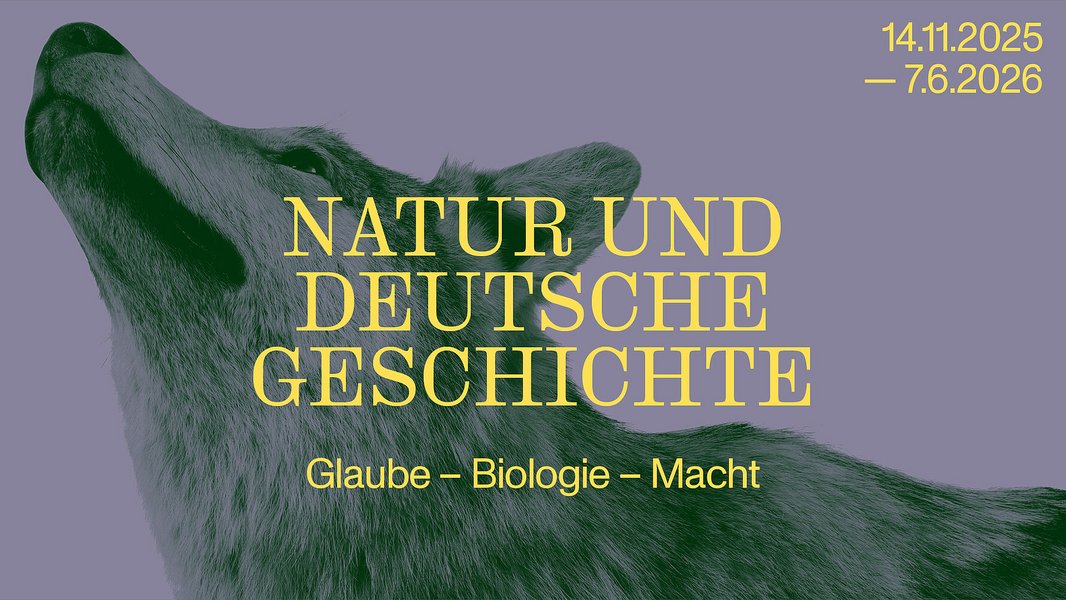
Visit to the Exhibition Nature and German History
Students of the course 'How to talk about "Nature"?' visited the exhibition Nature and German History: Faith - Biology - Power at the German Historical Museum in Berlin. The students were divided into two groups and both groups enjoyed a guided tour through the exhibition. At the end, both groups were reunited and Dr. Francesc Rodríguez related the particulars of the history of nature in Germany to the content of the course.
About the course: “How to talk about nature?” is closely linked to the question of what “nature” is, how it is construed and in which way we act with, in or against it. It is a question that is ontological and epistemological at the same time, it is about how we imagine “nature to be” and how we conceive of knowledge about “nature” and about ourselves. The ideas about this entwinement are manifold over time and in space; different cultures have developed different ways of thinking and also practices of how to deal with a culture/“nature” distinction. Another important conceptual issue is how “nature” and technology are related in contemporary debates. For instance, "nature" is often identified with "environment" and as such inescapably entangled with its cultural, political, and technological context. Is the use of technology in “nature” then a threat or an opportunity to build a genuinely sustainable world?
The course seeks to answer these and other questions, by approaching “nature” with variously grounded historical and contemporary theoretical approaches. For example, the concept of “nature” was differently interpreted in ancient times, compared to modern contemporary cultures. The different usage, the scope of historical and cross-cultural depth, imaginaries, and finally, the logical coherence of “nature” concepts will be probed. This variety of topics means that the assigned readings will draw from a wide range of sources. In order to address current ecological and technocultural problems effectively, it is necessary to engage in a conscious reflection on the concept of "nature.". Thus, the module should be also seen, in part, as a way to gain insight into contemporary reading, writing, and visual practices about “nature”.
Kontakt
Allgemeine Technikwissenschaft
T +49 (0) 355 69-2284
F.RodriguezMansilla(at)b-tu.de