
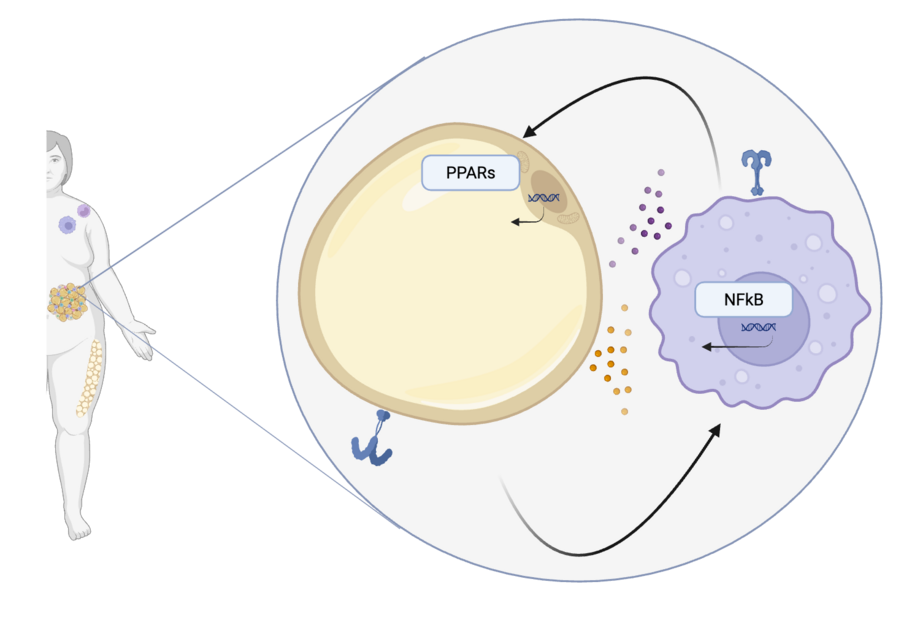
Obesity is the most significant risk factor for the development of numerous metabolic diseases in children, adolescents and adults, including type 2 diabetes, cardiovascular diseases, high blood pressure, fatty liver and some types of cancer. Recently, metabolism-disrupting chemicals (MDCs) have increasingly been linked to the development of obesity and its associated diseases. Elucidating the underlying pathophysiological mechanisms is essential for developing preventive measures and effective treatment strategies.
Our research focuses in particular on adipose tissue, where MDCs can influence adipocyte function. Since obesity is associated with low-grade, chronic inflammation of adipose tissue, which is primarily triggered by macrophages, macrophages are also being investigated as key players in the characterisation of MDC-mediated effects.
Our projects aim to gain a detailed mechanistic understanding of the effects of MDCs on cell differentiation, the interactions between adipocytes and macrophages, and the cellular functions of both cell types. Using advanced systems biology omics methods, we aim to identify molecular initiation and key events that provide essential data for the development of adverse outcome pathways (AOPs). In addition, we define molecular signatures that explain MDC-mediated changes and serve as potential biomarkers for human biomonitoring.
Through this integrated research approach, the Cell Biology working group will contribute to a better understanding of the health effects modulated by environmental chemicals and to the development of scientifically sound prevention and intervention strategies.