
Mathematics in Cottbus: getting to the bottom of things.
You are now studying at the MINT Faculty, i.e. the Faculty of Mathematics, Computer Science, Physics, Electrical Engineering, and Information Technology.
We want to help you organise the start of your studies. To this end, we provide you with an overview of the formalities to be completed in the first few weeks after enrollment so that you are ready to start your actual studies with us.
The information summarised here is updated regularly, so if you are missing something important, please let us know.
We wish you a good start and every success in your studies!
The teaching staff and the student councils of Faculty 1 at BTU
Structure of the study programme
In addition to the academic content, studying also involves a few bureaucratic hurdles. Have you ever wondered what these ECTS credits are? Or how you earn these credits? Or how many of them you need? Or whether there is a fixed timetable and, if so, where you can find it? Modules have to be registered for, exams have to be registered for and sometimes deregistered from. In addition, you also have to sign up for various lists or register with “Moodle.”
Those who are new to the university may easily feel overwhelmed by these requirements. That's why we have tried to outline the essential procedures that occur repeatedly in everyday student life in the following sections.
Studying with modules
Sometimes it is helpful to know what is being talked about, so here we explain a few of the terms that are used repeatedly.
Modules. Modules are similar to subjects at school: they are distinct parts of the degree programme in terms of content. Each module has a module description, a module number and information on content, exam format, learning objectives, responsibilities, credits, etc. A module often comprises several courses such as lectures, exercises or internships labs. Individual courses also have a number, but this differs from the module number.
Credit points. Credit points define the amount of work required for the degree programme and the individual modules. One credit corresponds to an assumed workload of 30 hours. Unfortunately, there are many different abbreviations and spellings for credit points; they are sometimes called credit points or ECTS points and abbreviations such as LP, CP or KP are often used, but they all mean the same thing.
Courses. A course is a physical event with a location and date. Your degree programme includes, for example, lectures, exercises, seminars or internships labs.
Examination and study regulations. The structure and content of the program are governed by the examination and study regulations applicable to the degree program. There are "General study and examination regulations for Bachelor's/Master's degree programmes", which apply to all subjects, and "Subject-specific study regulations" for the respective study programme, which supplement the general regulations. The study regulations for the Bachelor's programme in Mathematics can be found here, those for the Bachelor's degree programme Economathematics here, those for the Master's programme in Applied Mathematics here, those for the Master's programme in Mathematics here, and those for the programme in Mathematical Data Science here.
The examination and study regulations that are valid at the time of enrolment always apply, unless you choose to transfer to a newer set of regulations at a later date.
Please read the regulations carefully, as they form the basis of your degree programme and outline the possibilities and limitations.
Structure of the degree programmes
For the Bachelor's degree programmes in Mathematics and Economathematics, a total of 180 credits (CP) must be earned in six semesters. The individual modules are assigned to module areas, and the study regulations specify how many credit points must be earned in which module area. In the following illustrations you can see the individual module areas and the corresponding number of credit points. The two degree programs are very similar, with only a few differences in the “Applications” and “Advanced” modules.
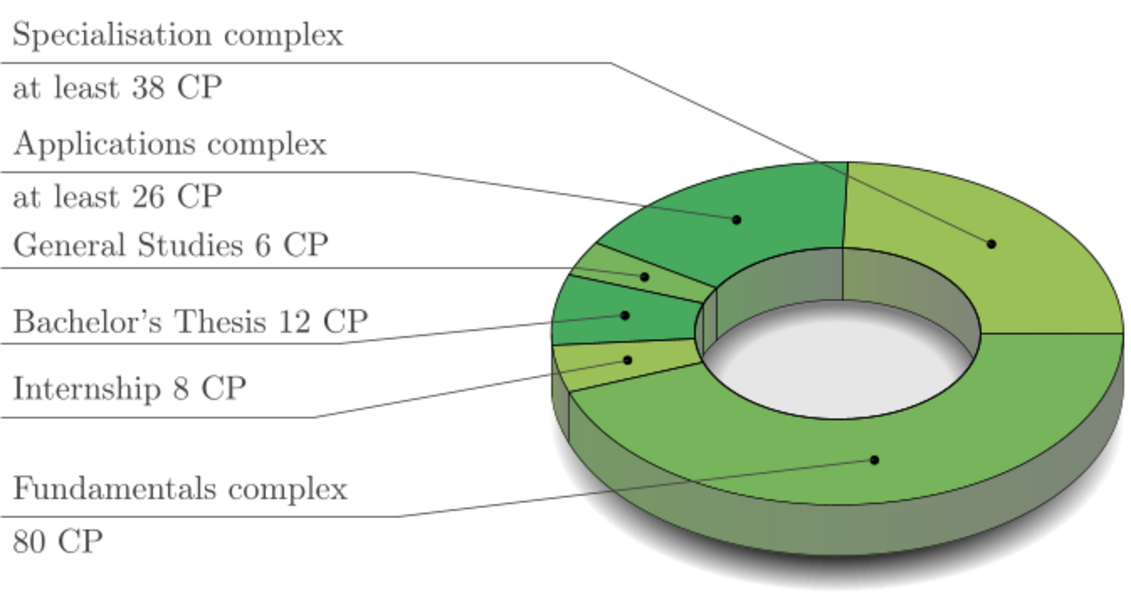
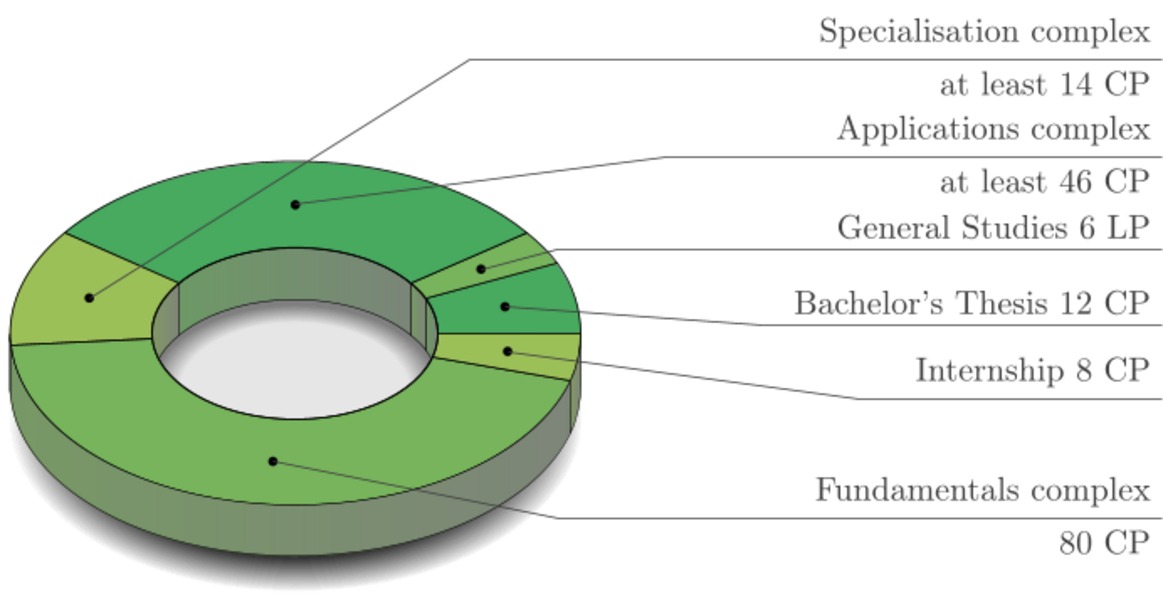
Application subject. There is one application subject in each of the Mathematics degree programmes. In the Economathematics degree programme, this is Economics. In the Mathematics degree programme, you can choose an application area and then take modules from that area. Most students choose Computer Science or Physics as an application subject, but Economics or Engineering can also be selected.
Interdisciplinary Studies and FÜS catalogue. Another module area is Interdisciplinary Studies (FÜS). These modules serve to teach content that goes beyond the subject curricula and are a mandatory part of all BTU study programmes. For Interdisciplinary Studies, you cannot choose modules that are included in your own study regulations or are too closely related to your own field of study. Instead, there is a catalogue in which the selectable modules for each study programme are listed. This can be found here.
Compulsory and elective modules. The study regulations also specify which modules are mandatory modules. These are modules that must be successfully completed by every student on the degree programme. In addition, there are also elective modules, you have to choose from a list of possible modules.
Standard study plan. The following figure shows an excerpt from the standard study plan (Mathematics degree programme, starting in the winter semester). There you can see the module number, the module title, and the number of CP for the module. You can also see in which semester you should take the corresponding module. For the module with the number 12868, for example, this would be the second semester.
To find out which modules are being offered in the coming semester, when the courses take place, and what the module content is, you can use various sources of information. First, there is the overview of all courses offered by Faculty 1, which you can also use to create a timetable according to your standard study plan.
A second way to find information about the modules is the Information Portal Teaching, which gives you access to all courses at the university.
Both of these resources also provide module descriptions for the respective modules. These descriptions contain information about the course content, the type and scope of the exam, the recommended literature, the credit points, and the prerequisites for the respective module.
Important addresses for the start
Enrolment
Enrolment is the start of the degree programme. Students are always enrolled on a specific study programme (e.g. Bachelor Mathematics or Bachelor Economathematics). You will receive a personal student ID number that will uniquely represent you for the duration of your studies at BTU.
BTU account
The BTU account must be activated once at www.b-tu.de/account/s-activate with the student ID number and the activation code. You will find this information in the welcome letter you received after enrolment. The BTU account allows you to register for all services at BTU and enables you to use the campus-wide WiFi (eduroam). The BTU account password must be changed regularly. You will receive an email from the BTU Computing Centre in good time.
General information about the BTU account can be found here, password changes and settings for the BTU e-mail can be made here.
Chip card
All students receive a chip card with their name and student ID number. This serves as a Student Identification Card in the canteen, for identification at the terminals of the Student Secretariat for printing out Certificates of Enrolment and as an electronic locking card for the computer pools.
BTU Mail
Upon enrolment, all students receive an email address in the form <short-name>@b-tu.de or FirstName.LastName@b-tu.de.
We strongly advise you to use this address for all BTU-related communication, e.g. for registering on lists and sending mails to lecturers. The mails should be checked regularly. To stay up to date, you can also have the mails forwarded to your private e-mail address.
BTU Online-Portal
The Online-Portal is used for module registration and deregistration. Module registration is also the binding registration for the module examination (and a prerequisite for examination participation). If it is not possible to take the examination, deregistration must also be made here, otherwise the examination will be counted as a failed attempt, i.e. as a "failed" examination.
BTU Information Portal: Teaching
A search engine for modules and seminars at BTU. For students, the Information Portal: Teaching is mainly used to search for seminars for planning the (upcoming) semester. For example, you can search for a specific module using the module number and the corresponding seminars in the current semester are linked on the module description page.
BTU Moodle
Moodle is a course management software. Lecturers can create an entry for a seminar in Moodle and use it to manage course participants, assign appointments, send messages, upload materials or organise digital submissions. Almost all online courses are also made accessible via Moodle.
Moodle is the communication platform between lecturers and students; no module or examination registrations are made via Moodle.
Computer pools
The two Mathematics computer pools in the main building (HG 3.35 and HG 3.46) are available to all students on Mathematics degree programmes. The door locking system can be opened by touching it with the Student Identification Card. All students of Mathematics degree programmes can log in to the terminals of these computer pools with their BTU account. If you have any questions or problems in connection with the computer pools, please contact Mr Jähnert in the main building, room HG 3.55.
BTU CampusApp
The CampusApp provides comprehensive online functions of the university in one central location. The following functions are included in the app: Webmail, Moodle, news and events around the BTU, module management, timetable, Transcript of Records, BTU media platform, campus map with all buildings of all BTU locations, canteen meal plan, people search, access to the library, travel information.
BTU OwnCloud
BTU operates its own instance of "OwnCloud" (similar to Dropbox, OneDrive, Google Drive etc.). Files or folders can be shared with other students and lecturers. It is also possible to share content with external persons via a link.
IKMZ: Library and media centre
The Information, Communication and Media Centre (IKMZ) is home to both the University Library and the BTU Media Centre.
All BTU students can use the services of the IKMZ. You can read or borrow books and journals in the IKMZ reading rooms. All you need is your Student Identification Card. There are also a large number of online services offered by the IKMZ.
For example, many of the textbooks used in the basic Mathematics lectures are available for BTU students to download free of charge (access via the BTU network or from outside via VPN).
Timetable
As already mentioned, there is a table in the study and examination regulations that shows the distribution of the modules across the programme-related semesters. In principle, this distribution is not binding or mandatory. However, it makes sense to adhere to it, as certain content is a prerequisite or at least helpful for subsequent modules. It is recommended to complete around 30 credits in each semester.
In the Bachelor's degree programme, there are mainly mandatory modules, each of which is assigned to a semester in the standard programme plan. There are also optional modules, but they are not yet as numerous. A timetable for the respective semester can be found on the faculty's website or in the Information Portal: Teaching. Click on Courses in the Information Portal, then on Timetable for study programmes in the navigation on the left and search using the form.
Alternatively, you can first select the mandatory modules for the semester from the module catalogue, search for the corresponding course via the module number in the Infoportal-Lehre and find the dates. Then proceed in the same way for the optional modules and put together your timetable.
Exams and grades
Examinations, re-examination (MAP, MCA)
There are two types of module examinations. The final module examination (MAP) and the semester-long continuous assessment (MCA).
What is a final module examination (MAP)?
Modules with a MAP conclude with a written or oral final module examination at the end of the semester (examination period).
What is a Continuous Assessment (MCA)?
Modules with an MCA consist of several examination elements throughout the semester. These elements are assessed individually and an overall grade is calculated at the end of the semester.
How can I check that it is a module with MAP or MCA?
You can check this in the module description, which can be found via the Information Portal: Teaching. Here you can also find all other important information about a module
When do I have to register for the module?
Binding registration for the module and thus for the examination is required in the 1st - 3rd week of lectures! If you have to repeat an exam, you must register for re-examination a MAP. You must have registered for the re-examination at least one week before the examination period in which the re-examination takes place.
When can I deregister from the module?
For modules with MCA, deregistration from the module and thus from the examination is possible in the 1st - 3rd week of lectures. For modules with MAP, deregistration is possible up to one week before the examination period in which the examination takes place.
How and where can I register/deregister?
You can use your BTU account to register and deregister in the Online-Portal. In special cases (such as additional modules), you may need to contact Admissions and Registrar's Office.
Which module examinations can I register for/deregister from online?
You can register and deregister online for all modules of an examination regulation, including re-examination. Exceptions to this are module examinations for final theses as well as supplementary and additional modules. These must be registered with Team2 of Admissions and Registrar's Office (ground floor in the main building). You can also do this by email.
What are the requirements for admission to examinations?
You must be registered for the respective module. Admission depends on the fulfilment of the prerequisites required for the module. These prerequisites can be found in the module description of the module.
Grade overview and transcripts of records
A Transcript of Records can be accessed via the BTU account in the Online-Portal.
Please check your transcript of records regularly. Contact the Admissions and Registrar's Office if you have any questions regarding the data issued on the Transcript of Records.
Time schedules
Lecture and examination periods
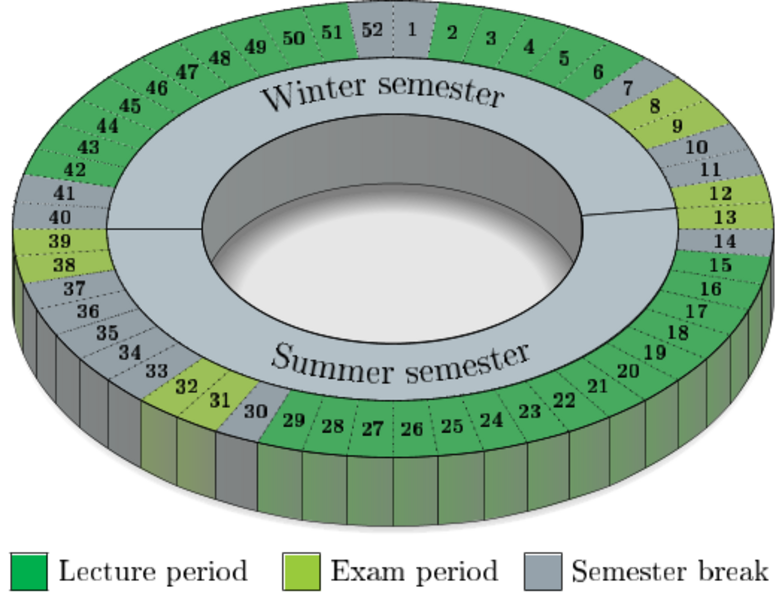
On the one hand, the semester consists of the lecture periods - 15 weeks in the winter semester and 15 weeks in the summer semester. On the other hand, it consists of two examination periods per semester, each at the end of the semester. Each examination period consists of a preparation week and two examination weeks. There is also a lecture and examination-free period.
Registering for the following semester
To ensure that you can continue your studies in the next semester, you must always re-register for the current semester within the re-registration period. You can find the re-registration deadlines in the semester timetable. Registering for the following semester takes place via the myBTU portal. Here you will find your fee notice, which you simply have to pay.
Semester timetable
Each semester has different periods and deadlines that should be adhered to. The semester timetables show the lecture period, examination periods and module registration and re-registration deadlines.
Stay abroad
BTU offers many ways to study for a semester or an academic year at a European partner university or an overseas university or to complete an internship abroad. Information events on studying abroad are organised twice a year at the beginning of each lecture period.
International Relations Office
The International Relations Office offers you an overview of various programmes with funding opportunities and advises you on questions about studying abroad.
Various programmes with funding opportunities are available for freely chosen stays abroad, final theses, research stays or participation in language courses: ERASMUS, STUDEXA and summer schools, FULBRIGHT, PROMOS, DAAD scholarship programmes and much more.
BTU also offers various language courses free of charge to accompany your studies
Take advantage of the offer - it's worth it!
Master's programme
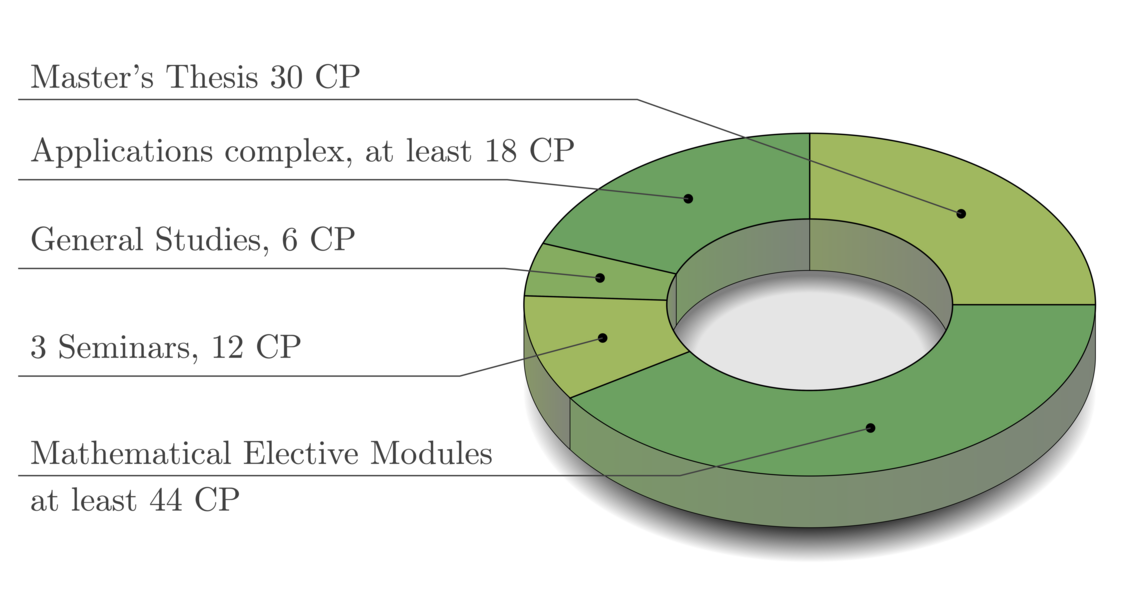
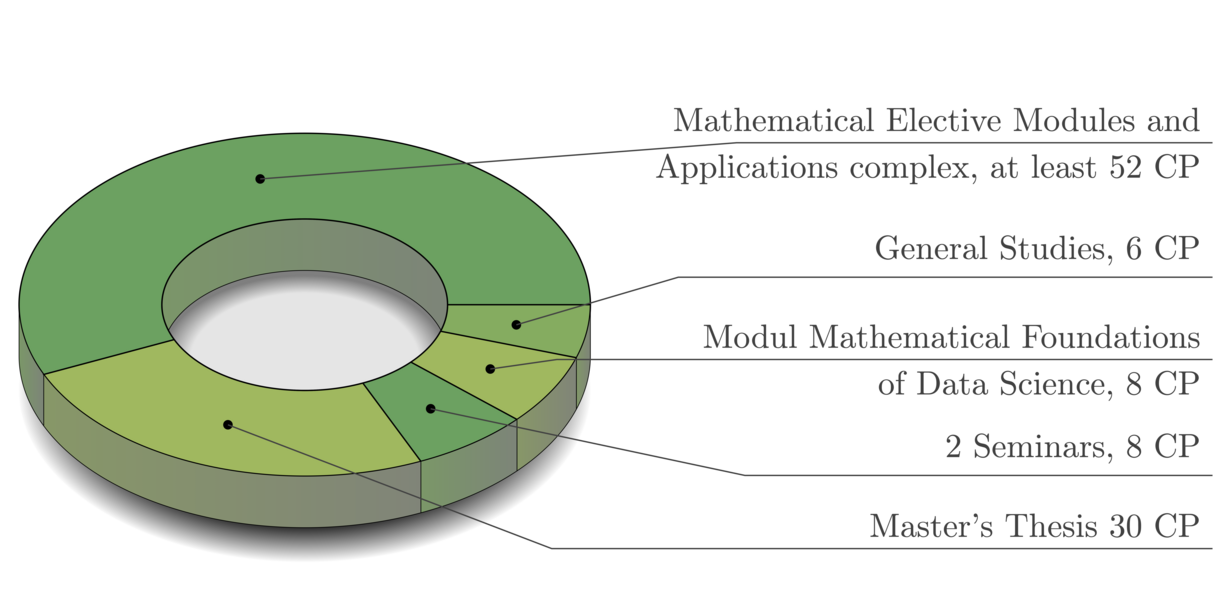
Building on a Bachelor's degree in Mathematics or Economathematics or a comparable degree, you can complete a Master's degree in Applied Mathematics (German-language degree programme), Mathematics (English-language degree programme) and Mathematical Data Science (English-language degree programme) at BTU. You can find a rough overview of the modules and applications you can elect from in the master's programmes here for Applied Mathematics, here for Mathematics and here for Mathematical Data Science.
Examination and study regulations
The course and content of the Master's degree programme are regulated in diffrent study and examination regulations.
- The "General Study and Examination Regulations for Master's degree programmes at BTU (RahmenO-MA)" regulate the organisation and implementation of the degree programme and examinations. It applies to all subjects.
The "Subject-specific examination and study regulations supplement the General Study and Examination Regulations.
- Subject-specific examination and study regulations (Master's programme Applied Mathematics)
- Subject-specific examination and study regulations for the (Master's programme Mathematics)
- Subject-specific examination and study regulations for the (Master's programme Mathematical Data Science)
Both sets of study regulations apply to students.
Student Body and Council of the Student Body
What is the Mathematics Student Body? The Mathematics Departmental Committee consists of all students on the Mathematics, Economathematics and Applied Mathematics study programmes.
What is the Mathematics Council of the Stundent Body? The Council for the Student Body (Fachschaftsrat/ short: FSR in German) endeavours to represent the interests of the student body in the best possible way. The members are contact persons for university problems or requests. The FSR's tasks also include arranging tutoring requests and other job offers as well as interesting information for Mathematics students. The FSR also regularly organises events such as games evenings and tutorials.
How do you become a member of the FSR? Once a year at the turn of the year, a general meeting of the Maths Student Body is held. Among other things, the new members of the FSR are elected there. Every student enrolled on a mathematics degree programme can stand for election.
Is it worth joining the FSR? The FSR is an honorary organisation. It does involve some work, but it also has some advantages. For example, you get to talk to professors and can help shape your study environment. In addition, membership of the FSR is a reason for extending your Bafög and it doesn't look bad on your CV either.
Contact. The best way to contact the FSR is via the email address fsr-mathematik(at)b-tu.de. The FSR office is located in room HG 3.24. You can get the latest information via the FSR email distribution list, which you can subscribe to here.
Contact persons
If you have any questions or problems relating to your studies in one of our three Mathematics study programmes, you can contact the following people/institutions:
Student Council:
fsr-mathematik(at)b-tu.de
Director of studies for Mathematics (Bachelor), Economathematics (Bachelor), Applied Mathematics (Master), Mathematics (Master): Prof. Dr Carsten Hartmann
+49 (0) 355 69-4150
carsten.hartmann(at)b-tu.de
Director of studies for Mathematical Data Science: Prof. Dr. Michael Breuß
+49 (0) 355 69 2086
math-data-science-ms@b-tu.de
Examination board: Prof. Dr Ralf Wunderlich
+49 (0) 355 69-4812
ralf.wunderlich(at)b-tu.de
Programme coordination Mathematical Data Science und Mathematics: Touhid Ahmed Chowdhury
+49 (0)355 69 3815
math-data-science-ms@b-tu.de
mathematics-ms@b-tu.de
Subject-related counsellor: Dr Robert Scheffler
+49 (0) 355 69 2444
robert.scheffler(at)b-tu.de
Admissions and Registrar's Office: Service Team 2
+49 (0) 355 69-5602
studium+serviceteam2(at)b-tu.de