
Welcome to the BTU – You have come to the right place!
Unlike large technical universities, we offer optimal conditions for your successful studies. Preceding the admission and enrolment phase, we provide customized information and consulting services. We are known for our excellent all-round student care and the uncomplicated, personal communication between lecturers and students.
Discover BTU
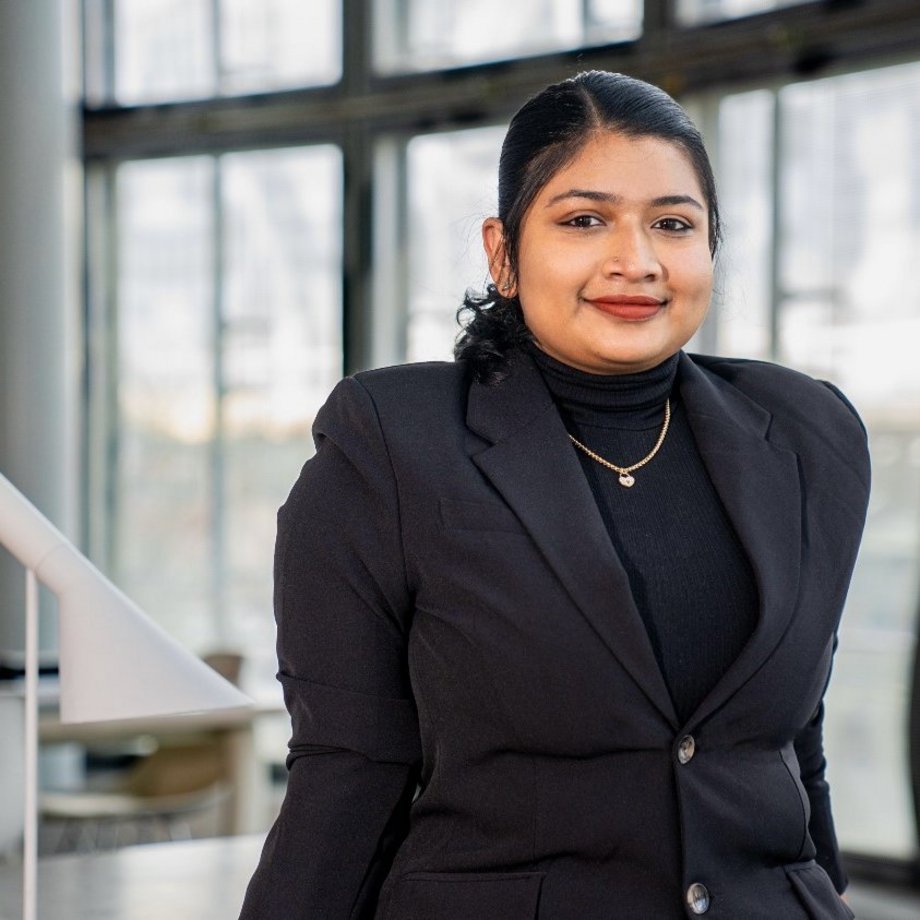
BTU is the only university I wanted to get into. It is young, modern, research oriented, innovation driven, with a strong focus on start-ups, and has super cool international professors. It´s got a library that feels like the future, and an incredible community of students from all over the world!
Living in Cottbus has felt like finding a quiet corner of the world where i could focus, grow, and feel at home. Beyond the city, BTU gave me not only the knowledge, but also friendships and experiences that shaped my time in Germany in a quite unique and interesting way.
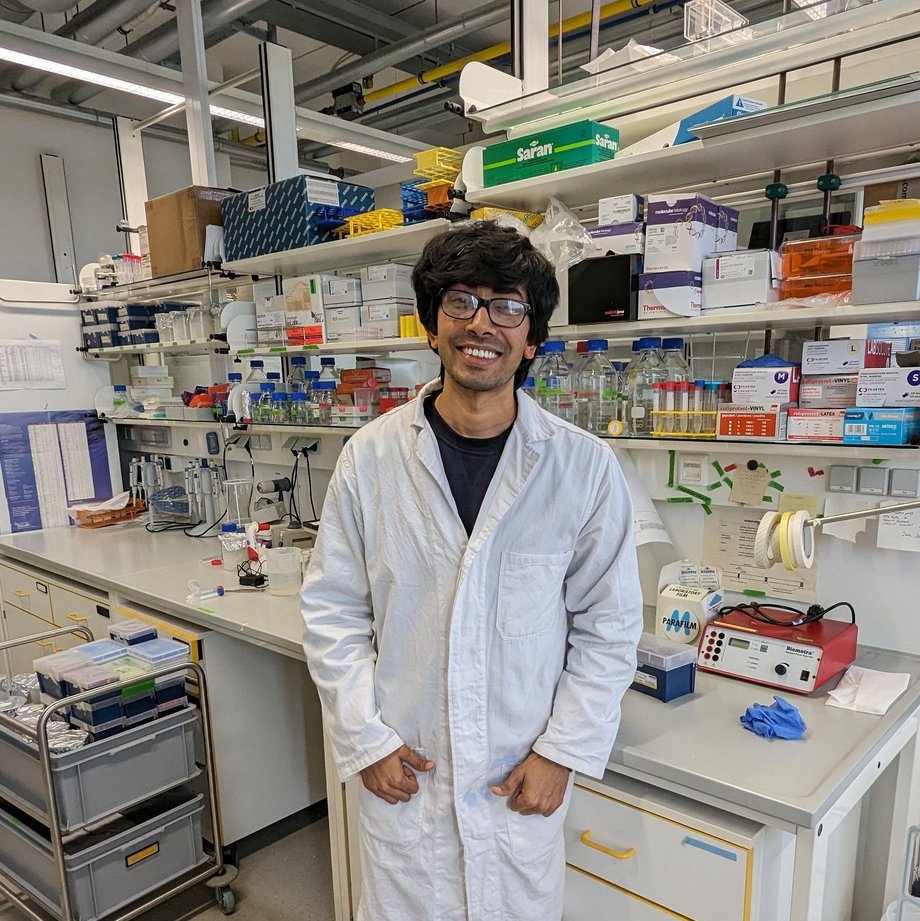
My M.Sc. in Biotechnology helped me find my passion in Enzyme Technology. Inspired by my professor´s work, I did my thesis on discovering novel biocatalysts for the synthesis of drug metabolites. I had a great experience working with a wonderful team of scientists and international peers. During the Master phase, I gained sound theoretical knowledge and strong hands-on experience in research.

As a PhD chemist, I couldn't have imagined a better place to do my doctoral thesis. BTU offers a unique research environment with well-equipped laboratories and competent, committed teaching staff. The town of Senftenberg also impresses with its peaceful atmosphere and proximity to the lake - a perfect balance to research.
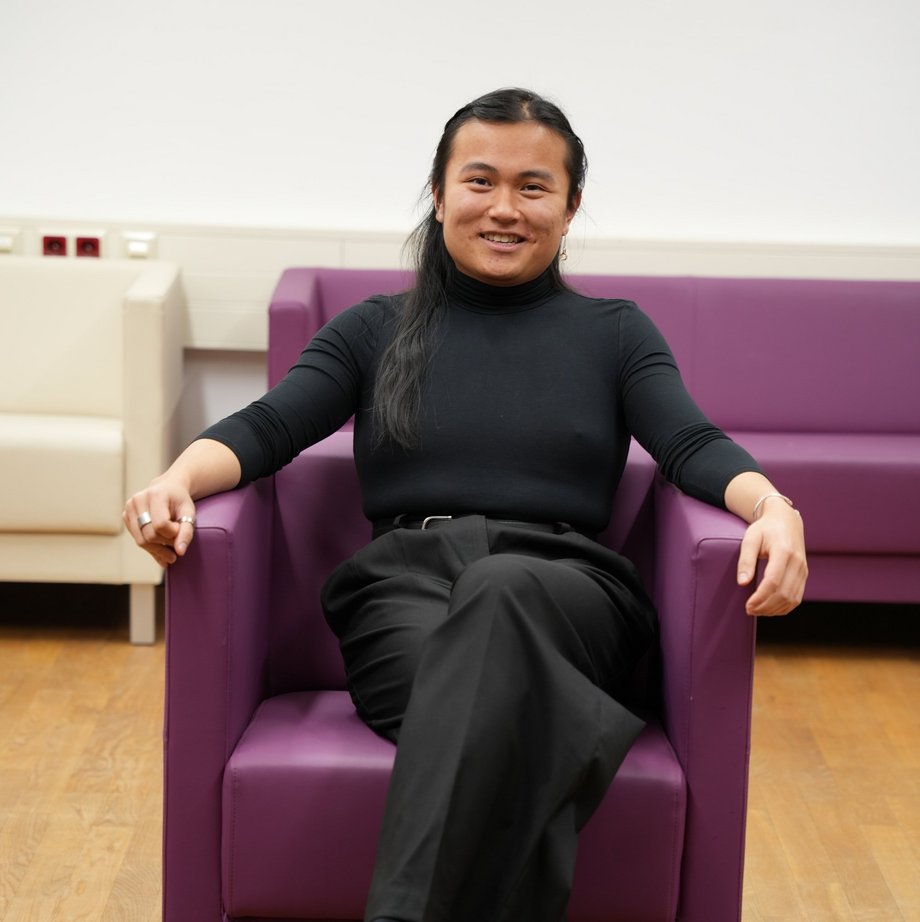
Studying Instrumental and Vocal Pedagogy at BTU as an international student has opened doors artistically and professionally. The program blends music and teaching, with great support, modern facilities, and a choice between classical or popular music.
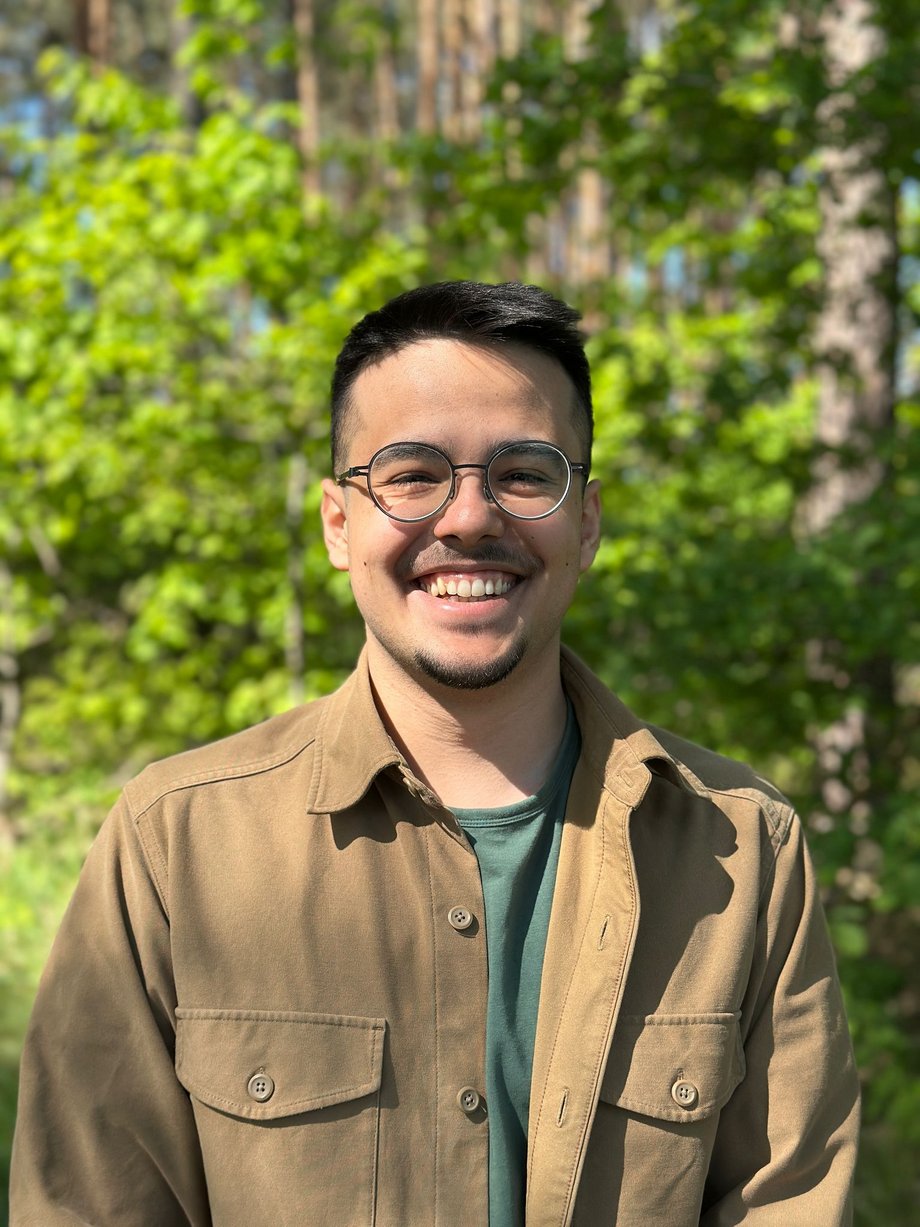
What I like about BTU is the relaxed atmosphere and the constant support – both academically and personally. There are lots of great activities and events outside of classes where you can meet new people. Honestly, what more could a student ask for?

The intensive language course “Bridge to Studies” has prepared me well for my studies in business administration. I also work as an office assistant at the Center for Hybrid Electric Systems (Chesco) at the BTU, which helps me finance part of my studies. BTU enables me to develop further and gain not only knowledge but also many wonderful personal experiences, such as the recent exchange with others at the Decarbondays.
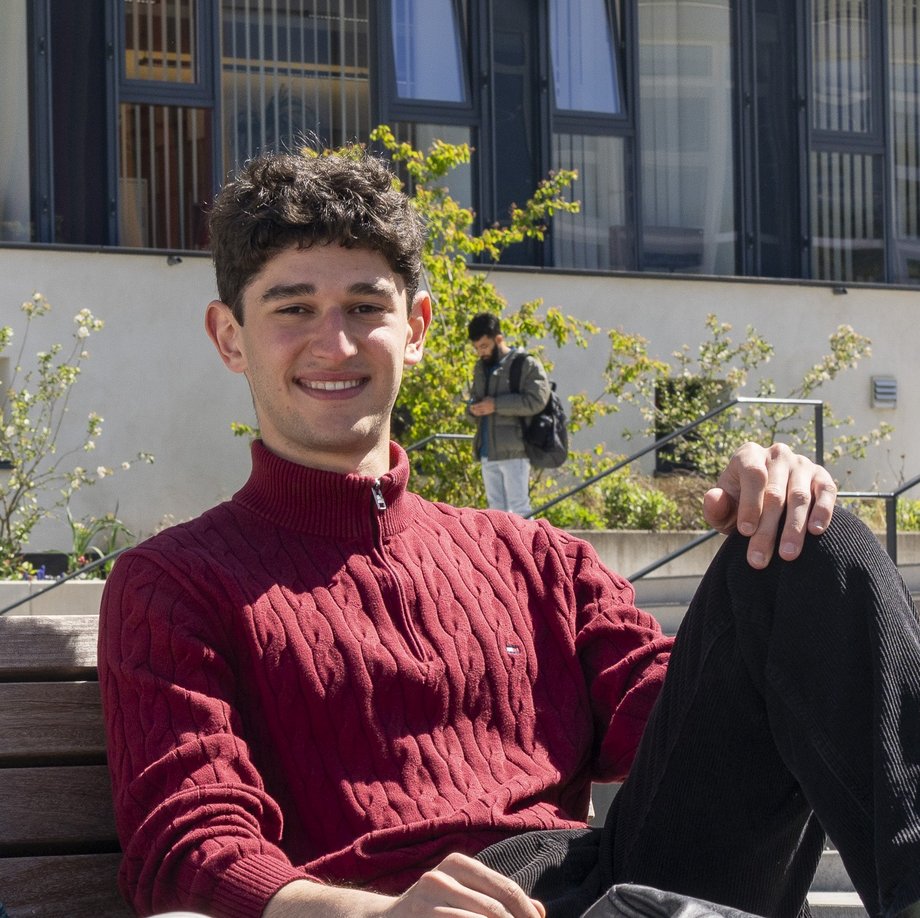
I have long been interested in energy generation, the sustainable use of energy and the future of energy technology. There are many exciting career opportunities in the energy sector in Germany. Our faculty works closely with various companies and research institutions, which opens up many interesting future prospects for students. I particularly like the atmosphere at the university. You can approach lecturers with questions at any time, and they really do take the time to help.
Discover our Study Programmes

Frequently Asked Questions
What will the summer semester be like?
The BTU sees itself as a face-to-face university and plans to hold the 2022 summer semester in regular academic mode. The opening of our university stands for joint learning, creative exchange and a lively campus life. The BTU has taken all the necessary precautions to ensure that face-to-face teaching can be carried out responsibly. We respond to current changes in the pandemic by offering flexible teaching and learning formats.
In view of the ongoing restrictions on entry to Germany, exceptions from classroom teaching have been made for international students at degree programme level. Please contact your degree programme or lecturer for information on the options and general conditions that apply to your studies at the BTU.
(Status: 16.03.2022)
Why should I apply?
Besides the financial incentive, there are many reasons to apply for a scholarship. Here are just a few:
- Contacts to sponsors (usually companies) enable insights into professional life.
- If desired, sponsors can support scholarship holders in their search for an internship, the topic of their final thesis or offer them a future job (scholarship holders are not obliged to accept such an offer).
- Being a Deutschlandstipendiat is a quality feature in your CV, potential employers know about the programme.
- Networking with students from other programmes and with sponsors
- In a nutshell: You are doing something positive for your professional future!
Is there a right to the Deutschlandstipendium?
No. Each university decides for itself whether to offer the Deutschlandstipendium. If it decides to do so, the scholarship holders are selected by the committees of the universities on the basis of the established criteria. The university must make its selection on the basis of the legal requirements.
Why should I apply?
Besides the financial incentive, there are many reasons to apply for a scholarship. Here are just a few:
- Contacts to sponsors (usually companies) enable insights into professional life.
- If desired, sponsors can support scholarship holders in their search for an internship, the topic of their final thesis or offer them a future job (scholarship holders are not obliged to accept such an offer).
- Being a Deutschlandstipendiat is a quality feature in your CV, potential employers know about the programme.
- Networking with students from other programmes and with sponsors
- In a nutshell: You are doing something positive for your professional future!
What does ‘scientific writing’ mean?
Scientific writing means thoroughly analysing complicated issues and presenting them with reason and objectivity. Scientific work encompasses researching, excerpting, structuring, thinking about different interpretations, and testing theses. The skill of correcting and improving academic insight is central to the process of knowledge production.
Writing and working scientifically requires being concise. Succintly describe issues and references to familiar authors and theories in your own words. Be as to the point as possible, while still covering the topics in-depth.
This may feel time-consuming and unusual at first. Developing scientific writing skills takes time and effort. Associate professor Dr. phil. habil. T. Zoglauer, interim head of the chair, advises even experienced scientists typically write up to one page a day. You should estimate, at a minimum, the same number of working days as the number of pages you aim to submit.
What is ‘reading with reciprocity’?
In the context of higher education, the ‘reading with reciprocity’ assignment alters the usual assignment in which students write a critical analysis to learn both to identify arguments of another author’s ideas or work, and to evaluate them to avoid fallacies. Instead of criticizing and tearing arguments apart, students doing the ‘reading with reciprocity’ assignment elaborate on the text and see its positive practical implications regardless of the strengths of the arguments or whether they agree or disagree with the author. This enables students to learn more problem-solving skills and to put knowledge and ideas together in a collaborative and horizontal way.
In the ‘reading with reciprocity’ assignment, students shall pick three or four questions among the following to write a 1600-2000 words essay. Only the first question is mandatory to answer, the other ones as optional:
- What is the main purpose of the author and what arguments does she/he make?
- What are the strengths of the text you have read?
- If his/her ideas are implemented, what would be the positive effects on the world?
- What is useful in this text to your own work or future career?
- What can we further elaborate on the text to complement the author’s message?
- Which new arguments could be introduced based on the text?
- How do you imagine collaborating with the author to grapple the problems that he/she is trying to solve?
- What is this author saying that could be useful to your own thinking?
- How could the world benefit from his/her main ideas?
What is ‘reading with reciprocity’?
In the context of higher education, the ‘reading with reciprocity’ assignment alters the usual assignment in which students write a critical analysis to learn both to identify arguments of another author’s ideas or work, and to evaluate them to avoid fallacies. Instead of criticizing and tearing arguments apart, students doing the ‘reading with reciprocity’ assignment elaborate on the text and see its positive practical implications regardless of the strengths of the arguments or whether they agree or disagree with the author. This enables students to learn more problem-solving skills and to put knowledge and ideas together in a collaborative and horizontal way.
In the ‘reading with reciprocity’ assignment, students shall pick three or four questions among the following to write a 1600-2000 words essay. Only the first question is mandatory to answer, the other ones as optional:
- What is the main purpose of the author and what arguments does she/he make?
- What are the strengths of the text you have read?
- If his/her ideas are implemented, what would be the positive effects on the world?
- What is useful in this text to your own work or future career?
- What can we further elaborate on the text to complement the author’s message?
- Which new arguments could be introduced based on the text?
- How do you imagine collaborating with the author to grapple the problems that he/she is trying to solve?
- What is this author saying that could be useful to your own thinking?
- How could the world benefit from his/her main ideas?
Is there a right to the Deutschlandstipendium?
No. Each university decides for itself whether to offer the Deutschlandstipendium. If it decides to do so, the scholarship holders are selected by the committees of the universities on the basis of the established criteria. The university must make its selection on the basis of the legal requirements.
Where can I get tested for Corona?
Test centres for antigen rapid tests as well as current information can be found on the homepage of the city of Cottbus or Senftenberg. Find an overview of all test centres in Brandenburg here.
(Updated 08/12/2021)
What is the link for the Application Portal Placement Online?
This link leads to our placement online portal.
Am I eligible to apply?
The scholarship is aimed at students and applicants for Bachelor's and Master's degrees.
Please remember that you must have at least two remaining semesters of standard study time ahead of you. In the case of university Bachelor's programmes, this usually means that you are in your 4th semester at the time of application (and in the case of university Master's programmes, in your 2nd at the most). For application-related degree programmes, corresponding standard periods of study apply.
The minimum performance value is ≤2.5.
Doctoral students and students in PhD programmes are not eligible to apply.
What is an interlibrary loan?
The interlibrary loan is a paid service of the University Library to obtain literature which is not available at any Cottbus or Senftenberg library from other libraries within the interlibrary loan.
Only registered users have access to The interlibrary loan of the University Library.What will the winter semester be like?
Our university stands for learning together, creative exchange and a lively campus life. As an attendance university, we are preparing the lectures, seminars and practical courses for the winter semester 2022/23 as attendance events. Please ensure in your planning that you can be on site at our university's campuses in time for the start of the semester.
We can counter the development of the Corona pandemic with a flexible and demand-oriented offer of hybrid teaching and learning formats.
(Status: 27.7.2022)Can I apply as a student applicant?
Yes. Please enclose an admission certificate for a Bachelor's or Master's degree programme at the BTU with your application. You can submit the certificate of study later.
Offer of self-test at the BTU for employees
The university management and the General Staff Council were able to work out a suitable procedure for the orderly distribution of these self-tests at short notice and in a spirit of trust. Unfortunately, the BTU does not have enough tests available to offer all employees a self-test every day.
We would like to outline the procedure for issuing them briefly and clearly:
- each employee performing duties in presence can receive a self-test once a week - if available at the office.
- employees at the Zentralcampus and Sachsendorf sites receive their self-tests at the ZC security lodge in the main building. They are issued here from Monday to Friday between 9 a.m. and 1 p.m.
- employees of the Campus in Senftenberg receive their self-tests at the location of the security loge in Senftenberg at the main entrance Universitätsplatz. They are issued here Monday to Friday between 9 a.m. and 1 p.m.
- employees at the other BTU locations will receive an appropriate contingent by mail/courier.
- collective pick-up at the guard locations is not possible.
- the employee's name and structural unit must be provided at the time of pickup.
- the pick-up will be noted on a site-specific name list (with indication of the structural unit) available to the guard protection employees in order to avoid duplicate pick-ups.
- the tests are subsequently carried out by the employees individually and not site-related. Corresponding instructions for handling can be found here.
The self-tests are intended for on-duty use to reduce the risk of possible corona infection at BTU. If you have a positive self-test result, please observe the following:
- please do not enter any BTU buildings and initially perform your duties from home.
- immediately contact your responsible health office and follow their instructions (if necessary, perform a PCR test for control).
- inform the crisis management team (krisenstab+personal(at)b-tu.de) in the event of a positive PCR test result for contact follow-up at the BTU.
- In the event of a negative PCR test result, follow the instructions of the Health Department. If a quarantine is not declared, regular attendance in presence change operation may resume.
We hope to expand this test offer successively, depending on availability of self-tests in the coming weeks and thus to be able to offer self-tests in advance for various event formats (e.g. also with students and guests of the BTU).
Furthermore, we would like to point out the possibility that all citizens can also be tested for the coronavirus in the municipal test centers. On the website: https://brandenburg-testet.de/bb-testet/de/ you will find an overview of testing centers in your area.
How do I order literature through interlibrary loan?
You can place your interlibrary loan requests directly from the library catalogue.
You also have the option to search directly through the KOBV-Portal (KOBV interlibrary loan) and to order from there or in case of journal articles directly via the journal database .
A guide to interlibrary loan can be found on the relevant website.
Important information regarding the automated interlibrary loan have been put together in a special tutorialWho reads the data from the system?
Four persons of the university management and four persons of the general staff council have been appointed who are authorized to read the data. Of these eight persons, one person of the university administration and one person of the Staff Council will jointly read the list of contacts from the system on the order of the Health Office.
What are the current conditions for attending face-to-face courses?
Our hygiene concept ensures safe studying in presence. Please actively contribute to this by observing the general hygiene rules and wearing a medical mask inside the BTU buildings.
The 3G rules for attending courses have expired.
Please note that the information on the applicable regulations is updated on an ongoing basis.
(Status: 13.04.2022)
Notes on the ventilation of rooms at the BTU
In the course of using rooms at the BTU during the ongoing corona pandemic, regular and adequate air exchange must be ensured. For this purpose, the following recommendations should be observed, which will ensure adequate air exchange:
- During physically light activity such as office work or teaching, increase ventilation by constantly tilting windows or shock ventilation.
- Always ventilate at the beginning of the activity and then regularly:
- Office rooms with normal occupancy (8-10 m² per user) shock ventilation at least every 30 minutes.
- seminar rooms with more than 15 users: at least every 20 minutes.
- depending on the season, the airing time should not be less than 10 minutes in summer and 3 minutes in winter.
- if the windows in seminar rooms are constantly tilted, shock ventilation should take place every 45 minutes after each unit, but at least every 60 minutes additional air circulation systems are only a supplement to the above recommendations.
In addition, the ventilation calculator recommended by the Federal Ministry of Labor, Social Affairs and Family can provide assistance in the correct ventilation of rooms. The ventilation calculator is available at the following link: https://www.bgn.de/lueftungsrechner/.
If you still have unanswered questions about the specific ventilation behavior in individual rooms, you may also consider consulting the relevant occupational safety specialist. Please contact the person responsible directly.
When are the scholarships announced?
The BTU only awards Deutschlandstipendien in the winter semester. In general, the call for applications is published on the BTU website at the end of June.
Will the scholarship be taken into account for BAföG?
No. BAföG and the Deutschlandstipendium are two complementary programmes. In principle, students can claim both funding opportunities at the same time without deductions. A deduction is only made if a total amount corresponding to a monthly average of 300 euros is exceeded due to the simultaneous receipt of other scholarships. The usual principles of asset imputation apply to saved scholarship funds, i.e. the imputation-free limit of 5,200 euros is not increased when a scholarship is received.
To what extent can a refugee background play a role in the selection?
Special social, family or personal hurdles, the overcoming of which should be taken into account in the selection process, also include experience of flight or political persecution.
What are the costs for the complete study program?
280 € (as of 11.2022)
Is there a documentation / manual for the web app?
Yes, at the Infopage on the Web-App BTU-Kontaktnachverfolgung you will find the versions for Android and iOS (for the time being only in German versions)
For how long will my data be stored?
4 weeks
How should I structure a written paper?
Every written paper contains a cover sheet, body of text, references, and a declaration of academic honesty.
- Cover Sheet: Includes the title of the paper, author’s name, study programme, number of semesters, and information on the lecture or seminar (module number, lecturer). Download the chair’s Word template (DOT file) by saving it on your device (right click the link → select Save Link as) and open in a word processing program.
- Body: A structured text organized according to its style, purpose, and context. Different types of text include: commentary, scientific paper, literature study, book or film review, essay, article, blog entry, et al. PDF | Text types with explanations
- Scientific texts are published in academic journals or books (e.g. papers, comments, or literature studies). When citing other texts, including non-scientific ones, avoid colloquial expressions. Prioritise the correct presentation of arguments and facts.
- If you use figures or graphics, a list of figures and tables is mandatory. Additional attachments include interview data or empirical data you collected yourself or that you want to highlight.
How do breakout spaces work during a video conference?
What is a breakout space (or breakout room)?
It is possible to divide a group of conference participants into several smaller groups using so called ‘breakout rooms’. This allows them to interact in smaller groups for a certain period of time. Afterwards all participants ‘automatically’ rejoin the larger virtual conference room.
How can I prepare a breakout room?
Only moderators may prepare breakout rooms, most likely your lecturers. As a student your are most often a ‘participant’ of a virtual conference room, if not assigned a different role. As a participant you might get ‘invited’ to join a breakout room—you have to accept the invitation to join the room, which basically works the same as the larger virtual conference room, only with less people. By default, here, you will have more ‘rights’ as you switched your ‘role’ from participant to ‘moderator’; so you are able to use more of the functions provided (e.g. share your screen, upload slides, share an external video).
What is the purpose of a breakout space?
In teaching, it can enable working in smaller groups. For instance, you’d be able to discuss given questions, document your ideas on your shared notes and prepare to present them in the larger round. Remember to copy everything you need afterwards somewhere else because all your notes will be gone once the time of the breakout room has run out!
Will the scholarship be taken into account for BAföG?
No. BAföG and the Deutschlandstipendium are two complementary programmes. In principle, students can claim both funding opportunities at the same time without deductions. A deduction is only made if a total amount corresponding to a monthly average of 300 euros is exceeded due to the simultaneous receipt of other scholarships. The usual principles of asset imputation apply to saved scholarship funds, i.e. the imputation-free limit of 5,200 euros is not increased when a scholarship is received.
What does ‘scientific writing’ mean?
Scientific writing means thoroughly analysing complicated issues and presenting them with reason and objectivity. Scientific work encompasses researching, excerpting, structuring, thinking about different interpretations, and testing theses. The skill of correcting and improving academic insight is central to the process of knowledge production.
Writing and working scientifically requires being concise. Succintly describe issues and references to familiar authors and theories in your own words. Be as to the point as possible, while still covering the topics in-depth.
This may feel time-consuming and unusual at first. Developing scientific writing skills takes time and effort. Associate professor Dr. phil. habil. T. Zoglauer, interim head of the chair, advises even experienced scientists typically write up to one page a day. You should estimate, at a minimum, the same number of working days as the number of pages you aim to submit.
To what extent can a refugee background play a role in the selection?
Special social, family or personal hurdles, the overcoming of which should be taken into account in the selection process, also include experience of flight or political persecution.
How do breakout spaces work during a video conference?
What is a breakout space (or breakout room)?
It is possible to divide a group of conference participants into several smaller groups using so called ‘breakout rooms’. This allows them to interact in smaller groups for a certain period of time. Afterwards all participants ‘automatically’ rejoin the larger virtual conference room.
How can I prepare a breakout room?
Only moderators may prepare breakout rooms, most likely your lecturers. As a student your are most often a ‘participant’ of a virtual conference room, if not assigned a different role. As a participant you might get ‘invited’ to join a breakout room—you have to accept the invitation to join the room, which basically works the same as the larger virtual conference room, only with less people. By default, here, you will have more ‘rights’ as you switched your ‘role’ from participant to ‘moderator’; so you are able to use more of the functions provided (e.g. share your screen, upload slides, share an external video).
What is the purpose of a breakout space?
In teaching, it can enable working in smaller groups. For instance, you’d be able to discuss given questions, document your ideas on your shared notes and prepare to present them in the larger round. Remember to copy everything you need afterwards somewhere else because all your notes will be gone once the time of the breakout room has run out!
What forms of work are possible in alternating presence?
The organization of the work in the respective area must be adapted in terms of time, location and content, taking into account the Corona recommendations for action in alternating attendance. It must be ensured that the area of responsibility remains capable of acting even in the event of a prescribed quarantine (e.g. weekly change of permanently assigned working groups). Here, the departments independently find their appropriate organizational form. It is possible to provide work services flexibly in terms of time and location, both at the workplace at BTU and outside BTU. This time flexibility is made possible by the comprehensive definition of trusted working hours for all status groups during the corona pandemic. Fixed hours of availability can be arranged according to the needs of the departments. The supervisor is responsible for ensuring that employees have access to all necessary information and coordination processes in their respective areas of responsibility.
Local flexibility is ensured by working in the context of so-called mobile working outside BTU premises, in the home environment or - if necessary - at other locations, using mobile technical equipment. If available, mobile technical equipment from BTU should be used.
Home office as a form of mobile working is to be considered a priority during restrictions on regular operations (currently alternating presence). Agreements entered into with BTU regarding teleworking and home office work will continue to exist in principle, but will be suspended during the period of restrictions on regular operation.
Agreements concluded with the BTU on teleworking and housing continue to exist in principle.
How can I access my library account?
Enter your library account details in the "Log in" at the top left. You will then see the link "Your account" and find all the information you need.
Your 11-digit user number is printed on your library card. The corresponding password is automatically assigned your date of birth in the format ddmmyy. Please change your password to protect your access to library applications from misuse.
You cannot work in the library system with your BTU account.
Who can apply?
Master's students who meet the requirements stated in the announcement can apply for the scholarships of the Lusatian Lignite Foundation.
Who can apply?
Eligible applicants are high-achieving students with a connection to the Lusatia region who are enrolled at Brandenburg University of Technology Cottbus–Senftenberg. Preference is given to students in technical degree programs who demonstrate academic and/or social engagement and whose standard period of study includes at least two remaining semesters.
What is the legal basis for the collection/storage/processing of data?
We collect and process the personal data in accordance with the SARS-CoV-2 Ordinance of the State of Brandenburg.
A summary of the responsible Ministry of Science, Research and Culture, under which conditions attendance events can be held at Brandenburg universities, can be found at: https://mwfk.brandenburg.de/mwfk/de/ministerium/umgang-mit-corona-pandemie/ (accessed on 02.10.2020)
What are the current conditions for attending courses on site?
There are currently no restrictions on holding courses on site. Please actively contribute to maintaining the status by observing the general hygiene rules.
(Status: 27.7.2022)
I have forgotten my password. What can I do?
You currently have to use the old catalogue to reset your password. Click on the "Login" button on the right and then "Forgot your password?"
What topics are discussed at the contract negotiations?
- Equipment (staff, premises, current material resources, start-up financing and investment funds)
- Personal issues
- Structure of the service or employment relationship (civil service or employment relationship, possibly fixed-term)
- Teaching duties
- Possible start of employment
- Relocation to the place of work or to the catchment area
Who are my negotiating partners?
- President
- Chancellor
- Dean, Faculty Officer
- Appointments Officer
After the negotiation has been completed, a contract under public law will be concluded between you, the university management and the dean.
What information am I expected to provide before the negotiations begin?
- Concept of future teaching and research activities and the equipment required for them
- Ideas about personal references
- current salary statement
- Possible contents for a target agreement
- possible start of work
Can I get a letter of entry?
Yes! All admitted international applicants can receive such a letter ("Bestätigung über die Notwendigkeit der Anwesenheit in Deutschland zum Zweck des Studiums") upon request. Please send a request to international+studystart(at)b-tu.de
Which requirements do I have to fulfil?
The Foundation supports students with a connection to the Lusatia region and the regional energy sector. Priority is given to applicants from technical degree programs, in particular geosciences and geoengineering, energy economics, electrical engineering, computer science, mechanical engineering, and environmental engineering.
Applicants must meet the following requirements:
Enrollment (summer semester) in a degree program at Brandenburg University of Technology Cottbus–Senftenberg
At least two semesters remaining within the standard period of study
Excellent academic performance as well as university and/or social engagement
Is it compulsory to wear a mouth and nose cover (MNB) in BTU buildings?
No, wearing a medical mask is voluntary in all BTU buildings.
Which groups of people are affected by the web app?
Employees, students, guests
How is the invoicing/payment of online conference fees handled?
You can submit online conference contributions in the current online mode in the same way as for invoice payment. Your supervisor will confirm the accuracy of the information by e-mail. Details of the procedure are available from the heads of the organizational units.
How and when will exams take place during the summer semester 2020?
Over the last few weeks, faculty members have been working at full speed to organize and plan examinations in the summer semester in such a way that all students have the opportunity to make up for cancelled examinations of the winter semester 19/20 and to complete the modules of the summer semester by the end of September. The basis for this is a resolution of the senate of 14 May 2020.
How and when will there be examinations in the winter semester 2021/22?
As usual, two examination periods are planned for the module final examinations (see semester schedule). As usual, dates for oral exams within a certain, module-specific timeframe will be arranged individually.
Further information on examination matters can also be found on the website of the Student Service "Examinations".What data is collected from the respective groups of people?
- Employees, students: university account ID, surname, first name, e-mail address, room, time
- Guests: name, surname, telephone number or e-mail address, room, time
Will my data be used for any other purpose than that stated?
No.
How is my data stored?
Encrypted on the university's own servers
How can I apply?
You apply online via a special portal: to the online application portal
How is my scholarship treated for tax purposes?
The Scholarship Programme Act (Stipendienprogramm-Gesetz, StipG) was designed in such a way that Deutschlandstipendien are generally not income subject to tax or social security contributions.
Will the Deutschlandstipendium be taken into account for other social benefits (except BAföG)?
No. As a rule, the Deutschlandstipendium is not offset against other social benefits, such as »Unemployment Benefit II«. An exception is the receipt of housing allowance.
What happens to the Deutschlandstipendium if I am on leave from my studies?
During a leave of absence from studies for personal or family reasons, e.g. pregnancy or child rearing or to care for a close relative, the scholarship will not be paid. If you continue your studies, the grant period will be extended by the duration of the leave of absence. If a leave of absence is taken for a semester abroad or for a compulsory internship, the scholarship will continue to be paid. In this case, the period of approval is not extended.
What is the procedure for the university's own funding programmes? Do these fall under the exclusion of double funding?
Only if it's financial support and is based on talent and performance. For example, programmes to teach soft skills or interdisciplinary knowledge as well as mentoring programmes do not preclude funding.
How long will I be funded?
Funded students should have their backs free for as long as possible and be able to concentrate on their education. The sponsorship usually lasts at least two semesters and covers a maximum of the standard period of study. After one year, the university checks whether the scholarship holder still meets the eligibility criteria.
Can the Deutschlandstipendium also benefit refugees?
Students with a refugee background can also receive the Deutschlandstipendium if they are enrolled at a state-funded or state-recognised university in Germany that participates in the Deutschlandstipendium.
Support requests
Please include the following information with your support request regarding the faulty VPN login attempt/problem:
- Exact time (day, hour, minute)
- Your IP address (IPv4) – can be found at https://www.heise.de/netze/tools/meine-ip-adresse
- Type/version of the operating system on the affected computer
- Version of the Cisco Secure Client,
- Brief description of the error/problem (ideally: error message word for word).
How many rooms can be found in the app?
More than 3000, office rooms included. The QR-code you will find at lecture halls only (around 450 rooms and halls).
How should I prepare a screencast?
What is a screencast?
A screencast is a video of the visual content of your screen. Typically, a screencast also includes audio content, such as the recording of your voice when you give a talk. You are free to include a video feed from a webcam to show you as the person providing the talk.
What is the purpose of a screencast?
At the chair, we ask for screencasts as a form of an asynchronous presentation that can be shared with other students within the course and assessed by the lecturer as part of an examination. Recording a screencast offers a key advantage over a synchronous presentation: you can re-record your presentation if you are not happy with a result of an earlier recording.
How can I prepare a screencast?
Structure a screencast like you would structure a presentation—consider specifically welcoming your audience, introduction, a main body presenting facts, reasoning, the conclusions you draw and the questions that your argument raises and should be considered in a discussion.
A range of screencast production softwares exists. We recommend OBS – Open Broadcaster Studio, which is free, open source and available across platforms. Free tutorials are available amass. You may consider editing your recording in a video editing software afterwards, to remove disruptions, etc.How is my scholarship treated for tax purposes?
The Scholarship Programme Act (Stipendienprogramm-Gesetz, StipG) was designed in such a way that Deutschlandstipendien are generally not income subject to tax or social security contributions.
Will the Deutschlandstipendium be taken into account for other social benefits (except BAföG)?
No. As a rule, the Deutschlandstipendium is not offset against other social benefits, such as »Unemployment Benefit II«. An exception is the receipt of housing allowance.
How should I structure a written paper?
Every written paper contains a cover sheet, body of text, references, and a declaration of academic honesty.
- Cover Sheet: Includes the title of the paper, author’s name, study programme, number of semesters, and information on the lecture or seminar (module number, lecturer). Download the chair’s Word template (DOT file) by saving it on your device (right click the link → select Save Link as) and open in a word processing program.
- Body: A structured text organized according to its style, purpose, and context. Different types of text include: commentary, scientific paper, literature study, book or film review, essay, article, blog entry, et al. PDF | Text types with explanations
- Scientific texts are published in academic journals or books (e.g. papers, comments, or literature studies). When citing other texts, including non-scientific ones, avoid colloquial expressions. Prioritise the correct presentation of arguments and facts.
- If you use figures or graphics, a list of figures and tables is mandatory. Additional attachments include interview data or empirical data you collected yourself or that you want to highlight.
What happens to the Deutschlandstipendium if I am on leave from my studies?
During a leave of absence from studies for personal or family reasons, e.g. pregnancy or child rearing or to care for a close relative, the scholarship will not be paid. If you continue your studies, the grant period will be extended by the duration of the leave of absence. If a leave of absence is taken for a semester abroad or for a compulsory internship, the scholarship will continue to be paid. In this case, the period of approval is not extended.
What is the procedure for the university's own funding programmes? Do these fall under the exclusion of double funding?
Only if it's financial support and is based on talent and performance. For example, programmes to teach soft skills or interdisciplinary knowledge as well as mentoring programmes do not preclude funding.
How long will I be funded?
Funded students should have their backs free for as long as possible and be able to concentrate on their education. The sponsorship usually lasts at least two semesters and covers a maximum of the standard period of study. After one year, the university checks whether the scholarship holder still meets the eligibility criteria.
Can the Deutschlandstipendium also benefit refugees?
Students with a refugee background can also receive the Deutschlandstipendium if they are enrolled at a state-funded or state-recognised university in Germany that participates in the Deutschlandstipendium.
How should I prepare a screencast?
What is a screencast?
A screencast is a video of the visual content of your screen. Typically, a screencast also includes audio content, such as the recording of your voice when you give a talk. You are free to include a video feed from a webcam to show you as the person providing the talk.
What is the purpose of a screencast?
At the chair, we ask for screencasts as a form of an asynchronous presentation that can be shared with other students within the course and assessed by the lecturer as part of an examination. Recording a screencast offers a key advantage over a synchronous presentation: you can re-record your presentation if you are not happy with a result of an earlier recording.
How can I prepare a screencast?
Structure a screencast like you would structure a presentation—consider specifically welcoming your audience, introduction, a main body presenting facts, reasoning, the conclusions you draw and the questions that your argument raises and should be considered in a discussion.
A range of screencast production softwares exists. We recommend OBS – Open Broadcaster Studio, which is free, open source and available across platforms. Free tutorials are available amass. You may consider editing your recording in a video editing software afterwards, to remove disruptions, etc.Are there any special features regarding exam registration and deregistration?
Voluntary exam participation will be extended again in the winter semester of 2021/2022. This means that failure to appear for the examination will be regarded as a withdrawal. Nevertheless, all students who already know within the applicable deadlines that they will not take part, should cancel their registration in good time. This makes planning easier for the lecturers.
Please note that this does not result in any changes in the duration of validity of the prerequisites for MAP examinations already completed (§ 13 (2), sentence 2 RahmenO). As always, the prerequisites expire after two semesters. There are also no changes to the deadlines for taking free attempts (§ 17, sections 1 and 2 RahmenO).
Will the scholarship be taken into account for BAföG?
No. BAföG and the Deutschlandstipendium are two complementary programmes. In principle, students can claim both funding opportunities at the same time without deductions. A deduction is only made if a total amount corresponding to a monthly average of 300 euros is exceeded due to the simultaneous receipt of other scholarships. The usual principles of asset imputation apply to saved scholarship funds, i.e. the imputation-free limit of 5,200 euros is not increased when a scholarship is received.
How are the examination attempts evaluated?
Module examinations of the winter semester 2021/22 (MCA and MAP) that have not been passed will be considered as not having been taken. The result will not be evaluated and the attempt count will not be continued. This does not apply to examinations that were assessed as failed due to an attempt at cheating.
Please note that when exam results are reported, a "failed" or "did-not-show" is initially recorded. The post-processing of the entries by the Student Services may take a while until the entries are "cleaned up".
Please also take advantage of the expected last extension of the regulations to catch up on any remaining delay in exam participation and also to face difficult exams. For your support, the Central Academic Advising Office and the subject-specific academic advising offices will be happy to assist you.
Will the Deutschlandstipendium be taken into account for other social benefits (except BAföG)?
No. As a rule, the Deutschlandstipendium is not offset against other social benefits, such as »Unemployment Benefit II«. An exception is the receipt of housing allowance.
Are there special regulations for final theses?
The processing period for theses (Bachelor's/Master's) is extended by three months. This applies to all theses that were registered after 01 April 2020 and have not yet been submitted. If a further extension is required in individual cases for ongoing theses that do not fall under this, students can submit a corresponding application to the Student Services.
Can I also receive housing allowance parallel to the Deutschlandstipendium?
Yes. However, recipients of housing allowance must note that, like other scholarships, half of the Deutschlandstipendium is taken into account when calculating the annual income. For further questions on the topic of scholarships and housing allowance, please contact your local housing allowance office.
What is the current Covid-19 situation in Germany and where can I get detailed information about it?
The Federal Ministry of Health provides an overview of all current information regarding entry, vaccination and further protective measures around the Covid-19 pandemic.
https://www.bundesgesundheitsministerium.de/coronavirus.html
The city of Cottbus has set up a hotline where people who don't speak German can get in touch. Arabic, Persian, Russian and English are available.
This service is available from Monday to Friday from 10 a.m. to 12 noon and 2 p.m. to 4 p.m. The number of the hotline is 0355 / 612 4000.
General information collection City of Cottbus
Information about the Corona Virus City of CottbusUse of the University Library during the Corona Pandemic
Wie können ausgefallene Prüfungen des Wintersemesters 2019/2020 nachgeholt werden?
How will cancelled examinations for the winter semester 2019/20 be rescheduled?
Cancelled examinations from March 2020 can be made up in summer semester 2020 in different ways.
For cancelled examinations (MAP) from the winter semester, for which there is a regular offer in the first examination period of the summer semester, these dates are mostly used for catching up. For other cancelled examinations, alternative dates will be offered until the end of July if possible, provided that all hygiene measures are observed and the lecturers have not arranged other solutions with the students.
The additional examination period comprises two phases (22.06. – 05.07.2020 /06. – 26.07.2020). They are connected with two different deadlines for registration and de-registration. Please note that you have to re-register for all catch-up examinations (MAP) of the winter semester, as a withdrawal has been booked for cancelled examinations or for non-attendance for examinations in March 2020.
You can find an overview of the adjusted examination periods, the deadlines for announcing examination dates and changes in the information portal teaching as well as the deadlines for registration and de-registration in the summary table Examination Periods and Deadlines Summer Semester 2020 (Supplement).
The completion of MCA-modules should also be made possible until 19 July at the latest. A separate registration for the module is not necessary, as the module registration from winter semester 2019/20 has not yet been completed.
Additional information concerning exams in the summer semester 2020can be found on the website of the Admission’s and Registrar’s Office.
Where does scientific misconduct begin?
Plagiarism, idea theft, or falsifications can have serious consequences as scientific misconduct. Especially in teamwork, researchers share responsibility for the misconduct of their colleagues and can be held accountable for it. "Research & Teaching" has inquired about this with the German Research Foundation (DFG). According to the procedural rules of the DFG, scientific misconduct begins where there is a violation of scientific core duties "and this violation occurs in a blameworthy manner and with some weight". Gray areas include so-called "honest mistakes" or violations of good scientific practice, which, for example, are not covered as offenses in the procedural rules of the DFG for dealing with scientific misconduct or in the model statute of the German Rectors' Conference for safeguarding good scientific practice and dealing with scientific misconduct, due to their lack of seriousness.
Source: Henrike Schwab, Forschung-und-lehre.de
Further Infomationen can be found here: Zitieren statt Plagiieren.
How do I hand in my written papers?
E-mailing a digital version of your paper is sufficient. Please use a working e-mail address that accepts replies. Provide additional contact details in case of technical difficulties.
Please scan your declaration of academic honesty and add it to your paper (see: ‘What should I include in a declaration of academic honesty?’).
Name your file as:
[semester]_[1st word of the seminar’s name]_[your name].[file extension]
→ e.g. SS2018_How_Meyer.docIf you are asked to hand in a printed paper, please deliver it to the chair’s mailbox. The mailbox is in Lehrgebäude 10, box number 44. This is located in the room next to the beverage dispenser, near the entrance to Zwischenbau VI.
What kind of texts should I use?
With the onset of digital media, text production on the Internet has proliferated tremendously, including scientific and academic texts—‘Wikipedia’ serving as a perfect example. Additionally, some journals now publish exclusively online, while other scientists use blog entries to discuss their findings and hypotheses. This leads us to an entirely new intellectual culture, with knowledge becoming digital common property. Previously established methods of scientific quality assurance (proofreading books or journals) are changing.
This means the distinctions between what is literary and scientific writing, and what is popular and academic writing, are in flux (e.g. see The Third Culture: Literature and Science (1998) by Elinor S. Shaffer; or "Between fact and fiction: Demarcating science from non-science in popular physics books" (2003) by Felicity Mellor in Social Studies of Science 33, pp. 509-538).
We consider the decisive criteria of merit to be the verifiable presentation of arguments and facts. This includes context-sensitive handling of historically and institutionally contextualized meanings.
When writing a scientific paper, pay attention to the type of text(s) requested. See below for a list provided by the chair:
Which formalities apply when writing a paper?
Please note that the following formalities are mandatory when handing in a written paper:
- Font size: 12 pt
- Font: Times New Roman
- Line spacing: 1.5 lines
- Line format: ragged margin (‘left-justified’)
- Margin: top/bottom 2.5 cm; left/right 3 cm
- Page numbers: centered on top
We urge you to follow these guidelines in formatting texts for submission. This will allow your lecturer to focus on the content of your paper rather than being distracted by its form.Correct spelling is essential. Please note spelling conventions according to Duden Spelling Dictionary (24th edition and later or online) for German texts or a standard reference for English spelling conventions (e.g. The Oxford Dictionary). For finding grammatical mistakes within your text, you may also use the spell check included in your text processing program.
Further notes:
- Add page numbers and use the same font throughout the entire document.
- Use 6 pt or less for the space between paragraphs. Think carefully about starting a new paragraph and know its purpose.
- Select an italic typeface to emphasize. Choose bold typeface only for headlines. Use both typefaces sparingly.
- Separate citations longer than two lines into an isolated section (left/right margin: 0.5 cm; spacing before and after).
This chair offers you a pre-formatted DOT file that you may download (Click the link, then do a right click → Save as...). Save the file on your device and open it with Microsoft Office Word or a similar text processing program.
Which citation style should I use for my written papers?
There are a lot of different citation styles when it comes to quoting from professional literature and the preferences vary by departments and chairs.
At the chair of Technoscience Studies we prefer the ‘Author-Date’ style. For support, you will find attachments below. Please note that references in your document or paper need to be consistent!
The university library also gives you access to more information and software licences concerning various literature management programs.
Is the provision of personal data voluntary?
No, due to legal regulations the university must store the data for the purpose of contact tracing
What should I include in a declaration of academic honesty?
Every written paper needs to be accompanied by a signed declaration of academic honesty. This confirms that you have independently written your paper. Confirmation is validated by your signature.
Find downloadable templates below (in line with RahmenO-Ba and RahmenO-Ma § 12 (9) and § 24 (4)):
Where does scientific misconduct begin?
Plagiarism, idea theft, or falsifications can have serious consequences as scientific misconduct. Especially in teamwork, researchers share responsibility for the misconduct of their colleagues and can be held accountable for it. "Research & Teaching" has inquired about this with the German Research Foundation (DFG). According to the procedural rules of the DFG, scientific misconduct begins where there is a violation of scientific core duties "and this violation occurs in a blameworthy manner and with some weight". Gray areas include so-called "honest mistakes" or violations of good scientific practice, which, for example, are not covered as offenses in the procedural rules of the DFG for dealing with scientific misconduct or in the model statute of the German Rectors' Conference for safeguarding good scientific practice and dealing with scientific misconduct, due to their lack of seriousness.
What options do I have if students, staff or guests do not want to register via the web app when entering a room?
- The President has transferred the right of the house to teachers.
- Persons may be denied access.
- Teachers can refuse face-to-face teaching and switch to online seminars - teachers are entitled to cancel face-to-face teaching.
- In case of escalation the security service can be called.
German medical professionals visit City to learn more about ultrasound education
Dezember 2017
The visit provided an opportunity to learn about best practice and how ultrasound is taught within an academic setting in the UK
Medical professionals from Germany came to City towards the end of the year to investigate how ultrasound is taught and practiced in the UK in order to help developed training for the profession in Germany. (CITY)Is there a hotline if there are problems or I have questions?
Yes, a ticket system is available by e-mail at it-support(at)b-tu.de
How can I enrol at BTU?
After receiving your admission, you can immediately start the online enrolment process. You can get all the information you need here: Welcome and Registration Point.
Do I also have to register in my own office/lab?
Yes, the web app evaluates the contacts at BTU in a whole.
How is my scholarship treated for tax purposes?
The Scholarship Programme Act (Stipendienprogramm-Gesetz, StipG) was designed in such a way that Deutschlandstipendien are generally not income subject to tax or social security contributions.
Which changes will apply for the (re)examinations of the summer semester?
Lecturers first examined whether other formats could be offered instead of an examination in presence. They initially concentrated on the first examination period, the second will be revised immediately afterwards. If this means that a different submission deadline has been set, e.g. for a term paper instead of a written exam, the examination period was extended for this purpose.
For examinations of the summer semester, the dates already set (examination days) will be maintained as far as possible. Any necessary changes (change of examination form, examination day, room, time) will be announced by your lecturers and published promptly in the information portal teaching and in the online portal. In the event of necessary date changes, the first examination period will be extended until 13 Sept. 2020 and the second examination period until 30 Sept. 2020.
Additional information concerning exams in the summer semester 2020 can be found on the website of the Admission’s and Registrar’s Office.
Do I have to use this technical solution or are there alternatives? Because I • do not have a mobile phone • do not have a QR Code scanner or • do not want to use my data volume for this.
You do not need a mobile device. You can enter your data on any internet-capable terminal at www.b-tu.de/kontaktnachverfolgung. You can also use WIFI eduroam on our campus:
How can the staff of the University Library be reached?
The library staff can be reached on site, by phone or by e-mail. If you have specific questions, we will be happy to advise you as part of our "Ask an Expert" consultation service.
Special regulations for examinations in the summer semester 2022
In the summer semester 2022, there will be no special regulations regarding exam participation and grading due to Corona. Detailed information can be found on the pages of the Student Services.
(Status: 16.03.2022)Does the Deutschlandstipendium affect the contribution to the statutory health insurance?
The Deutschlandstipendium has no effect on the contribution to the statutory health insurance as long as the scholarship holder is compulsorily insured in the statutory health insurance (usually until the completion of the 14th semester or the 30th year of life). The case is different if the scholarship holder is (subsequently) insured as a voluntary member. For voluntary members, the legislator has prescribed the levying of minimum contributions. If the income of the insured person subject to contributions (this also includes scholarships) exceeds an assessment basis specified by the legislator, the corresponding income is subject to contributions.
A room is missing in the web app. Who can I contact?
Please register manually in the electronic contact tracking system. You can reach the ticket system by e-mail at it-support(at)b-tu.dexxx
Does this mean that the paper lists that were previously used in the offices and courses are no longer needed?
Yes. The paper lists are no longer necessary. However, the occupancy planning for cleaning planning are still necessary.
There is no QR code at my location. Who can I contact?
You can reach the ticket system by e-mail at it-support(at)b-tu.de
I have accidentally entered incorrect data (e.g. a wrong telephone number). Can I correct this?
Yes, use the web app: https://www.b-tu.de/kontaktnachverfolgung
I forgot to enter my details before entering the premises. What should I do now?
Use the web app and enter your data afterwards: https://www.b-tu.de/kontaktnachverfolgung
How do I register?
It is best to refer to the Web App documentation at our page on the Web-App BTU-Kontaktnachverfolgung you will find the versions for Android and iOS (for the time being only in German versions)
What should I bear in mind when applying online?
You have three weeks between the publication of the call for applications and the application deadline to get all the documents and fill in the online form. Please start your application in a timely manner! There are only a few documents involved, which you can usually obtain easily.
Uploading the attachments takes some time, so we recommend a step-by-step upload. Please avoid uploading all documents only on the last day of the application period. It would be a pity if you are too late and the application is not accepted.
Am I eligible to apply?
The scholarship is aimed at students and applicants for Bachelor's and Master's degrees.
Please remember that you must have at least two remaining semesters of standard study time ahead of you. In the case of university Bachelor's programmes, this usually means that you are in your 4th semester at the time of application (and in the case of university Master's programmes, in your 2nd at the most). For application-related degree programmes, corresponding standard periods of study apply.
The minimum performance value is ≤2.5.
Doctoral students and students in PhD programmes are not eligible to apply.
Does the Deutschlandstipendium affect the contribution to the statutory health insurance?
The Deutschlandstipendium has no effect on the contribution to the statutory health insurance as long as the scholarship holder is compulsorily insured in the statutory health insurance (usually until the completion of the 14th semester or the 30th year of life). The case is different if the scholarship holder is (subsequently) insured as a voluntary member. For voluntary members, the legislator has prescribed the levying of minimum contributions. If the income of the insured person subject to contributions (this also includes scholarships) exceeds an assessment basis specified by the legislator, the corresponding income is subject to contributions.
Can I also receive housing allowance parallel to the Deutschlandstipendium?
Yes. However, recipients of housing allowance must note that, like other scholarships, half of the Deutschlandstipendium is taken into account when calculating the annual income. For further questions on the topic of scholarships and housing allowance, please contact your local housing allowance office.
Can the Deutschlandstipendium continue to be used if an internship or a stay abroad is completed during this time?
A distinction must be made here between compulsory internships at home and abroad and other internships. Compulsory internships at home or abroad are integrated into the degree programme and do not prevent the scholarship from being paid out. The same applies to subject-related stays abroad. If the scholarship holder takes leave of absence for other internships that are not provided for in the respective study regulations, the scholarship will not continue to be paid during this time.
Is parallel scholarship funding possible?
This depends on the amount and type of scholarship funding. As a general rule, anyone who already receives talent- and performance-based material support averaging 30 euros or more per month is not eligible for a Deutschlandstipendium.
Is participation in a university committee a reason for extending the funding period?
Similar to BAföG, participation in a university committee or in a committee of student self-administration can be a reason for extending funding. This only applies to elected members. The duration of the extension depends on the amount of time the activity causes.
What are the criteria for selecting students?
The Scholarship Programme Act (»Stipendprogramm-Gesetz, StipG«) and the Scholarship Programme Regulation (»Stipendienprogramm-Verordnung, StipV«) stipulate the funding criteria that the universities can develop. The Deutschlandstipendium is intended to support talented and capable students. School and academic performance are important criteria for assessing the ability and talent of applicants. However, the eligibility criteria also include awards and prizes, previous employment and internships, extracurricular or extracurricular commitment and overcoming biographical obstacles, such as those caused by origin. The application and selection process should take into account the applicant's entire personality.
What can I study at BTU Cottbus-Senftenberg?
There are over 70 degree programmes at the BTU! The wide range of courses on offer spans from architecture and biotechnology to industrial engineering and is summarised on the overview pages study programmes, Bachelor's degree programmes and Master's degree programmes. In addition, BTU offers 21 English-language degree programmes (Bachelor, Master, PhD), as well as double and joint degrees with partner universities worldwide.
What should I bear in mind when applying online?
You have three weeks between the publication of the call for applications and the application deadline to get all the documents and fill in the online form. Please start your application in a timely manner! There are only a few documents involved, which you can usually obtain easily.
Uploading the attachments takes some time, so we recommend a step-by-step upload. Please avoid uploading all documents only on the last day of the application period. It would be a pity if you are too late and the application is not accepted.
What kind of texts should I use?
With the onset of digital media, text production on the Internet has proliferated tremendously, including scientific and academic texts—‘Wikipedia’ serving as a perfect example. Additionally, some journals now publish exclusively online, while other scientists use blog entries to discuss their findings and hypotheses. This leads us to an entirely new intellectual culture, with knowledge becoming digital common property. Previously established methods of scientific quality assurance (proofreading books or journals) are changing.
This means the distinctions between what is literary and scientific writing, and what is popular and academic writing, are in flux (e.g. see The Third Culture: Literature and Science (1998) by Elinor S. Shaffer; or "Between fact and fiction: Demarcating science from non-science in popular physics books" (2003) by Felicity Mellor in Social Studies of Science 33, pp. 509-538).
We consider the decisive criteria of merit to be the verifiable presentation of arguments and facts. This includes context-sensitive handling of historically and institutionally contextualized meanings.
When writing a scientific paper, pay attention to the type of text(s) requested. See below for a list provided by the chair:
What is a Module’s Online Quiz (MOQ)?
What is a MOQ good for?
It is a widely held view that games improve the learning environment and create a better student experience. The MOQ activity is a way both to reinforce the learning capacity of students, and to generate a more dynamic class in the educational process of online modules.
How do instructors create a MOQ?
A MOQ activity can be easily implemented in online higher education. Instructors will generate MOQs through online applications (see, for example, the free plan of Mentimeter). This application allows to create a MOQ using online questions and answers to aggregate a total score and reveal the final winners.
How do students take part in a MOQ?
Students can participate in the MOQ through tablets, mobiles, laptops and desktops which have Internet access.
Am I eligible to apply?
The scholarship is aimed at students and applicants for Bachelor's and Master's degrees.
Please remember that you must have at least two remaining semesters of standard study time ahead of you. In the case of university Bachelor's programmes, this usually means that you are in your 4th semester at the time of application (and in the case of university Master's programmes, in your 2nd at the most). For application-related degree programmes, corresponding standard periods of study apply.
The minimum performance value is ≤2.5.
Doctoral students and students in PhD programmes are not eligible to apply.
Does the Deutschlandstipendium affect the contribution to the statutory health insurance?
The Deutschlandstipendium has no effect on the contribution to the statutory health insurance as long as the scholarship holder is compulsorily insured in the statutory health insurance (usually until the completion of the 14th semester or the 30th year of life). The case is different if the scholarship holder is (subsequently) insured as a voluntary member. For voluntary members, the legislator has prescribed the levying of minimum contributions. If the income of the insured person subject to contributions (this also includes scholarships) exceeds an assessment basis specified by the legislator, the corresponding income is subject to contributions.
What should I include in a declaration of academic honesty?
Every written paper needs to be accompanied by a signed declaration of academic honesty. This confirms that you have independently written your paper. Confirmation is validated by your signature.
Find downloadable templates below (in line with RahmenO-Ba and RahmenO-Ma § 12 (9) and § 24 (4)):
Can I also receive housing allowance parallel to the Deutschlandstipendium?
Yes. However, recipients of housing allowance must note that, like other scholarships, half of the Deutschlandstipendium is taken into account when calculating the annual income. For further questions on the topic of scholarships and housing allowance, please contact your local housing allowance office.
Can the Deutschlandstipendium continue to be used if an internship or a stay abroad is completed during this time?
A distinction must be made here between compulsory internships at home and abroad and other internships. Compulsory internships at home or abroad are integrated into the degree programme and do not prevent the scholarship from being paid out. The same applies to subject-related stays abroad. If the scholarship holder takes leave of absence for other internships that are not provided for in the respective study regulations, the scholarship will not continue to be paid during this time.
Is parallel scholarship funding possible?
This depends on the amount and type of scholarship funding. As a general rule, anyone who already receives talent- and performance-based material support averaging 30 euros or more per month is not eligible for a Deutschlandstipendium.
Is participation in a university committee a reason for extending the funding period?
Similar to BAföG, participation in a university committee or in a committee of student self-administration can be a reason for extending funding. This only applies to elected members. The duration of the extension depends on the amount of time the activity causes.
What are the criteria for selecting students?
The Scholarship Programme Act (»Stipendprogramm-Gesetz, StipG«) and the Scholarship Programme Regulation (»Stipendienprogramm-Verordnung, StipV«) stipulate the funding criteria that the universities can develop. The Deutschlandstipendium is intended to support talented and capable students. School and academic performance are important criteria for assessing the ability and talent of applicants. However, the eligibility criteria also include awards and prizes, previous employment and internships, extracurricular or extracurricular commitment and overcoming biographical obstacles, such as those caused by origin. The application and selection process should take into account the applicant's entire personality.
What is a Module’s Online Quiz (MOQ)?
What is a MOQ good for?
It is a widely held view that games improve the learning environment and create a better student experience. The MOQ activity is a way both to reinforce the learning capacity of students, and to generate a more dynamic class in the educational process of online modules.
How do instructors create a MOQ?
A MOQ activity can be easily implemented in online higher education. Instructors will generate MOQs through online applications (see, for example, the free plan of Mentimeter). This application allows to create a MOQ using online questions and answers to aggregate a total score and reveal the final winners.
How do students take part in a MOQ?
Students can participate in the MOQ through tablets, mobiles, laptops and desktops which have Internet access.
Who can apply?
Master's students who meet the requirements stated in the announcement can apply for the scholarships of the Lusatian Lignite Foundation.
How will the BTU's study programmes be offered in the summer semester 2023? Will there be online courses in the summer semester 2023?
Our university stands for learning together, creative exchange and a lively campus life. As an attendance university, we are preparing the lectures, seminars and practical courses for the summer semester 2023 as attendance events.This means that you must be on site at the latest at the beginning of the lecture period.*
All dates and deadlines can be found here: https://www.b-tu.de/en/students/admissions-registrars-office/dates-and-deadlines
Regarding your arrival, you can find more information on our BTU website: https://www.b-tu.de/en/international/international-students/before-studies/entry-and-visa
We can counter the development of the Corona pandemic with a flexible and demand-oriented offer of hybrid teaching and learning formats.
*) The exception, of course, are our purely online study programes such as WHS Online and Sprungbrett Deutsch.
How can I enrol at BTU?
After receiving your admission, you can immediately start the online enrolment process. You can get all the information you need here: 'Welcome and Registration Point'.
How long will I be funded?
Funded students should have their backs free for as long as possible and be able to concentrate on their education. The sponsorship usually lasts at least two semesters and covers a maximum of the standard period of study. After one year, the university checks whether the scholarship holder still meets the eligibility criteria.
What is the procedure for the university's own funding programmes? Do these fall under the exclusion of double funding?
Only if it's financial support and is based on talent and performance. For example, programmes to teach soft skills or interdisciplinary knowledge as well as mentoring programmes do not preclude funding.
Where will the QR codes be found?
Event and meeting rooms, seminar rooms, and lecture halls.
Where can lecturers find advice on how to conduct examinations in online formats?
The multimedia centre's e-learning team has compiled extensive information on alternative examination formats and online examination options.
My supplier/service provider wants to send me PDF invoices?
Ask your supplier/service provider to send PDF invoices to finanzen at b-tu.de.
The incoming PDF invoices will be recorded in our DMS system in an audit-proof manner and then sent to you via the function mailboxes of your institutions with an accompanying e-mail. You will receive information in the accompanying mail on how to proceed.Is participation in a university committee a reason for extending the funding period?
Similar to BAföG, participation in a university committee or in a committee of student self-administration can be a reason for extending funding. This only applies to elected members. The duration of the extension depends on the amount of time the activity causes.
Is parallel scholarship funding possible?
This depends on the amount and type of scholarship funding. As a general rule, anyone who already receives talent- and performance-based material support averaging 30 euros or more per month is not eligible for a Deutschlandstipendium.
What distinguishes the EUNICE alliance?
The BTU forms the EUNICE (European UNIversity for Customised Education) alliance with the University of Cantabria, University of Catania, University of Mons, Université Polytechnique Hauts-de-France, University of Vaasa, and Poznan University of Technology. What all the partner universities have in common is that they tend to be located away from the urban centres of their respective countries. As a result, they have similar problems in recruiting students and staff. In addition, the regions of some partner universities are also facing challenges of structural change.
After registration, do we receive access to Moodle? How do I get access to other digital BTU services such as library services?
The access data will be sent by mail or can be picked up at the ZWW (Mrs Bernhard).
Moodle is accessible as soon as the study contract has been concluded and the participation fees have been paid. The access data will be sent by mail or can be picked up at the ZWW (Mrs Bernhard). As soon as you have an account you also have access to Moodle.
General information about Moodle can be found at: https://www.b-tu.de/en/multimediazentrum/etools/learning-platform-moodle/moodle-tips-and-tutorials.
Was soll im Abschlussbericht stehen?
Ihr Bericht sollte folgende Schwerpunkte haben:
Tätigkeiten im Praktikum
- Einführung und Betreuung
- Aufgaben und Ablauf des Praktikums
- Beurteilung der Ergebnisse
Die im Praktikum erworbenen praktisch-fachlichen Kompetenzen und Reflexion über den Praktikumsverlauf
- Bewertung des aufnehmenden Unternehmens (ehrliche Schilderung Ihrer Erfahrungen und Bewertung der Einrichtung bezüglich der Eignung als Praktikumseinrichtung)
- Persönliche Anforderungen im Arbeitsalltag (Bewertung der Aufgaben und der eigenen Leistungen, eigene Projekte, geschaffene Produkte, Dienstleistungen)
- Bewertung der Praktikumserfahrungen (Vergleich: Erwartungen und Erfahrungen des Praktikanten, Feedback)
- im Praktikum erworbene praktisch-fachliche Kompetenzen
Dieser Bericht soll uns einen Einblick in die Strukturen und Abläufe in der Praktikumseinrichtung vermitteln und uns Informationen darüber liefern, wie die Praktikanten dort aufgenommen, betreut, integriert werden und ob sie tatsächlich ihrem Studium zuträgliche Tätigkeiten übertragen bekommen. Er dient als Entscheidungsgrundlage dafür, ob ein Praktikum dort „Sinn macht“ und wir weitere Praktikanten in diese Einrichtung empfehlen können. Deshalb bitten wir Sie ausdrücklich darum, uns auch über negative Aspekte zu berichten. Diese Informationen werden selbstverständlich vertraulich behandelt, sind jedoch sehr wichtig für uns, damit wir vermeiden können, dass künftige Praktikanten wegen unserer Unkenntnis der Situation in der Praktikumseinrichtung schlechte Erfahrungen machen müssen.
Einverständnis oder Ablehnung Veröffentlichung
Bitte teilen Sie uns in einem Schlusssatz mit, ob Sie mit der Veröffentlichung Ihres anonymisierten Berichts auf unserer Webseite einverstanden sind oder dies ablehnen.
Test
Test
Why should I apply?
Besides the financial incentive, there are many reasons to apply for a scholarship. Here are just a few:
- Contacts to sponsors (usually companies) enable insights into professional life.
- If desired, sponsors can support scholarship holders in their search for an internship, the topic of their final thesis or offer them a future job (scholarship holders are not obliged to accept such an offer).
- Being a Deutschlandstipendiat is a quality feature in your CV, potential employers know about the programme.
- Networking with students from other programmes and with sponsors
- In a nutshell: You are doing something positive for your professional future!
What does the BTU Scholarship Framework Directive cover?
There are several kinds of scholarships, which are offered at BTU, including doctoral scholarships or several scholarships funded by the DAAD for foreign students. The BTU Scholarship Framework Directive contains the general principles and conditions. In particular, the BTU Scholarship Framework Directive constitutes the legal base for awarding scholarships in the context of Clusters of the BTU Graduate Research School (GRS). Scholarships awarded directly by the other organisations, foundations, etc. (e.g. EU, DFG, DAAD) with their own terms of funding are not subject the BTU Scholarship Framework Directive.
How do I get my Student Identification Card?
After receipt of the semester fees and submission of all enrolment relevant documents you will be enroled at our university. Applicants from Germany will receive their chip card (student ID card) and the activation code for their BTU account unsolicited by post until one week before the beginning of the lecture. If you pay the semester fees later, your documents will be ready for you to pick up at our Information Center at Campus Cottbus (Main Campus) or Campus Senftenberg. International Applicants will also receive their student ID at our Information Center.
How do I get my Student Identification Card?
After receipt of the semester fees and submission of all enrolment relevant documents you will be enroled at our university. Applicants from Germany will receive their chip card (student ID card) and the activation code for their BTU account unsolicited by post until one week before the beginning of the lecture. If you pay the semester fees later, your documents will be ready for you to pick up at our Information Center at Campus Cottbus (Main Campus) or Campus Senftenberg. International Applicants will also receive their student ID at our Information Center.
Which requirements do I have to fulfil?
The foundation supports students with a connection to Lusatia and the regional energy industry. Priority is given to applicants with technical degrees, especially in electrical engineering, computer science, environmental energy and energy management.
Applicants must meet the following requirements:
Enrolment (SoSe) in a Master's degree programme at the BTU
Two semesters remaining in the standard period of study
excellent performance, but also a high level of university and/or social commitmentWhich requirements do I have to fulfil?
The foundation supports students with a connection to Lusatia and the regional energy industry. Priority is given to applicants with technical degrees, especially in electrical engineering, computer science, environmental energy and energy management.
Applicants must meet the following requirements:
Enrolment (SoSe) in a Master's degree programme at the BTU
Two semesters remaining in the standard period of study
excellent performance, but also a high level of university and/or social commitmentWhat happens to the Deutschlandstipendium if I am on leave from my studies?
During a leave of absence from studies for personal or family reasons, e.g. pregnancy or child rearing or to care for a close relative, the scholarship will not be paid. If you continue your studies, the grant period will be extended by the duration of the leave of absence. If a leave of absence is taken for a semester abroad or for a compulsory internship, the scholarship will continue to be paid. In this case, the period of approval is not extended.
Can a confirmation of funding be issued for the Bafögamt?
Yes, write us an e-mail and we will send you the confirmation.
Can I apply for the scholarship in the Master's programme if I am still studying in the Bachelor's programme?
Yes, in addition to the admission to the Master's programme, please enclose a certificate with your application stating that you expect to finish your studies at the end of the semester. You can submit the certificate of study for the 1st semester of the Master's programme later.
How is the tuition fee to be paid?
Please contact Mrs. Bernhard weiterbildung(at)b-tu.de and an invoice with all the necessary information will be created and sent to you by e-mail.
What do the colours mean for availability?
- green - available.
You can borrow the medium from the open stacks, order it or read it in the library. - yellow - reference collection.
You can use the item in the reading room. If you need a reference item from the stacks, please contact the library staff or place a stacks order in the old catalogue https://btuov60.bib-bvb.de/InfoGuideClient.btusis/startseite/katalog.htm - Red - borrowed.
The item is on loan, you can place a hold on it. You can see how many people will receive the item before you by looking at the reserve status. - red - not available
You cannot borrow, order or reserve the item; it is either in a reference collection or is currently being processed or is missing.
- green - available.
What else can the BTU offer me?
- Support from our Dual Career Service with the aim of achieving the best possible work-life balance, especially in the case of
- the search for professional opportunities and for the continuation of the career in the region for the life partner.
- the search for language courses, further education and qualification offers
- Questions about reconciling family responsibilities with a professional career
- Questions about childcare and schools as well as caring responsibilities
- Questions on residence law issues
- a wide range of sporting activities
- various further training opportunities
- Involving children and young people in university life
- Offers through our health management
- Support from our Dual Career Service with the aim of achieving the best possible work-life balance, especially in the case of
Is the data deleted automatically?
Yes, after 4 weeks the data is automatically deleted.
How do I find the location?
Tab: Library catalogue
The "Fulltext" button appears for all e-media. For physically available media, click on the "Availability" button. If you would like a visual location display, please click on the location.Tab: Online articles
Click on the "Links" button to access the desired full texts.
I have accidentally logged into a wrong room. What to do?
- Click directly again on "Leave room" and log in again in the correct room.
- If you notice the mistake later: Editing or deleting is not possible. Leave it at that.
What do I have to consider when entering Germany from abroad?
Since 11 June 2022, all COVID-19-related restrictions for entry into Germany have preliminarily been lifted. You can find further information on the website of the Federal Ministry of the Interior and Community.
When do lectures start in the summer semester 2021?
The summer semester begins as usual on 1 April 2021, lectures on 12 April.
Details on the summer semester schedule can be found in the semester schedule.
When do the language courses start?
The semester-long language courses begin with the lecture period.
We also offer intensive courses during the lecture-free period in September and in March. You can find the exact dates on the Intensive Courses page.How can I register for a language course?
Registration is done via the respective course in the BTU-moodle system.
Who is allowed to participate in the language courses?
All students and employees with a BTU account can participate in the language courses.
Is a placement test required to enroll in a language course?
You can provide the teacher responsible for your language course with proof of language proficiency (e.g. a certificate of attendance from your last language course). If this is not possible, a placement test may be given. It is best to consult the teacher in charge.
Is it possible to take international language tests at the Language Center?
No. For this you need to contact the official test centers. Please refer to the information on our website under external exams.
Where can I get the latest updates and news?
We will keep you updated here on our website, as well as on the information boards in our premises.
How can I find a tandem partner?
Here you can find all information about the tandem.
What does it mean to be a "European University"?
On 16 July 2020, the BTU was awarded the title of "European University" in an alliance with six universities by the EU Commission. The BTU forms the alliance EUNICE (European UNIversity for Customised Education) with these six similarly sized universities. The EU Commission has so far awarded the "European University" distinction to 41 alliances in a competitive procedure involving 116 applications. 280 individual institutions make up the 41 European alliances that have now been determined.
For the BTU, this is also an honor, because it appears in this context together with renowned German universities. In Germany, for example, the following universities have been awarded as European Universities thus far: HU and TU Berlin, FAU Erlangen- Nürnberg, RWTH Aachen and the universities in Göttingen, Konstanz, Cologne and Bonn. A total of 20 higher education institutions from Germany are represented, including smaller ones, such as the TU Freiberg and the University of Applied Sciences Mittweida.
What happens if I cannot enter the country for the summer semester 2023 due to the pandemic?
If you are still interested in studying at BTU Cottbus-Senftenberg, first click on the "Return place" button in the myBTU application portal. Please renew your application for the next semester directly via the BTU application portal myBTU:
- Create a new application for the respective semester via myBTU.
- Upload your most recent letter of admission for the question on "Bachelor's or Master's admission qualification"
- a new language certificate, if available and/or registration for a higher semester, if desired
- a current curriculum vitae
For applications for the winter semester 2023/2024, the myBTU portal is expected to open on 20 April 2023.
If you still need to submit additional documents, we will notify you about this with the admission. Please note: a renewal is only possible on the condition that your study programme continues to be offered at the BTU.
If you have been granted admission to a degree programme with restricted admission, you will participate in the admission procedure again with your application.
Questions to: internationaladmission(at)b-tu.de.
We are looking forward to your application!
When are the scholarships announced?
The BTU only awards Deutschlandstipendien in the winter semester. In general, the call for applications is published on the BTU website at the end of June.
What can I study at BTU Cottbus-Senftenberg?
There are more than 60 degree programmes available for studying at the BTU. The wide array of courses range from architecture and biotechnology via cyber security to industrial engineering and are available on the study programmes overview page, as well as on the study guide subsites for Bachelor's degree programmes and Master's degree programmes. In addition, BTU offers numerous English-language degree programmes (Bachelor, Master, PhD), as well as double and joint degrees with partner universities worldwide.
How do I receive my invoices and how is the procedure from the home office?
Incoming paper invoices are transferred from the mailroom to the administration. There, all invoices are scanned and then handed over to you via the functional mailboxes of your facilities with an accompanying e-mail. You will receive information in the accompanying mail on how to proceed.
Can the Deutschlandstipendium continue to be used if an internship or a stay abroad is completed during this time?
A distinction must be made here between compulsory internships at home and abroad and other internships. Compulsory internships at home or abroad are integrated into the degree programme and do not prevent the scholarship from being paid out. The same applies to subject-related stays abroad. If the scholarship holder takes leave of absence for other internships that are not provided for in the respective study regulations, the scholarship will not continue to be paid during this time.
As a scholarship holder in the Bachelor's programme, do I have to reapply for a scholarship in the Master's programme?
Yes, the standard period of study is also the maximum funding period. Bachelor's and Master's degrees are independent degrees, each with its own standard period of study.
How can I find more information about the title?
All available information is displayed under the "Details" button.
Who can access the data?
- internal authorised access: four-eye principle -> member of university management + one representative of the staff council
- Public Health Office: at the request of the responsible public health office, the contacts (surname, first name, telephone number or e-mail) of the persons concerned during the period specified will be made available.
I have a question about my search or about a hit.
At the end of the hit list there is the button “Ask a librarian”. Call up the page and enter your question and your contact details. Your search will be transferred to the form.
If you have a question about a specific hit, please copy the permalink into an e-mail or the inquiry form.
Can I get an letter of entry?
Yes! All admitted international applicants can receive such a letter ("Bestätigung über die Notwendigkeit der Anwesenheit in Deutschland zum Zweck des Studiums") upon request. Please send a request to international+studystart(at)b-tu.de.
When and where do the language courses take place?
For the exact dates and locations, please refer to the overview with our semester program or the BTU schedule of events. The program is usually released about 15.03. and 15.09. before the start of the next semester.
Is there a registration deadline?
Registration takes place 2 weeks before the start of the respective semester in the BTU-moodle system.
What are the costs of participation?
Language courses are free of charge for all students. For some language courses, you will incur costs for a textbook. The responsible teacher will be happy to provide you with further information.
How do I receive a certificate of attendance or achievement upon completion of the language course?
First, the requirements of the language course must be met. You can apply for your language certificate 4 weeks after completing the language course. Please fill out the language certificate request form.
Can I get a DAAD language certificate at the Language Center for my application for a semester abroad?
Yes, we offer DAAD language certificates in English, French and Spanish. You can find more information here.
Where can I find the Language Center?
Here you can find us at our locations:
Cottbus - Central Campus, Teaching Building 10
Senftenberg, teaching building 1
How can I apply?
You apply online via a special portal: to the online application portal
Should I choose an applied or a research-oriented degree programme?
At the BTU Cottbus-Senftenberg, you have the special opportunity to study either and applied or research-oriented study programme. In general, applied degree programmes are geared more towards direct applicability in practice and offer the option of a dual degree study programme, while the research oriented-study programmes focus more on a comprehensive understanding of the fundamentals of science and proximity to research. Excellent study conditions exist for both types of study programmes at the BTU.
Can I continue to receive the Deutschlandstipendium if I complete a voluntary internship without taking a leave of absence from my studies?
Whether funding can be continued during a voluntary internship for which the student has not taken a leave of absence from his/her studies must be decided by the university in each individual case. Criteria can be, for example, whether completing the internship leads to an interruption of the studies. Depending on the curriculum, this may not be the case for internships that take place during the lecture-free period or are of short duration (up to six weeks).
What happens if I don't get the scholarship? Can I apply again?
This simply means that other applicants have been selected as scholarship holders this time. That is not a bad thing! First and foremost, you will gain experience in the application process and it is an ideal exercise for subsequent application processes in general, not just for the Deutschlandstipendium.
The earlier in your studies you start applying for the Deutschlandstipendium, the more chances you have of applying again in subsequent years. Just apply again - every application is a new chance!
I would like to email my hits / my account.
Select the desired title from your hit list / mind list / your favourites and click on “E-Mail”. Your list will be mailed to the first given address in your library account in the form of a link. If you want a physical copy of your list, again elect the desired title from your hit list / mind list / your favourites but click on print and select “save as pdf” as your printer.
Can I take my language course online?
Currently, language courses are taught in person, by blended learning or online. Please contact the teacher in charge if you have any questions about the teaching model.
Do I have to wait another semester if I don't get a seat in the language class I want to take?
Please also note our intensive course programs in September and March. There is a waiting list in most language courses. If you are still unable to attend, registration is not possible until the next semester.
Can I receive ECTS for my language course?
Yes, but only if your program regulations provide for this. Please contact your study program coordination to find out whether you can receive ECTS for language courses.
During which office hours can I contact the Language Center?
How will the summer semester 2020 count towards my studies?
As a result of an amendment to the Brandenburg Higher Education Act and the adoption of a so-called Higher Education Pandemic Ordinance (which came into force on 14 October 2020), the individual standard period of study has now been extended by one semester for all students who were enrolled in the 2020 summer semester. This is taken into account in all regulations that in any way take the standard period of study into account (e.g. subject counselling, duration of the granting of free attempt). It also has an impact on BAFöG funding (see there).
What should I bear in mind when applying online?
You have three weeks between the publication of the call for applications and the application deadline to get all the documents and fill in the online form. Please start your application in a timely manner! There are only a few documents involved, which you can usually obtain easily.
Uploading the attachments takes some time, so we recommend a step-by-step upload. Please avoid uploading all documents only on the last day of the application period. It would be a pity if you are too late and the application is not accepted.
What requirements must I fulfil to study at the BTU?
To study at the BTU, certain requirements must be fulfilled in accordance with Brandenburg University Law. For Bachelor´s degree programmes, these are usually a German university entrance qualification. In addition, there are specific requirements for some degree programmes, such as language certificates or health certificates. For Master's degree programmes, a suitable first degree qualifying for a profession is required. In all cases, the required language level must be proven. The detailed application and admission requirements of BTU can be found on this website.
Will the Deutschlandstipendium continue to be paid while you are temporarily studying abroad (e.g. ERASMUS+)?
The scholarship will continue to be paid even if you are on a subject-related stay abroad. Provided, of course, that you go abroad for the duration of the scholarship. This applies irrespective of any leave of absence at the higher education institution that awards the scholarship. If you study abroad through the ERASMUS+ programme, the Deutschlandstipendium will continue to be paid even if you also receive a mobility grant from the German Academic Exchange Service (DAAD) as a scholarship holder.
How do I know what level of language I should take?
The self-assessment grid for competence levels according to the Common European Framework of Reference for Languages (CEFR) can help you. Select the grid for your target language (e.g. German, English or French) and create your own competence profile along the 34 scales for listening, reading, spoken interaction, spoken production and writing activities. (Source: Council of Europe 2022 )
Can I register for more than one language course at the same time?
There are no restrictions. However, think carefully about whether this really makes sense: For example, do you have the necessary prior knowledge for the selected language courses? Do you have enough time for regular participation in all language courses and the associated self-study?
What documents do I have to submit?
You can find all the important information about the application documents in our checklist.
Where can I live in Cottbus and Senftenberg?
For students of the BTU Cottbus-Senftenberg, there are many nice and affordable housing options very close to the university and the city center. Tips and contact information specifically for international students can be found in the Welcome to BTU brochure and on the International Relations Office´s websites on housing/ accommodation and financing.
Which regulation applies in the case of a change of university?
In the event of a change of university to the same subject area, a transition semester is granted, i.e. the scholarship continues to be paid for one semester. This gives the student the opportunity to apply for a Deutschlandstipendium or other funding at the new university. This applies both to a transfer to a university in Germany and to a university abroad.
Do I need to buy a textbook for my language course?
For most language courses you will need to purchase a textbook. It is best to ask the instructor in charge for all information relevant to the course.
How can I cancel my registration for a language course?
You remove your name from the list of participants on the Moodle platform and inform the responsible teacher.
Which certificate of study do I have to submit?
The certificate of study or certificate of admission for the winter semester specified in the advertisement for the Deutschlandstipendium must be submitted (for students already enrolled after re-registration).
Submission of the certificate of study for the current summer semester certificate leads to formal rejection of the application.
How long does one semester last? What other dates do I have to keep in mind?
One year at the university is divided into semesters, each lasting six months. The winter semester runs from October to March and the summer semester from April to September. Most study programmes at BTU start in the winter semester. An overview of all important dates, such as lecture periods, application and enrolment deadlines is provided by the schedule of the current semester.
What are the regulations when I finish my studies or change my field of study?
In the case of successful completion of studies, the scholarship ends with the announcement of the overall result, at the latest, however, at the end of the second month after the completion of the last examination. Otherwise, the scholarship ends at the end of the month in which the scholarship holder discontinues his or her studies, changes the subject area or is exmatriculated.
What language is spoken in the language courses?
All language courses are taught in the respective target language. Only in beginner courses will German or English be used in exceptional cases.
What should my motivation letter look like and what should it contain?
There is no form for the letter of motivation. Please explain briefly and concisely (max. one page) to the selection committee of your faculty why you are applying for a Deutschlandstipendium and why you are suitable for the scholarship. Please include your contact details, date and sign the document.
How can I get a timetable for my studies?
A fixed timetable is rare when studying. Putting together the modules for the first semester is therefore usually one of the first challenges while studying, which in Germany is very freely organized in many subjects and must (and may! :)) be designed independently.
The course of the first semester can and should be planned with the help of the examination and study regulations of the degree programme and the Information Portal Teaching. In the appendix of the examination and study regulations, you will find the standard study plan (curriculum), which suggests a distribution of the modules over the semesters of the study programme. All modules and courses of BTU are incorporated within the Information Portal Teaching, including the modules for the first semester. Further information can be found in the brochure Getting Started and - on the various student portals - in the tutorial series "Digital BTU".
What happens when I have completed my Bachelor's degree? Do I have to reapply for the Master's programme?
In principle, the scholarship ends with the successful completion of studies, i.e. also with the completion of the Bachelor's degree. Universities may set up special selection procedures to facilitate the transition to funding for Master's studies.
When will I know the result of my application?
Formal rejections (e.g. incomplete application, exceeding the standard period of study) are usually sent by e-mail in July.
It is up to you not to receive such a message! It is better to ask beforehand if there is any uncertainty or ambiguity.Successful applicants will receive an email at the beginning of September. Applicants who unfortunately could not be considered by the selection committee will receive a rejection letter in October.
Please wait until you receive a message. It is not possible to answer individual questions about the status of your application during the application process.
Can I enter my planned room visits in advance?
No; this is not technically possible and not planned.
What documents do I have to submit?
You can find all the important information about the application documents in our checklist.
How will the summer semester proceed?
Due to the ongoing pandemic, we will not be able to avoid a few special features to organise our daily study routine in the summer semester. Distance and hygiene rules will continue to accompany us. Nevertheless, the BTU would like to make classroom teaching possible wherever possible and thus bring students and lecturers closer to a familiar everyday university life again.
The 2021 summer semester for German-language degree programmes will take place in a combination of online and face-to-face formats. The concrete implementation depends largely on your degree programme and the corresponding courses. Further information can be found on the pages of your faculty for the start of the summer semester 2021 (LINK on the page for the start of the semester), as well as within the corresponding Moodle courses, if applicable.
The resumption of classroom teaching will be complemented by the innovative option of outdoor learning: under the motto "BTU goes Open-Air", courses will also be held in the fresh air for the first time.
The courses of our international degree programmes will continue to be held online, enabling our students from all over the world to continue their studies in the summer semester.
The exception here is the Master's programme in Biotechnology. Because of the extensive practical parts of the course, it can only be studied in presence.
The extraordinary dynamics of the situation require constant corrections in the planning. Please inform yourself regularly about any changes here on these pages or on the pages of the faculties and degree programmes.
Is it possible to change the language course after the semester starts if I find that it does not fit my level?
Yes, this is possible if there are enough places in another group. Please contact the responsible teachers, also to inform them that you are leaving the group.
Can I continue to receive the Deutschlandstipendium if I complete a voluntary internship without taking a leave of absence from my studies?
Whether funding can be continued during a voluntary internship for which the student has not taken a leave of absence from his/her studies must be decided by the university in each individual case. Criteria can be, for example, whether completing the internship leads to an interruption of the studies. Depending on the curriculum, this may not be the case for internships that take place during the lecture-free period or are of short duration (up to six weeks).
How did the idea of "European Universities" come about?
This initiative started with French President Emmanuel Macron’s speech at the Sorbonne in September 2017. The European Commission then proposed this new initiative to EU leaders ahead of the Gothenburg Social Summit in November 2017, as part of the overall vision of building a European education area by 2025. The initiative was endorsed by the European Council in December 2017, which called for the emergence of at least 20 European universities by 2024. The speech by Emmanuel Macron, then 39 years old, at Paris University on 26 September 2017 was about security and innovation. He spoke about dealing with migration, about Europe as an economic power and as a guarantor of sustainable development. In implementation, the EU Commission has described the establishment of "world-class European universities working seamlessly across borders" as a key factor for the further development of the European Community.
Where can I find the modules and how do I sign up for them?
After you have been registered, you can sign up for Moodle and you will find general information about the modules there at: https://www.b-tu.de/en/multimediazentrum/etools/learning-platform-moodle/moodle-tips-and-tutorials.
Why do we need the BTU Contact Tracing web app?
In accordance with the SARS-CoV-2 Code of Practice of the State of Brandenburg, higher education institutions must record personal data of persons present in university premises for the purpose of contact tracing.
In the event that a Covid 19 infected person is present in the premises of TH Wildau, we must be able to provide a list of all contact persons within 24 hours upon request of the responsible health authority.
When can I apply?
Application deadline 2026
until May 29th 2026
Where can I get support and advice?
The sooner you contact us with your concerns, the sooner we can help you.
If you have any problems or questions about the conditions of the Deutschlandstipendium (e.g. standard period of study), the documents to be submitted (e.g. admission, certificate of study) or for any other questions (e.g. special cases due to the COVID-19 pandemic) - just let us know.Contacts
Astrid Buse
T +49 (0) 355 69 3511
deutschland-stipendium(at)b-tu.deWhich formalities apply when writing a paper?
Please note that the following formalities are mandatory when handing in a written paper:
- Font size: 12 pt
- Font: Times New Roman
- Line spacing: 1.5 lines
- Line format: ragged margin (‘left-justified’)
- Margin: top/bottom 2.5 cm; left/right 3 cm
- Page numbers: centered on top
We urge you to follow these guidelines in formatting texts for submission. This will allow your lecturer to focus on the content of your paper rather than being distracted by its form.Correct spelling is essential. Please note spelling conventions according to Duden Spelling Dictionary (24th edition and later or online) for German texts or a standard reference for English spelling conventions (e.g. The Oxford Dictionary). For finding grammatical mistakes within your text, you may also use the spell check included in your text processing program.
Further notes:
- Add page numbers and use the same font throughout the entire document.
- Use 6 pt or less for the space between paragraphs. Think carefully about starting a new paragraph and know its purpose.
- Select an italic typeface to emphasize. Choose bold typeface only for headlines. Use both typefaces sparingly.
- Separate citations longer than two lines into an isolated section (left/right margin: 0.5 cm; spacing before and after).
This chair offers you a pre-formatted DOT file that you may download (Click the link, then do a right click → Save as...). Save the file on your device and open it with Microsoft Office Word or a similar text processing program.
The deadline for the submission of theses (Bachelor and Master) has been extended by two months. Does this also apply to term papers and seminar papers?
The submission deadline for term papers and student research projects and other similarly extensive projects has also been extended by 2 months.
As long as the BTU is in online mode, papers will be submitted electronically to the department. Students should take care to limit the file volume or, if necessary, make the paper available via a cloud or dropbox. They should also coordinate the exact modalities with the lecturers in good time.
For smaller parts of the Continuous Assessment, the lecturers decide whether an extension of the submission deadline is granted.Can I continue to receive the Deutschlandstipendium if I complete a voluntary internship without taking a leave of absence from my studies?
Whether funding can be continued during a voluntary internship for which the student has not taken a leave of absence from his/her studies must be decided by the university in each individual case. Criteria can be, for example, whether completing the internship leads to an interruption of the studies. Depending on the curriculum, this may not be the case for internships that take place during the lecture-free period or are of short duration (up to six weeks).
What is a scholarship?
A scholarship is a voluntary financial support for young academics (doctoral candidates, post-doctoral candidates), students and artists. It aims particularly to support the scholarship holder in his/her education or further and advanced training. Thereby it shall make gainful employment dispensable and cover the cost-of-living. Hence, a scholarship is clearly not an occupation confined by instructions or an amount of time with a certain payment in return, thus it does not constitute a working condition or an employment status. There is no legal entitlement for being awarded a scholarship.
How do I get my Student Identification Card?
After receipt of the semester fees and submission of all enrolment relevant documents you will be enroled at our university. Applicants from Germany will receive their chip card (student ID card) and the activation code for their BTU account unsolicited by post until one week before the beginning of the lecture. If you pay the semester fees later, your documents will be ready for you to pick up at our Information Center at Campus Cottbus (Main Campus) or Campus Senftenberg. International Applicants will also receive their student ID at our Information Center.
When can I apply?
Application deadline 2024:
- until ...complete receipt of the application documents directly at the foundation
Regulations for examinations in the winter semester 2022/23
In the winter semester 2022/23, there will be no corona-related special regulations for exam participation and grading. You can find detailed information on the Admissions and Registrar's Office.
(Status: 27.7.2022)
Which certificate of study do I have to submit?
The certificate of study or certificate of admission for the winter semester specified in the advertisement for the Deutschlandstipendium must be submitted (for students already enrolled after re-registration).
Submission of the certificate of study for the current summer semester certificate leads to formal rejection of the application.
Can I apply as a student applicant?
Yes. Please enclose an admission certificate for a Bachelor's or Master's degree programme at the BTU with your application. You can submit the certificate of study later.
Will the Deutschlandstipendium continue to be paid while you are temporarily studying abroad (e.g. ERASMUS+)?
The scholarship will continue to be paid even if you are on a subject-related stay abroad. Provided, of course, that you go abroad for the duration of the scholarship. This applies irrespective of any leave of absence at the higher education institution that awards the scholarship. If you study abroad through the ERASMUS+ programme, the Deutschlandstipendium will continue to be paid even if you also receive a mobility grant from the German Academic Exchange Service (DAAD) as a scholarship holder.
What requirements must I fulfil to study at the BTU?
To study at the BTU, certain requirements must be fulfilled in accordance with Brandenburg University Law. For Bachelor´s degree programmes, these are usually a German university entrance qualification. In addition, there are specific requirements for some degree programmes, such as language certificates or health certificates. For Master's degree programmes, a suitable first degree qualifying for a profession is required. In all cases, the required language level must be proven. The detailed application and admission requirements of BTU can be found on this website.
Which documents do I need for my application?
- Covering letter with reasons for the special motivation to study according to the advertisement
- Curriculum vitae, including non-university interests
- Letter of recommendation from the study institution (justification of selection)
- transcript of records and certificate of enrolment
Which certificate of study do I have to submit?
The certificate of study or certificate of admission for the winter semester specified in the advertisement for the Deutschlandstipendium must be submitted (for students already enrolled after re-registration).
Submission of the certificate of study for the current summer semester leads to formal rejection of the application.
Which citation style should I use for my written papers?
There are a lot of different citation styles when it comes to quoting from professional literature and the preferences vary by departments and chairs.
At the chair of Technoscience Studies we prefer the ‘Author-Date’ style. For support, you will find attachments below. Please note that references in your document or paper need to be consistent!
The university library also gives you access to more information and software licences concerning various literature management programs.
Can I apply as a student applicant?
Yes. Please enclose an admission certificate for a Bachelor's or Master's degree programme at the BTU with your application. You can submit the certificate of study later.
Will the Deutschlandstipendium continue to be paid while you are temporarily studying abroad (e.g. ERASMUS+)?
The scholarship will continue to be paid even if you are on a subject-related stay abroad. Provided, of course, that you go abroad for the duration of the scholarship. This applies irrespective of any leave of absence at the higher education institution that awards the scholarship. If you study abroad through the ERASMUS+ programme, the Deutschlandstipendium will continue to be paid even if you also receive a mobility grant from the German Academic Exchange Service (DAAD) as a scholarship holder.
Which documents do I need for my application?
- Covering letter with reasons for the special motivation to study according to the advertisement
- Curriculum vitae, including non-university interests
- Letter of recommendation from the study institution (justification of selection)
- transcript of records and certificate of enrolment
Where can I find more information about the summer semester 2021?
You can find details of introductory events and current information from the faculties on our homepage at the following link: www.b-tu.de/studium/immatrikulation-studienstart/semesterstart.
Central events as well as those of the individual degree programmes and faculties are published here. In addition to information on study preparation programmes and language courses, we provide the video tutorial series "BTU-digital" here, which serves as preparation for study organisation. Please note that the information is constantly updated at the start of the semester.
Will there be special regulations on exams again in the summer semester?
The Senate and the university management will discuss in mid-April whether there will be special regulations again in the summer semester, e.g. regarding participation in examinations or the processing time for theses. The decisions and the practical consequences will be announced here and on the Student Services pages.
When is an interlibrary loan not possible?
Please note that not everything you order can be delivered.
Material which will be not be delivered:- Literature already present in the University library and Cottbus libraries
- Electronic ressources
- Reference books
- Exam papers, Bachlor- and Master thesis and Diploma theses
- Newspaper and journals
- Loose-leaf collections
- Standards
- Old holdings (until 1900), Valuable media
What should my motivation letter look like and what should it contain?
There is no form for the letter of motivation. Please explain briefly and concisely (max. one page) to the selection committee of your faculty why you are applying for a Deutschlandstipendium and why you are suitable for the scholarship. Please include your contact details, date and sign the document.
When and where can I have my Student Identification Card validated?
The validation stations in the university library at the Senftenberg site and in the entrance area to building 7 in Sachsendorf (also access library) are accessible during the current opening hours of the libraries.
The stations in the main building on the main campus and in building 2 in Senftenberg can be used from Monday to Friday from 08:00 - 20:00 hours.
Can I apply for the scholarship in the Master's programme if I am still studying in the Bachelor's programme?
Yes, in addition to the admission to the Master's programme, please enclose a certificate with your application stating that you expect to finish your studies at the end of the semester. You can submit the certificate of study for the 1st semester of the Master's programme later.
Which regulation applies in the case of a change of university?
In the event of a change of university to the same subject area, a transition semester is granted, i.e. the scholarship continues to be paid for one semester. This gives the student the opportunity to apply for a Deutschlandstipendium or other funding at the new university. This applies both to a transfer to a university in Germany and to a university abroad.
When is the deadline for paying the fees? Could you please provide me with the relevant bank details?
The deadline is 30 days after receipt of the invoice. The bank details are listed on the invoice which you will receive after contact Mrs. Bernhard at weiterbildung(at)b-tu.de.
Where can I live in Cottbus and Senftenberg?
For students of the BTU Cottbus-Senftenberg, there are many nice and affordable housing options very close to the university and the city center. Tips and contact information specifically for international students can be found in the Welcome to BTU brochure and on the International Relations Office´s websites on housing/ accommodation and financing.
How can I apply?
Applications must be submitted directly to the Foundation.
Stiftung Lausitzer Braunkohle
Leagplatz 1
03050 CottbusTelephone: 015154733178
E-mail: info(at)stiftung-lausitzer-braunkohle.deWhat should my motivation letter look like and what should it contain?
There is no form for the letter of motivation. Please explain briefly and concisely (max. one page) to the selection committee of your faculty why you are applying for a Deutschlandstipendium and why you are suitable for the scholarship. Please include your contact details, date and sign the document.
Can I apply for the scholarship in the Master's programme if I am still studying in the Bachelor's programme?
Yes, in addition to the admission to the Master's programme, please enclose a certificate with your application stating that you expect to finish your studies at the end of the semester. You can submit the certificate of study for the 1st semester of the Master's programme later.
Which regulation applies in the case of a change of university?
In the event of a change of university to the same subject area, a transition semester is granted, i.e. the scholarship continues to be paid for one semester. This gives the student the opportunity to apply for a Deutschlandstipendium or other funding at the new university. This applies both to a transfer to a university in Germany and to a university abroad.
How can I apply?
Applications must be submitted directly to the Foundation.
Stiftung Lausitzer Braunkohle
Leagplatz 1
03050 CottbusTelephone: 0355 2887 2121
E-mail: info(at)stiftung-lausitzer-braunkohle.deDo you have accident insurance at home?
During the activity, yes. In certain cases there is no accident insurance cover, for example:
- on the way to the toilet
- on the way from your desk at home to the kitchen
- if you bring your child to the nursery from home.
In this respect, the risk potential of mobile working has changed.
When and where can I have my Student Identification Card validated?
The validation stations in the university library at the Senftenberg site and in the entrance area to building 7 in Sachsendorf (also access library) are accessible during the current opening hours of the libraries.
The stations in the main building on the main campus and in building 2 in Senftenberg can be used from Monday to Friday from 08:00 - 20:00 hours.
I have too many hits!
Look in the left-hand column under "Refine your search" to see if there are any useful ways for you to restrict the list of hits. Perhaps you are looking for publications in a specific language or in a specific publication period (e.g. new publications).
Please also note the "advanced search".
Who can take part in the TeSS study program?
- Advanced BA and MA students at BTU who are (MINT, ERM, Architecture, WHS).
- Students from other universities who are interested in the cultural and epistemological dimensions of technology and science (i.e., students from Eunice, Erasmus+).
- Education professionals interested in additional training.
Support requests
Please include the following information with your support request regarding the faulty VPN login attempt/problem:
- Exact time (day, hour, minute)
- Your IP address (IPv4) – can be found at https://www.heise.de/netze/tools/meine-ip-adresse
- Type/version of the operating system on the affected computer
- Version of the Cisco Secure Client,
- Brief description of the error/problem (ideally: error message word for word).
How can the necessary tools and consumables be made available for mobile working? Should the employees display the invoice amounts themselves?
Different working materials and consumables are necessary for mobile working within the scope of the Corona operation stages at BTU. This refers to materials such as ballpoint pens, printing paper, and headsets. The departments are requested to order these working materials and consumables as usual from the corresponding cost centers and to make them available to the employees. This ensures direct payment by BTU as well as accurate invoicing. Private invoicing to the employees is not legally sufficient and would have to be corrected by the supplier in order to obtain reimbursement from BTU.
When will I know the result of my application?
Formal rejections (e.g. incomplete application, exceeding the standard period of study) are usually sent by e-mail in July.
It is up to you not to receive such a message! It is better to ask beforehand if there is any uncertainty or ambiguity.Successful applicants will receive an email at the beginning of September. Applicants who unfortunately could not be considered by the selection committee will receive a rejection letter in October.
Please wait until you receive a message. It is not possible to answer individual questions about the status of your application during the application process.
As a scholarship holder in the Bachelor's programme, do I have to reapply for a scholarship in the Master's programme?
Yes, the standard period of study is also the maximum funding period. Bachelor's and Master's degrees are independent degrees, each with its own standard period of study.
What are the regulations when I finish my studies or change my field of study?
In the case of successful completion of studies, the scholarship ends with the announcement of the overall result, at the latest, however, at the end of the second month after the completion of the last examination. Otherwise, the scholarship ends at the end of the month in which the scholarship holder discontinues his or her studies, changes the subject area or is exmatriculated.
Cisco Secure Client for older Windows versions
Information (31 January 2023): Windows versions older than Windows 10 are no longer supported by the current Cisco Secure Client (5.x). To resolve the issue, the affected computer can and should be updated to a current Windows version. Current Windows versions are currently available to BTU members under a campus licence.
How long does one semester last? What other dates do I have to keep in mind?
One year at the university is divided into semesters, each lasting six months. The winter semester runs from October to March and the summer semester from April to September. Most study programmes at BTU start in the winter semester. An overview of all important dates, such as lecture periods, application and enrolment deadlines is provided by the schedule of the current semester.
How are the scholarship holders selected?
After receipt and review of the documents, suitable applicants will be invited by the Foundation to a personal interview.
When will I know the result of my application?
Successful applicants will receive an email at the beginning of September. Applicants who unfortunately could not be considered by the selection committee will receive a rejection letter in October.
Please wait until you receive a message. It is not possible to answer individual questions about the status of your application during the application process.
As a scholarship holder in the Bachelor's programme, do I have to reapply for a scholarship in the Master's programme?
Yes, the standard period of study is also the maximum funding period. Bachelor's and Master's degrees are independent degrees, each with its own standard period of study.
What are the regulations when I finish my studies or change my field of study?
In the case of successful completion of studies, the scholarship ends with the announcement of the overall result, at the latest, however, at the end of the second month after the completion of the last examination. Otherwise, the scholarship ends at the end of the month in which the scholarship holder discontinues his or her studies, changes the subject area or is exmatriculated.
How are the scholarship holders selected?
After receipt and review of the documents, suitable applicants will be invited by the Foundation to a personal interview.
Cisco Secure Client for older versions of macOS
Information (13 August 2026): Versions of macOS older than version 14 are no longer supported by the current Cisco Secure Client (5.x). To resolve the issue, the affected computer can and should be updated to a current version of macOS. See also: http://www.apple.com/uk/macos/how-to-upgrade
Cisco Secure Client (macOS) Uninstallation
Information (28 April 2022): The AnyConnect client should be uninstalled on macOS as follows:
Finder => Applications => Cisco => Uninstall AnyConnect
If you attempt to uninstall the software in any other way, remnants of the AnyConnect client may remain on the system, preventing the AnyConnect client from being reinstalled. If this is the case, you can try to remove these remnants of the AnyConnect client with the following command (in a command line):
sudo pkgutil --forget com.cisco.pkg.anyconnect.vpn
This requires entering the admin password for the macOS system in question.
Company outings
Approval of the company outing requires that a more detailed hygiene and protection concept with statements on compliance with distances or alternative measures is available and that the employees are divided according to the groups applicable during the alternating presence operation. In this respect, the department applying for approval would have to provide more detailed information and relate this information to the applicable regulations of the alternating presence operation. In this context, the question of how the department will safeguard the performance of its tasks in the event of an infection must also be adressed.
What is the purpose of the BTU Contact Tracing web app?
Contact tracing in case of a request by the public health department in case of a positive COVID-19 test of a person who has been applied in the premises of the BTU during a certain period.
Do I also have to log into a room if I have a short contact, e.g. if I only give something away for a short time?
If you only enter a room for a short time, for example to hand in documents, you do not need to log into the room.
If you stay in the room for more than 10 minutes, please log in.
When can I apply?
Application deadline 2024:
- until ...complete receipt of the application documents directly at the foundation
Can the CORONA warning app of the Federal Government be used on service mobile phones?
The app is expressly recommended by the German government. Anyone is free to use it. The university management welcomes its use - also on the service mobile phones of employees.
Which documents do I need for my application?
- Covering letter with reasons for the special motivation to study according to the advertisement
- Curriculum vitae, including non-university interests
- Letter of recommendation from the study institution (justification of selection)
- transcript of records and certificate of enrolment
How can I apply?
Applications must be submitted directly to the Foundation.
Stiftung Lausitzer Braunkohle
Leagplatz 1
03050 CottbusTelephone: 0355 2887 2121
E-mail: info(at)stiftung-lausitzer-braunkohle.deHow are the scholarship holders selected?
After receipt and review of the documents, suitable applicants will be invited by the Foundation to a personal interview.
What kind of funding do I receive?
- A one-time grant of up to € 3,600 (double grants are excluded) and assistance with the assignment of Master's or diploma topics,
- Support in finding suitable company placements or career entry opportunities.
Where can I get support and advice?
The sooner you contact us with your concerns, the sooner we can help you.
If you have any problems or questions about the conditions of the Deutschlandstipendium (e.g. standard period of study), the documents to be submitted (e.g. admission, certificate of study) or for any other questions (e.g. special cases due to the COVID-19 pandemic) - just let us know.Contacts
Astrid Buse
T +49 (0) 355 69 3511
deutschland-stipendium(at)b-tu.deFor questions regarding the course of studies during the online phase, what personal advisory services are available to students?
Subject-related counselling is also available during the online phase. Please take advantage of these offers and contact your subject-related counsellors, e.g. if postponed exams have resulted in changes to your individual study plan.
During the online mode, you can best reach your study advisors by email. If you need a personal counselling interview, ask for an appointment by email, if necessary also via the secretariat of the department. The conversation can then be conducted by telephone or video conference.
Since the winter semester 2019/2020 has not yet been completed with all examinations and there will probably be some time shifts in the course offerings in the summer semester 2020, BTU will not send out invitations to mandatory academic advisory sessions this semester. There will also be no automatic invitation to subject-related counselling.
In addition to the departmental student advisory service, the central student advisory service and counselling is of course also available by telephone and e-mail. Here you will receive assistance with general questions, e.g. regarding exam preparation or financing issues. Here, too, individual consultation appointments can still be arranged as video conferences.
What happens if I don't get the scholarship? Can I apply again?
This simply means that other applicants have been selected as scholarship holders this time. That is not a bad thing! First and foremost, you will gain experience in the application process and it is an ideal exercise for subsequent application processes in general, not just for the Deutschlandstipendium.
The earlier in your studies you start applying for the Deutschlandstipendium, the more chances you have of applying again in subsequent years. Just apply again - every application is a new chance!
What happens when I have completed my Bachelor's degree? Do I have to reapply for the Master's programme?
In principle, the scholarship ends with the successful completion of studies, i.e. also with the completion of the Bachelor's degree. Universities may set up special selection procedures to facilitate the transition to funding for Master's studies.
How can I get a timetable for my studies?
A fixed timetable is rare when studying. Putting together the modules for the first semester is therefore usually one of the first challenges while studying, which in Germany is very freely organized in many subjects and must (and may) be designed independently.
The course of the first semester can and should be planned with the help of the examination and study regulations of the degree programme and the Information Portal Teaching. In the appendix of the examination and study regulations, you will find the standard study plan (curriculum), which suggests a distribution of the modules over the semesters of the study programme. All modules and courses of BTU are incorporated within the Information Portal Teaching, including the modules for the first semester. Further information can be found on the "Study Start" websites and - on the various student portals - in the tutorial series "Digital BTU".
What kind of funding do I receive?
- A one-time grant of €6,000 (double funding is excluded) and support in arranging bachelor’s or master’s thesis topics, as well as
- assistance in finding suitable internships or professional entry opportunities and access to business networks.
Where can I get support and advice?
The sooner you contact us with your concerns, the sooner we can help you.
If you have any problems or questions about the conditions of the Deutschlandstipendium (e.g. standard period of study), the documents to be submitted (e.g. admission, certificate of study) or for any other questions - just let us know.Contacts
Astrid Buse
T +49 (0) 355 69 3511
E deutschlandstipendium+bewerbung(at)b-tu.deHow to work with ChatGPT in the classroom?
To learn the answer to that question visit our subpage "Citing instead of Plagiarizing".
What happens if I don't get the scholarship? Can I apply again?
This simply means that other applicants have been selected as scholarship holders this time. That is not a bad thing! First and foremost, you will gain experience in the application process and it is an ideal exercise for subsequent application processes in general, not just for the Deutschlandstipendium.
The earlier in your studies you start applying for the Deutschlandstipendium, the more chances you have of applying again in subsequent years. Just apply again - every application is a new chance!
What happens when I have completed my Bachelor's degree? Do I have to reapply for the Master's programme?
In principle, the scholarship ends with the successful completion of studies, i.e. also with the completion of the Bachelor's degree. Universities may set up special selection procedures to facilitate the transition to funding for Master's studies.
When does a scholarship have tax exemption?
Generally, scholarships for the support of research or academic and artistic training are tax-exempt according to German Income Tax Act (“Einkommensteuergesetz”) § 3 No. 44 in connection with § 5 (1) No. 9 of the Corporate Tax Act (“Körperschaftssteuergesetz”).
The precondition for the exemption is that ...
- the scholarship does not exceed the needed amount necessary for the fulfilment of the research assignment or the covering of the cost of living and is awarded within the framework directive of the donor.
- the scholarship holder is not obliged to perform certain academic or artistic services in the context of the scholarship.
Was kann ich an der BTU Cottbus-Senftenberg studieren?
An der BTU stehen über 70 Studiengänge für ein Studium bereit. Das breite Studienangebot reicht von Architektur und Biotechnologie bis zu Wirtschaftsingenieurwesen und findet sich gesammelt auf der Übersichtsseite zum Studienangebot, sowie in den Studienführern für Bachelorstudiengänge und Masterstudiengänge.
What kind of funding do I receive?
- A one-time grant of up to € 3,600 (double grants are excluded) and assistance with the assignment of Master's or diploma topics,
- Support in finding suitable company placements or career entry opportunities.
What regulations does the Wissenschaftszeitvertragsgesetz offer for academic employees with fixed-term contracts?
For doctoral students and post-docs who are employed on a fixed-term contract according to § 2 paragraph 1 of the Wissenschaftszeitvertragsgesetz (WissZeitVG), there is the possibility in individual cases to extend the maximum permissible fixed-term contract period. Applications on the appropriate form (application for continued employment) must be submitted by superiors to the Registrar via the deaneries, giving individual reasons. In particular, it must be explained to what extent the restrictions on service and research operations at the BTU due to the corona pandemic have led to a delay in individual qualification and how these restrictions relate to an intended extension of the fixed-term employment contract. The requested extension must therefore be in a temporal context with the actual delay.
Updated on 13 October 2020
For questions regarding the course of studies during the online phase, what personal advisory services are available to students?
Subject-related counselling is also available during the online phase. Please take advantage of these offers and contact your subject-related counsellors, e.g. if postponed exams have resulted in changes to your individual study plan.
During the online mode, you can best reach your study advisors by email. If you need a personal counselling interview, ask for an appointment by email, if necessary also via the secretariat of the department. The conversation can then be conducted by telephone or video conference.
Since the winter semester 2019/2020 has not yet been completed with all examinations and there will probably be some time shifts in the course offerings in the summer semester 2020, BTU will not send out invitations to mandatory academic advisory sessions this semester. There will also be no automatic invitation to subject-related counselling.
In addition to the departmental student advisory service, the central student advisory service and counselling is of course also available by telephone and e-mail. Here you will receive assistance with general questions, e.g. regarding exam preparation or financing issues. Here, too, individual consultation appointments can still be arranged as video conferences.
Information on the German regulations concerning the handling of the Coronavirus
Where can I find more information about the start of my degree programme?
All information on the start of the semester of your degree programme can be found here: https://www.b-tu.de/en/study/enrolment-study-start/beginning-of-the-semester
What are the advantages for scientific and non-scientific BTU entities that want to participate in this project?
For all those involved in the project, this new work across borders means a great gain in knowledge through direct comparison. Beyond this broadening of horizons, the partner universities increase their network and enlarge the scientific, student, and administrative community. For young people, the EUNICE consortium can contribute to student recruitment and retention. By being able to mutually use the infrastructure of seven universities, they will be better utilised and synergies can arise from this. These spin-offs can also be expected in terms of initiating international research projects.
Can modules be taken individually?
Yes.
Please ask the ZWW about individual fees if you are not already enrolled at
BTU. You can reach ZWW by e-mail weiterbildung(at)b-tu.de.Kann eine Bestätigung der Finanzierung für das Bafögamt ausgestellt werden?
Ja, schreiben Sie uns eine Mail und wir schicken Ihnen die Bestätigung zu.
How is mail distributed during online operation and how do I get access to mail and incoming parcels?
Please note that during the online operation phase, you will primarily use digital means of communication (especially e-mail) for internal and external correspondence.
External mail addressed to BTU is received centrally at the post offices in Cottbus and Senftenberg. During the online operation phase, incoming mail will be sorted centrally in the post offices and mail addressed to the respective areas will be opened and scanned by specially committed employees. The scanned mail is then sent as a PDF file by e-mail to functional mailboxes in the respective departments (e.g. faculties). From there, the digital mail must be forwarded to the relevant departments.
If a scan is not readable, please contact (0355) 69-3459.
Parallel to the scanning operation, the original letter post items are taken to the mailboxes of the buildings once a week on Friday. The weekly distribution of BTU's incoming letter mail from the mailroom only serves the purpose of not creating a stockpile of paper in the mailroom or sports halls.
External outgoing mail can be deposited in the two mailboxes of the central post offices in Cottbus and Senftenberg. These will be franked and, as known, handed over to the German Post Office.
Special regulations apply for personally addressed mail according to the valid postal regulations. This mail will not be opened by persons under special obligation. Rather, the persons addressed will be informed about the receipt of the mail and informed about the possibilities of collection.
Parcels are also accepted centrally and are not opened. The respective addressees of parcels are informed about the parcel in question. In the case of urgent and perishable goods (e.g. chilled goods) a handover can be organized. The parcels are stored centrally and safely until delivery.
The internal post office exchange between BTU locations takes place twice a week on Tuesday and Thursday. This is where, among other things, book transport for the libraries is secured.
There is no messenger service or lateral distribution between the organizational units. The familiar electronic channel should be used here.
What information does the DAAD provide regarding the corona pandemic?
The DAAD still continuously monitors developments on the coronavirus and adapts its activities. Current information can be found on the DAAD website: https://www.daad.de/de/coronavirus/
Why should I participate in the Job Shadowing Program?
Job shadowing gives you the opportunity to get to know a field of work and to check your own ideas about the world of work. At the same time, you can use Job Shadowing as a springboard, because with this initial entry you can negotiate more easily with your company about a subsequent internship, your bachelor thesis in the company or the start of your career.
Can I apply even if I haven’t yet completed my degree?
Yes, you can apply even if you haven’t yet graduated. However, you must have completed your degree by the end of the enrolment deadline (for the semester for which you have applied).
To do so, you will need a current Transcript of Records and a confirmation from your university that you will be able to complete your degree in time for a potential enrolment.
How long do I have to wait for an interlibrary loan?
Your interlibrary loan request is transmitted online without delay to a holding library.
Unfortunately it is not possible to guarantee an exact delivery date. In general, the interlibrary loan is processed as quickly as possible of the holding library. Orders for essays are processed digitally and are usually delivered faster - up to 5 working days.However, it may be delayed for various reasons e.g.:
- The bibliographic information is incorrect and an additional search is required.
- The media is already borrowed or reserved.
- The title is not yet published.
As a reference please take a delivery time of to 2-4 weeks into account - this time cannot be guaranteed.
Will you provide me with a certificate of registration that I can provide to the Foreigners Office in Cottbus?
After registering, you will receive a student contract that is equal to a certificate of registration.
If I am already registered as a student at BTU, why is it worthwhile for me to join TeSS? What benefits does TeSS offer in addition to the regular program?
By participating in TeSS, you will get an introduction into Science and Technology Studies, to participate in the module study project and learn the method problem-based learning, to build a community of practice with your fellow TeSS-mates, and to get to know the wider STS community.
How to work with ChatGPT in the classroom?
To learn the answer to that question visit our subpage "Citing instead of Plagiarizing".
Are there consequences for my BAFöG funding?
On 14.10.2020, the so-called Higher Education Pandemic Ordinance came into force. On the basis of the decree of the Ministry of Science, Research and Culture of the State of Brandenburg on the implementation of this ordinance, the standard period of study will be extended for students who were enrolled at the state universities of the State of Brandenburg in the 2020 summer semester.
BAföG recipients whose maximum duration of funding (standard period of study) ended with the 2020 summer semester can now receive training support until the end of the 2020/21 winter semester. The submission of the certificate of achievement is also postponed by one semester.
The BAFöG office points out that all those who have not yet applied should do so immediately. The forms previously issued there for funding beyond the maximum funding period are now no longer required.Cisco Secure Client and "Start before Login" under Windows
Information (updated on 24 September 2026): If you are logging in to a Windows domain (located on the BTU campus network), you may need to establish a VPN connection to the campus network before logging in to Windows.
In Windows, the Cisco Secure Client offers the following setting: ‘Start before Login’. To use this setting, the following component of the Cisco AnyConnect Secure Mobility Client must be installed separately: cisco-secure-client-win-5.1.20.333-sbl-predeploy-k9.msi
Cisco Secure Client (Linux) error message: "Security Warning: Untrusted VPN Server Certificate"
Information (17 April 2014): For the Cisco Secure Client, access to the browser or system-internal certificate store is required to establish a VPN connection. This ensures that the Cisco Secure Client only establishes connections to trusted VPN servers.
If internal system access to the specified certificate stores is not possible, the following error message appears:
Security Warning: Untrusted VPN Server Certificate
AnyConnect cannot verify the VPN server: vpn-gate.b-tu.de
...To resolve the problem, we recommend activating the internal certificate store of the Cisco Secure Client and importing the HARICA TLS ECC Root CA 2021 certificate into it. To do this, use the following commands on your Linux system:
mkdir -p ~/.cisco/certificates/ca
cd ~/.cisco/certificates/ca
wget https://repo.harica.gr/certs/HARICA-TLS-Root-2021-ECC.pemAnyConnect Client (Windows) error message: ‘VPN Service not available’
Information (31 January 2023): The software ‘Lenovo Rapid Boot’, ‘RapidBoot Shield’ or ‘RapidBoot HDD Accelerator’ may be responsible for the message ‘VPN Service not available’ appearing when starting the AnyConnect client. These products are incompatible with the AnyConnect client. Uninstall or deactivate them if you want to use the AnyConnect client.
What are the possibilities for tax deductibility of workrooms?
The Federal Ministry of Finance has published FAQs on the subject of "Taxes" (in German only) on its website, which also explains the tax deductibility of workrooms (see VI.6). Since employers are not allowed to give tax advice to their employees, BTU employees have the opportunity to inform themselves.
Are scholarships subject to social security contributions?
No. According to German Social Legislation (SGB IV) scholarships are not considered as salary, they are thus not liable for social security contributions. It is advisable that scholarship holders to take out a health insurance. In this case it is also advisable that scholarship holders enrol as doctoral students at BTU to benefit from reductions the health insurance companies offer for students. If you need help finding a health insurance company please contact Student Services (domestic students) or the International Relations Office (international students).
What is the schedule for job shadowing?
At the beginning of the day the focus is on getting to know each other. You can ask questions, e.g: How did your mentor's career path develop? Which knowledge and skills are important for the current job. In retrospect, what was helpful in getting the current job?
During the actual Job Shadowing you will be immersed in the professional and working world of your mentor. You will get to know a typical working day: Team meetings, phone calls, e-mails, client inquiries. You have arrived in the working world and see your future ahead of you. Along the way you will also get to know the company.
At the end of the Job Shadowing Day, you will have a conversation with your mentor. You should use this to find out whether a similar field of activity is suitable for you and what requirements you should have. If the job shadowing was positive, this is also the right time to ask about the possibilities of an internship, a thesis or a postgraduate position.
How do I check my interlibrary loan order?
Your interlibrary loans appears in your account in the current status in the library catalog. To check please sign up with your library number and its corresponding password.
My language certificate is no longer valid, is more than two years old, or will expire before the enrolment period. Can I still apply?
Yes, BTU Cottbus-Senftenberg continues to accept these language certificates, even after the two-year validity period recommended by the test centres.
You can apply (and enrol) with these language certificates provided you have achieved the required scores.
You can find further information on the requirements in our information sheet.
How should I prepare?
Your preparation begins with the choice of clothes. Your mentor will probably ask you some typical questions, such as: What do you know about our company? Why do you want to do a job shadowing in our company? What are your expectations and wishes regarding job shadowing?
Are the TOEFL Home Edition certificate, the IELTS OneSkill Retake certificate or a Medium of Instruction letter accepted?
Yes, we accept the TOEFL Home Edition certificate as well as the IELTS OneSkill Retake certificate, provided the required scores are achieved.
Unfortunately, we cannot accept ‘Medium of Instruction’ certificates from the Department for Education or your school or university.
Please also note that you are not exempt from submitting proof of your English language proficiency, even if you completed your school education or degree in English, with the exception of the following countries: Australia, Canada, Ireland, New Zealand, the United Kingdom (including Northern Ireland) and the United States of America.
AnyConnect Client (Windows 7) error message: "The vpn client agent was unable to create the interprocess communication depot."
Information (26 October 2011): If the following error message appears when installing the Cisco AnyConnect Secue Mobility Client: ‘The VPN client agent was unable to create the interprocess communication depot.’ We recommend disabling ‘Share this connection to other network devices’ for all network cards on the system as follows:
- Start => Control Panel => Small icons (if necessary) => Network and Sharing Centre => Manage network connections (in Windows 7: Change adapter settings)
- Right-click on each network connection => Properties => Sharing
- Disable Internet connection sharing
How will I be notified about the arrival of my interlibrary loan?
As soon as your order has arrived, you will be notified by e-mail or if no e-mail address is available, by mail (for a fee) informed.
The media are provided during the service hours of the University Library at the service desk of your desired location.Copies of articlesfor employees are sent by internal mail to the institute.
Is there any compensation?
There is no remuneration for students in the case of job shadowing (you are not an employee but an "observer", so the minimum wage law does not apply).
Is it possible to receive conditional admission if I am not yet able to provide proof of language proficiency?
For English-taught degree programmes:
Yes, you can apply without proof of language proficiency provided that you submit a registration for one of the recognised language tests as part of your application within the application deadline. If you are admitted, the final certificate can be submitted by the time of enrolment.
For German-language degree programmes:
Unfortunately, it is not possible to apply for the B1 course “Bridge to Studies” without a language certificate. Sufficient proof of B1 language proficiency must be provided with the application. Please also note the required scores for the individual tests.
For applications to the B2 course “Bridge to Studies”, it is possible to apply without a B2 language certificate if you submit a B1 language certificate and a registration for one of the recognised B2 language tests at the time of application. The final certificate can be submitted by the time of enrolment.
For applications to degree programmes, it is possible to apply without submitting the required final language certificate, provided that you submit proof of German language proficiency at the B2 level (or higher) together with proof of registration for one of the recognized language examinations (e.g., DSH, TestDaF, etc.) at the time of application. The final language certificate may be submitted up until enrollment (matriculation).
What are the restrictions when using interlibrary loan media?
The terms of use are determined by the lending library:
- Shorter loan time
- Usuage only in the reading room
- Prohibition of copying/ scanning e.g.
How am I insured?
Please note that in the context of job shadowing, you are not unvalid insured either by BTU Cottbus-Senftenberg or by the company. Nor is any further insurance cover (e.g. liability insurance) provided by the company or the BTU. This means that you must inform and insure yourself regarding your insurance coverage.
Can my application documents be assessed for academic suitability before I submit my application?
No, unfortunately it is not possible to assess your documents in advance. An academic assessment of your qualifications will only take place once you have submitted your application and it has passed the formal checks and has been forwarded to the university (in most cases via Uni-Assist).
Unfortunately, we are unable to answer questions regarding specific certificates or the entry requirements for specific degree programmes.
For degree programmes that require equivalent knowledge from Bachelor’s degree programmes offered at BTU Cottbus-Senftenberg, you can view the modules and credit points required there in the relevant examination and study regulations.
How long can I keep my interlibrary loan?
The loan period is determined by the lending library and is usually 4 weeks. Under certain circumstances, it can also be shorter. The information on loan period and possible extension will be provided when you pick up the book.
Copies of essays are intended to remain.
Can I receive a confirmation letter that my documents have been received by Uni-Assist/the university and that they are complete?
No, unfortunately we cannot issue confirmation of receipt of documents.
If you are applying via Uni-Assist, you will receive direct confirmation once you have submitted your documents and paid the processing fees. You will also be informed of the outcome of your application within approximately 4–6 weeks. Should any documents be missing, Uni-Assist will inform you.
If you are able to apply directly via our myBTU portal, you will receive information on the status of your application via your account on the myBTU portal. If any documents are missing, we will contact you.
You can find detailed information on the required application documents on our website:
If a degree programme requires additional documents, you will find this information on the respective programme’s website.
Do I need a VPD (preliminary review documentation) to apply to BTU Cottbus-Senftenberg?
No, you do not need a VPD. Please simply apply directly via Uni-Assist and upload your application documents to your account there.
If the formal review is successful, Uni-Assist will forward your application to us. You will then automatically receive login details for our internal myBTU applicant portal.
Can I apply directly via the university’s myBTU portal using a VPD from another higher education institution?
No, the preliminary examination document is only valid for the respective higher education institution and cannot be used for further applications to other institutions.
Even if you already have a VPD, you must apply to BTU Cottbus-Senftenberg via Uni-Assist again.
How can I extend my interlibrary loan?
Please note that interlibrary loan items cannot be extended online in your account as media of the University Library.
An extension should no be requested earlier than 3 - 5 days before the expiry of the loan period:- in person at the service desk of your desired location
- via Telephone: +49 (0)355 69-3237 / -3341
- via E-Mail: Bibliothek+Fernleihe(at)b-tu.de
- or use this form
and will only be only be granted with reservation.
Form of discrimination
With the monitoring centre, we survey various forms of discrimination as well as incidents that we define as right-wing extremist manifestations. We have opted for this broad form of survey for several reasons:
Discrimination is based - first of all semantically - on a differentiation between a "we" group and a group that is constructed as "the others". The ascribed difference is associated with a differentiated value: While the group of "others" is usually devalued, the "we-group" can valorise itself with various attributes. Linked to these semantic devaluations are disadvantages on a structural and institutional level as well as in the everyday life of society (power asymmetries, socio-economic inequalities, unequal opportunities for recognition), in many cases historically grown1.
The results of attitude research2 show that many people hold discriminatory views or agree with the corresponding items. However, this is not necessarily associated with a closed right-wing world view. We only speak of extreme right-wing attitudes or an extreme right-wing world view when people agree with a majority of discriminatory items, undemocratic, historically revisionist and authoritarian statements3. In this respect, right-wing extremism cannot do without discriminatory attitudes. Conversely, however, there is no causal link between agreement with individual discriminatory attitudes and right-wing extremism.
<hr />
<p class="MsoFootnoteText"><sup>1</sup> Scherr, Albert/El-Mafaalani, Aladin/Yüksel, Gökçen (Hg.) (2017): Handbuch Diskriminierung, Wiesbaden: Springer VS.; Scherr, Albert (2017): Soziologische Diskriminierungsforschung, in: Scherr, Albert/El-Mafaalani, Aladin/Yüksel, Gökçen (Hg.) (2017): Handbuch Diskriminierung, Wiesbaden: Springer VS, S. 39 – 48.; Gomolla, Mechtild (2017): Direkte und indirekte, institutionelle und strukturelle Diskriminierung, in: Scherr, Albert/El-Mafaalani, Aladin/Yüksel, Gökçen (Hg.) (2017): Handbuch Diskriminierung, Wiesbaden: Springer VS, S. 133 – 156.</p>
<p class="MsoFootnoteText"><sup>2</sup> Vgl. zuletzt Decker, Oliver/Kiess, Johannes/ Heller, Ayline/Brähler, Elmar (Hg.) (2022): Autoritäre Dynamiken in unsicheren Zeiten, Neue Herausforderungen – alte Reaktionen? Leipziger Autoritarismus Studie 2022, Veröffentlichung in Zusammenarbeit mit der Heinrich-Böll-Stiftung und der Otto Brenner Stiftung, Giessen: Psychosozial.</p>
<p class="MsoFootnoteText"><sup>3</sup> Decker, Oliver/Kiess, Johannes/Schuler, Julia/Handke, Barbara/Pickel, Gerd & Elmar Brähler (2020): Die Leipziger Autoritarismus Studie 2020: Methode, Ergebnisse und Langzeitverlauf, in: Decker, Oliver/Brähler, Elmar (Hg.): Autoritäre Dynamiken. Neue Radikalität – alte Ressentiments, Veröffentlichung erfolgt in Zusammenarbeit mit der Heinrich-Böll-Stiftung und der Otto Brenner Stiftung, Giessen: Psychosozial, S. 27 – 88., hier S. 50.</p>I can´t get my diplomas/final certificates in time – what can I do?
If you do not yet have your diploma documents, you can apply with your current Transcript of Records instead. Final degree documents must be submitted by the end of the winter semester 2022/2023 at the very latest.
I applied just before the application deadline. Will my application still be accepted?
The relevant application deadline applies exclusively to the applicants themselves. By this date, you must have submitted your application, uploaded all required documents and paid the application fee. The time taken by Uni-Assist to review your documents is not included in this deadline. Uni-Assist continues to review applications even after the deadline has passed and, in the event of a positive outcome, forwards them to us.
Only then will you automatically receive your login details for the myBTU university portal. Please do not create an account on the myBTU portal yourself.
Uni-Assist requires approximately 4 to 6 weeks to review your application. You will be informed of the result as soon as possible.
Please note that you will no longer be able to submit missing or incorrect documents or make corrections if Uni-Assist does not complete the review of your application until after the application deadline has passed. For this reason, we recommend that you apply as early as possible.
What about organizing events at the BTU?
For events at the BTU whose group of participants exceeds employees and students of the BTU, it is determined with immediate effect that these may only be held under status 2G for all participants. This does not apply to teaching events.
An event registration must be created by the responsible persons. When conducting the event, the regulations of the Corona Guidelines for Action of the BTU, in particular the documentation requirements, must be observed.
How can non-scientific entities of the BTU participate in EUNICE?
Non-scientific entities can participate in EUNICE through an exchange in which they are willing to network more closely with their "mirror" departments, for example, in order to learn about administrative processes and, if necessary, to support each other through best practices.
In the area of entrepreneurship, for example, the campuses with their already existing start-up centres can be easily visited, so that each of the partners involved can learn and profit from these already functioning show cases. Internationalisation in the area of knowledge and technology transfer can also be simulated by such an exchange.
Can I receive credit for the modules I have taken in the past?
Yes, all the modules listed in the module catalogue can be credited, even if you took them before signing up for TeSS. For other modules, please contact the head of the degree program Prof. Schwarz.
What personal counselling services are available for students with questions about the study process?
Subject advisors are also available in the coming semester for individual counselling sessions to plan your study schedule. Please take advantage of these offers and contact your study advisor, e.g. if there have been changes to your individual study plan due to postponed exams.
In addition to the subject-specific academic advising, the Central Academic Advising Office is also available to assist you. Here you will receive support with questions of a general nature, e.g. on exam preparation or financing issues.
(Status: 16.03.2022)
Where can I return my interlibrary loans?
Borrowed media can be returned at of the loan desks of our libraries during the service hours of the University Library.
Please leave the attached flyer in the medium.How much does an interlibrary loan cost?
Based on the "Fee Regulations of the BTU Cottbus" expenses are to be reimbursed when using the german or international interlibrary loan. Each order costs € 1.50.
Once an order is placed, your account is automatically debited with the amount which should be paid immediately. If the fee is not paid within 4 weeks, your user account will be locked.
Copies up to 20 pages can be delivered for free. With more than 20 pages, the supplying library may charge additional costs. The user will be charged for all costs that are charged by the lending library, as well as accumulating postage for the written notification or sending copies (if specifically requested).The online form to trigger an inter-library loan offers the option to limit the cost for copies. For orders in the international interlibrary loan additional cost may occur, but you will be notified in advance.
Is there a minimal number of TeSS-students that will have to register for this certificate program to continue in the following semesters?
No, there is no minimum number of students so don’t worry, regardless how many students participate in the future, you will have the opportunity to complete the program and receive your certificate.
Completion of the certificate program is possible in any case.
How do I hand in my written papers?
E-mailing a digital version of your paper is sufficient. Please use a working e-mail address that accepts replies. Provide additional contact details in case of technical difficulties.
Please scan your declaration of academic honesty and add it to your paper (see: ‘What should I include in a declaration of academic honesty?’).
Name your file as:
[semester]_[1st word of the seminar’s name]_[your name].[file extension]
→ e.g. SS2018_How_Meyer.docIf you are asked to hand in a printed paper, please deliver it to the chair’s mailbox. The mailbox is in Lehrgebäude 10, box number 44. This is located in the room next to the beverage dispenser, near the entrance to Zwischenbau VI.
Is an internship possible that lasts less than two months?
Yes, it is possible to go abroad for 5-30 days. However, it should be noted that this short-term mobility must include a virtual component. This can take place before, during or after the internship.
Where do I pay my interlibrary loan fees?
You pay your fees directly at the service desk of the desired pick-up location during the service hours of the University Library or transfer them, see Transfer of fees.
How do I transfer the interlibrary loan fees?
If the costs of interlibrary loan are paid by your chair, the fees can be transferred. After completing the online order a confirmation message, which offers the possibility of an immediate internal university transfer on the last line appears. The cost center must be known.
If you want to arrange transfer later, please fill in the appropriate form on our website.How can I register for TeSS?
Send an Email to the addresses listed below to begin the process.
For administrative questions, contact Viola Bernhard, Email: weiterbildung(at)b-tu.de
For content questions, contact Prof. A. Schwarz, Email: schwarza(at)b-tu.de
I haven't found what I was looking for!
There can be many reasons for this. Maybe it was a spelling mistake. Truncation could also help, e.g. chemi* for chemistry, chemical etc. Only use the most important words for your search. This is because all terms are linked with AND by default, so they really must all be present in the results.
Please note the Search tips at the bottom of the LAUBERT page.
Take a look at the tabs on the right under the search slot: Library catalogue, Online articles, Interlibrary loan.
In the library catalogue, for example, you will not find any journal articles, but only the titles of the journals. If you are not sure, then try "Online articles".
Of course, we don’t own all the media that are available worldwide. However, it is often possible to order books or articles that we do not have from other libraries (= interlibrary loan). So also search in the "Interlibrary loan" tab.
Further scientific publications can be found in (subject-specific) databases. Some databases also contain full texts, e.g. Beck Online, Business Source Complete, Carelit, Environment Complete or Wiso.
How is my performance graded?
The module grades are assigned in line with the university’s framework § 15 (1), (4) and (5):
The individual evaluation of module examinations is done by the respective examiners in form of grades.
The following grades are used:
1.0/1.3: very good
→ a very good performance1.7/2.0/2.3: good
→ a performance that goes above average requirements2.7/3.0/3.3: satisfactory
→ a performance that meets average requirements3.7/4.0: sufficient
→ a performance that meets the basic requirements5.0: insufficient/failed
→ a performance that lacks severely and therefore does not meet the requirementsCulture and Technology is one of the few courses of study at the BTU whose module grades consists mostly two partial grades put together (3 CP + 3 CP). One partial scoring is made for participating in one seminar. Both scores should be given according to a scale from 0 to 50 and comprises 50 percent of the complete final performance. The lecturer will hand the grade to the admissions & registrar’s office.
Points Percent 100 70 60 50 40 30 20 Grade 1.0 100–95% 100–95 70–66 60–57 48–50 40–38 30–28 20–19 1.3 94–90% 94–90 65–63 56–54 45–47 37–36 27–26 18 1.7 89–85% 89–85 62–59 53–51 42–44 35–34 25 17 2.0 84–80% 84–80 58–56 50–48 40–41 34–32 24 16 2.3 79–75% 79–75 55–52 47–45 38–39 31–30 23–22 15 2.7 74–70% 74–70 51–49 44–42 35–37 29–28 21 14 3.0 69–65% 69–65 48–45 41–39 32–34 27–26 20–19 13 3.3 64–60% 64–60 44–42 38–36 30–31 25–24 18 12 3.7 59–55% 59–55 41–38 35–33 27–29 23–22 17–16 11 4.0 54–50% 54–50 37–35 32–30 25–26 21–20 15 10 5.0 < 50% < 50 < 35 < 30 < 25 < 20 < 15 < 10 By law, the admissions & registrar’s office may not accept partial scores. That is why students are not able to ask for their partial grades there.
The lecturers manage the partial grades and give them to the students directly. For data protection reasons, they cannot be sent e.g. via Moodle, but the lecturer has to tell the results privately to every student (e.g. via e-mail).
In fact, partial grades (PG) are sometimes given by the lecturer to the module’s director. The module’s director will then unite the PGs to a final grade which will be sent to the Admissions & Registrar’s Office by e-mail or by inclusion in the exam list.
The average is calculated as follows:
- \(\frac{\textrm{PG}_1 + \textrm{PG}_2}{2}\leq \left[\textrm{whole grade}\right] + 0.5 \Longrightarrow \textrm{round down}\)
e.g. \(\frac{\textrm{grade 1} \,+\, \textrm{grade 2}}{2} = \textrm{grade 1.5} \leq \left(\textrm{grade 1} + 0.5 \right) \Longrightarrow \textrm{grade 1.3}\) - \(\frac{\textrm{PG}_1 + \textrm{PG}_2}{2} > \left[\textrm{whole grade}\right] + 0.5 \Longrightarrow \textrm{round up}\)
e.g. \(\frac{\textrm{grade 1} \,+\, \textrm{grade 2.3}}{2} = \textrm{grade 1.65} > \left(\textrm{grade 1} + 0.5 \right) \Longrightarrow \textrm{grade 1.7}\)
The academic transcript (‘Studienbuch’) is not used for recording grades anymore. Some students might want to use it anyway to document their studies in a clearly organised way.- \(\frac{\textrm{PG}_1 + \textrm{PG}_2}{2}\leq \left[\textrm{whole grade}\right] + 0.5 \Longrightarrow \textrm{round down}\)
Is there a right to the Deutschlandstipendium?
No. Each university decides for itself whether to offer the Deutschlandstipendium. If it decides to do so, the scholarship holders are selected by the committees of the universities on the basis of the established criteria. The university must make its selection on the basis of the legal requirements.
To what extent can a refugee background play a role in the selection?
Special social, family or personal hurdles, the overcoming of which should be taken into account in the selection process, also include experience of flight or political persecution.
Can the Deutschlandstipendium also benefit refugees?
Students with a refugee background can also receive the Deutschlandstipendium if they are enrolled at a state-funded or state-recognised university in Germany that participates in the Deutschlandstipendium.
What are the criteria for selecting students?
The Scholarship Programme Act (»Stipendprogramm-Gesetz, StipG«) and the Scholarship Programme Regulation (»Stipendienprogramm-Verordnung, StipV«) stipulate the funding criteria that the universities can develop. The Deutschlandstipendium is intended to support talented and capable students. School and academic performance are important criteria for assessing the ability and talent of applicants. However, the eligibility criteria also include awards and prizes, previous employment and internships, extracurricular or extracurricular commitment and overcoming biographical obstacles, such as those caused by origin. The application and selection process should take into account the applicant's entire personality.
Why should I care about fixed exam dates taking place within the ongoing semester?
In the courses and other teaching activities of the Chair of Technoscience Studies, students need to submit exam components before deadlines within the ongoing semester. It is crucial you meet these deadlines; you can ask for extensions in written form in exceptional cases (e.g. medical certificate). We consider fixed dates pedagogically important and necessary for organisational and administrative reasons. Pedagogically, the Chair of Technoscience Studies cares for designing examinations in a way that allows students to complete courses with an experience of success—temporally close to the engagement within the learning activity. This ensures that you can focus on the ongoing semester, focus on your studies, without distraction by “procrastination” (cf. Häfner et al. 2014). Also, from a regulatory perspective, BTU’s study regulations require students to complete their modules before the end of a semester.
What do you need to consider if you have income from other employment?
If your gross income from employment exceeds the tax-exempt personal exemption ("Grundfreibetrag") under the German Income Tax Act (§ 32a), it will be deducted from your scholarship. As the personal exemption is adjusted annually, please contact your local tax office for more information. Scholarship holders are required to inform the GRS about every type of income which exceeds the basic tax-free amount. You must inform the GRS at least four weeks before starting any employment. Full-time employment is not accepted. In such cases, you have the option of interrupting your scholarship for the duration of your employment. After the end of your employment, you must provide the GRS with details of the income you earned from the occupation and the number of hours (e.g., salary statement, work contract).
Can I apply without an APS? / My APS is still being processed.
No, unfortunately the APS is a mandatory document and it is not possible to apply without it. It is also not possible to submit the APS at a later date/after the deadline.
You can apply for a future semester once you have received the document.
Can I get an update on the status of my application? When will I receive the decision?
Unfortunately, we are unable to provide you with any information regarding the status of your application. You can track this yourself via your myBTU account.
We process Bachelor’s applications as quickly as possible, and you will find the decision in your account.
Master’s applications must first be assessed by the Examination Board. This process takes some time. Unfortunately, we cannot provide any estimates regarding the duration of this process, nor can we expedite it.
As soon as we receive feedback from the Examination Board, we will also notify you of the decision via your applicant account.
If the status in your account has not yet changed, this means we have not yet received a subject-specific decision.
Please understand that we are unable to respond to individual enquiries regarding the status of specific applications.
Please note: Applications for degree programmes with a numerus clausus (NC) will only be reviewed after the application deadline has passed and all applications have been received, and will undergo a selection process. Results are therefore expected towards the end of August for the winter semester and the end of February for the summer semester. Please understand that it is not possible to process your application earlier/faster in this case.
The application deadline for my chosen degree programme has already passed, but the Uni-Assist portal is still open. Can I still apply?
No, unfortunately applications submitted after the deadline cannot be accepted.
The Uni-Assist portal remains open because applicants are granted a later application deadline under certain conditions (e. g. EU/EEA citizens). Therefore, the portal cannot be closed yet. Unfortunately, Uni-Assist must reject applications from applicants whose deadline has already passed.
If Uni-Assist informs you of any errors or missing documents after the deadline has passed, it will also no longer be possible to submit the documents at a later date.
I have received a rejection. What options do I have?
As the professional decision is made by the examination board, we are unfortunately unable to provide you with any further information regarding the reasons for the rejection.
Furthermore, we are unable to process your application for a re-evaluation.
You have the right to appeal. You will find all the relevant information and the address on your rejection letter.
We are also unable to answer any questions regarding the delivery of the letter or the current status of your appeal, as this is handled by the legal department and we do not have any further information.
I need information about the costs involved during my studies.
You will be required to pay semester fees during your studies. Further information can be found on this page: LINK
Some degree programmes also charge tuition fees:
Urban Design
Forensic Sciences and Engineering
Public Administration
Business Law for Technology Companies
Further information on this can be found on the respective degree programme’s website.
We have also compiled information on the estimated costs of studying, living and scholarship opportunities on the following page: LINK
Once your application has been successful and you have received your offer of admission, you can also request an official letter detailing the costs of studying. To do so, please contact international+studystart(at)b-tu.de, quoting your application number.
Where can I get information on the Corona situation in Germany?
A good compilation of the known facts about the corona virus can be found on the website of the Robert Koch Institute. Here you can also use a tool to find out your local health authority.
https://www.rki.de/EN/Home/homepage_node.html
The following contact page has been set up for details provided by the BTU:
https://www.b-tu.de/en/university/governance-and-management/information-about-the-coronavirus
What can I do if I cannot take an English or German test in time?
You can still apply if you do not yet have the required English or German test results, but are registered for a test. You can find details on page 2 of the English language certificate information sheet or on this German language certificate information sheet, respectively.
Please note that in order to register, you must provide proof that you have taken and passed the language test (by the end of the enrolment deadline). You can submit the official certificate within the first semester.
Spacial occupation and influence of the extreme right
Extreme right-wing actors are attempting to open up spaces for their ideologies in the public sphere and in corresponding debates both regionally and nationwide and to promote their normalisation. These attempts to take up space are also evident in Cottbus and therefore also in the context of the university. The "increasing normalisation of authoritarian and extreme right-wing statements in public discourse"1 acts as a catalyst for violent and discriminatory acts in a wide range of social areas. Those affected in Cottbus also report a large number of such experiences2.
The right-wing extremism researcher Wilhelm Heitmeyer defines extreme right-wing spatial and influence operations as part of a structured escalation strategy aimed at increasingly dominating social spaces and institutions and permanently normalising extreme right-wing ideologies. Heitmeyer distinguishes between four phases. Initially, he says, provocation gains: extreme right-wing actors demonstrate their claim to power, e.g. through physical presence in public spaces, graffiti, poster and sticker campaigns. All those who are considered 'undesirable' in the extreme right-wing worldview increasingly experience the right-wing hegemonic endeavours in the form of violence and repression. If the right-wing actors succeed in permanently displacing other groups from the spaces they claim and establishing zones of fear, the gains in eviction have become so-called space gains. Without the intervention of a critical civil society, right-wing hegemony ultimately becomes the new normal.3
The BTU monitoring centre documents various areas of extreme right-wing use of space and influence in the context of the BTU campus. In addition to obvious attempts at mobilisation through posters, stickers or strategies to seize space and words at events, it also looks at less obvious effects of such approaches.
Situations of everyday discrimination, (extreme) right-wing threats and violence
The proportion of international students at BTU is currently 40%. Cottbus is internationally recognised as an innovative place to study. However, international students encounter an urban society "in which (extreme) right-wing provocations frequently occur in everyday life and in many cases go unchallenged. In recent years, there have been several incidents in which students of colour have been affected by racist and extreme right-wing violence in urban society and on campus"4 or people who were read as politically "left-wing" or queer were attacked5. Students of colour also report experiences of discrimination in contact with authorities and offices. "Police checks at the main railway station are cited as a specific problem, which are to be criticised as racial profiling and can have consequences for those affected, such as missing important appointments at the university."6 Here, too, efforts to dominate and attempts by the extreme right to control space and influence are evident in Cottbus.
Attempts to mobilise in public spaces and on campus
In the context of the BTU campus, (extreme) right-wing mobilisation and influence can be seen in various forms. In the past, for example, "mobilisation attempts in the form of stickers and flyers, the wearing of clothing brands from extreme right-wing fashion labels and the illegal depiction of a campus site in the advertising material of a corresponding company"7 have been observed. In addition, "neo-Nazi cadres attempted to signalise claims to hegemony by appearing at public events on the BTU campus."8 There were also isolated attempts by regional extreme right-wing actors to "contact members of the BTU online in order to spread their ideology."9
The area of teaching
The challenges in teaching vary in nature and require specific approaches. By far the largest part concerns unintentional, everyday discriminatory statements by students. They are usually made thoughtlessly, are not an expression of an established world view and can be more or less easily irritated and scrutinised as "mental search movements or as attitudes [...]. The decisive factor here is that teaching staff are appropriately sensitised in order to be able to counter such everyday discriminatory statements in the context of teaching."10 On the other hand, however, intended discriminatory statements can also occur in which political orientations are expressed "that are more firmly established in the sense of convictions"11. Intended discriminatory statements "cannot be questioned without further ado; rather, they need to be addressed in the teaching discussion over a longer period of time in order to enable a learning process."12 The quantitatively smallest part, but one that poses a particular challenge for teaching, concerns people who have a largely closed extreme right-wing world view and/or are organised on the extreme right. This is associated with "problems and questions that have so far hardly been addressed in public at universities and which require specialist debates, monitoring and research in order to be answered."13 The differentiations outlined above and the challenges for teaching have been described in detail and combined with didactic recommendations for action as part of the action plan against extreme right-wing influence at BTU Cottbus-Senftenberg.
Overall, the aim is to create and maintain a learning and teaching atmosphere in which academic controversy is possible:
"University is a space where controversial discussions take place. If this is no longer possible, we as lecturers see it as our task to exhaust all possibilities to (re)create this and to enable a reflective, discussion-friendly and anti-discriminatory learning atmosphere for all students. In doing so, we must ensure that students affected and threatened by marginalisation receive the greatest protection by supporting them and clearly demonstrating that we are prepared to do so at all times."14
1 Radvan, Heike/Dyhr, Susanne (2023): Handlungskonzept gegen (extrem) rechte Einflussnahme an der Brandenburgischen Technischen Universität Cottbus-Senftenberg. Sensibilisiert, Positioniert, Engagiert. S. 10. https://www-docs.b-tu.de/presse/public/Handlungskonzept-gegen(extrem)rechte-Einflussnahme-an-der-BTU_RZ.pdf
2 Raab, Michael/Radvan, Heike (2023): „Man muss lernen, sich zu bewegen“. Erfahrungen verschiedener Betroffenengruppen mit rechter Dominanz in Cottbus; Handlungsstrategien und Umgangsweisen. In: Botsch, Gideon/Köbberling, Gesa/Schulze, Christoph (2023): Rechte Gewalt in Brandenburg. Reihe Potsdamer Beiträge zur Antisemitismus- und Rechtsextremismusforschung der Emil Julius Gumbel Forschungsstelle der Universität Potsdam. (im Erscheinen)
3 Heitmeyer, Wilhelm(1999): Sozialräumliche Machtversuche des ostdeutschen Rechtsextremismus, in: Peter Kalb/Karin Sitte/Christian Petry (Hg.): Rechtsextremistische Jugendliche – was tun? Weinheim und Basel 1999, S. 47 – 79, hier S. 67–71.
4 Radvan, Heike/Dyhr, Susanne (2023): Handlungskonzept gegen (extrem) rechte Einflussnahme an der Brandenburgischen Technischen Universität Cottbus-Senftenberg. Sensibilisiert, Positioniert, Engagiert. S. 10. https://www-docs.b-tu.de/presse/public/Handlungskonzept-gegen(extrem)rechte-Einflussnahme-an-der-BTU_RZ.pdf
5 Opferperspektive (2023): Hintergrundpapier. Schwerpunkte rechter Gewalt in Brandenburg verlagern sich. https://www.opferperspektive.de/wp-content/uploads/2023/03/opp_hintergrundpapier_2022.pdf
6 Ebd., S. 11.
7 Ebd., S. 12.
8 Ebd.
9 Ebd.
10 Radvan, Heike/Dyhr, Susanne (2023): Didaktische Handlungsempfehlungen. Anhang Handlungskonzept gegen (extrem) rechte Einflussnahme an der Brandenburgischen Technischen Universität Cottbus-Senftenberg. Sensibilisiert, Positioniert, Engagiert. S. 39.
11 Ebd.
12 Ebd.
13 Ebd.
14 Stellungnahme Institut SozA BTU Cottbus (26.02.2020): Der Umgang mit rechtsextrem organisierten Studierenden: Stellungnahme von Lehrenden des Instituts für Soziale Arbeit aus aktuellem Anlasshttps://www-docs.b-tu.de/soziale-arbeit-ba-fh/public/aktuelles/2020/Stellungnahme/Stellungnahme-Institut-SozA%20BTU-Cottbus-26.2.20-mit-Unterschriften.pdf
Can I defer my admission if I am unable to arrive in time for the start of the semester?
Yes, you can currently defer your admission for 2 years. Please note that some degree programmes are only offered in the winter semester. In such cases, an extension is only possible for the following winter semester. In this case it is not possible to start in the summer semester.
To obtain an updated admission letter, you must apply via the myBTU portal. Applications can only be accepted within the regular application period (which is the same as the deadline for new applicants). As soon as the portal opens (mid-December for the summer semester and mid-April for the winter semester), you can submit a new application. Please quote your previous application number and upload your old letter of admission to the portal.
We will then process your application as quickly as possible.
You are welcome to contact us in March/November to receive the latest information on the deferment process.
Important: Please note that deferment applications for NC-restricted degree programs a re-participation in the NC selection procedure is required, and immediate issuance of an admission offer is not possible.
How can individual disciplines participate?
Disciplines can make their infrastructure available within the network, thus stimulating an exchange between scientists within the consortium. The goal is to facilitate opportunities for research visits for all participants and to highlight the attractiveness of the respective institution.
How can I avoid private telephone costs for telephone conferences in my home office?
With the CTI (Computer Telephony Integration) access of BTU's telephone system, you are able to conduct free telephone conferences. To do this, the organizer must ensure that the call direction with "Outgoing conference call" is selected for each invited participant. In this case, BTU's telephone system covers the costs, since the participants are called by the system. Conference organizers must have CTI access activated by Mr. René Schubert and a VPN connection.
What impact does the corona crisis have on BMBF research funding?
The BMBF has summarised the most important lessons learned from the pandemic and the most important funding measures for the coronavirus (SARS-CoV-2) on its website (German only).
I applied via Uni-Assist. Do I also need to create an application on the myBTU portal?
No, please do not create an application on the myBTU portal if you have applied via Uni-Assist.
Once your documents have been successfully verified by Uni-Assist, they will be forwarded directly to the university and you will automatically receive login details for the myBTU portal.
I applied via Uni-Assist and my documents have been forwarded to the university. Can I apply for further degree programmes directly via the myBTU portal?
No, even after your application has been forwarded by Uni-Assist, you cannot apply for further degree programmes directly via the myBTU portal. All applications must first be submitted via Uni-Assist, as formal eligibility is checked separately for each degree programme there.
Even if you have already received an admission/a rejection for one degree programme, an application for another degree programme must be submitted via Uni-Assist again. Please also note the relevant deadlines.
What is the standard period of study, and can it be extended?
The standard period of study is 2 semesters, but it can be extended without any problems.
What prerequisites are required to participate?
The minimum requirement is a Bachelor Certificate.
I have found an online resource, but cannot access the full text.
We often link to media for which our library has acquired a licence for the BTU campus network. Access only works if you are in this network. This is the case in the WLAN or on the computers in our library.
Remote access is also possible for students and employees of BTU Cottbus-Senftenberg. Information on this can be found on our website "Access and disclaimer for electronic media".
Is it possible to work at BTU while receiving a scholarship?
You are not eligible for employment at BTU if you receive a doctoral or research scholarship. Since the Brandenburg Higher Education Act ("Brandenburgisches Hochschulgesetz") of 6 April 2024 entered into force, it is no longer permissible to employ doctoral candidates as student or research assistants ("Hilfskraft") at BTU (see § 65). As a result, the exception according to § 6 (6) of the BTU Scholarship Framework Directive no longer applies to doctoral candidates at BTU. For more information about legal employment requirements at BTU, please contact the HR department.
Where can I find the classification system?
It is not included in LAUBERT. The old catalogue must be used for this.
However, it is possible to display all other titles that are also labelled with the same notation by clicking on the corresponding notation in the detailed display of a hit that has already been found in another way. It is also possible to open the corresponding part of the "tree" by clicking on the + under the notation and to call up the titles for these notations in the same way. This applies both to the notations of the BTU classification and to those of the Regensburg Union Classification (RVK).
Must applications for personnel decisions (recruitment, continued employment, etc.) be submitted with original signatures?
The submission of written applications for personnel decisions is still possible.
For the time of online operation, it is also possible to submit applications for personnel decisions digitally to the Personnel Administration Department. Please ensure that files are sent with the smallest possible file size so as not to exhaust the storage capacity of the mailboxes. The following procedure should be followed:
- Fill out the relevant form digitally (forms are available on the Intranet)
- Send the completed document with the confirmation of your supervisor (also possible by e-mail) including the required attachments by e-mail to the dean's office/the member of the executive committee responsible for the structural area (e.g. Chancellor for Administration)
- The dean's office/the responsible member of the executive committee sends the application, if he/she agrees, including the annexes and his/her declared consent to the Personnel Administration Department (personal(at)b-tu.de)
- An additional written application is not required in these cases
Classism - discrimination based on social origin
Social background, i.e. the circumstances in which people grow up, determines to a large extent how they will be able to live later on. Social background has a significant influence on what educational opportunities people have and what professions they will later pursue. This is not just about monetary capital, which enables people to attend good schools, take advantage of extra tuition and study - at all or with sufficient time resources. It is also a question of whether people can fall back on the career-enhancing relationships of their parents, whether they have learnt in the course of their childhood and youth how to behave in certain social contexts - in accordance with existing norms - or how their own self-confidence is based on biographical experiences.
"Social background is still a decisive factor in educational success"1, according to the Stifterverband für die Deutsche Wissenschaft e. V., which quantifies the chances of higher education for children from non-academic families as follows: For every 100 non-academic children, 27 begin a degree programme, 11 of whom go on to earn a Master's degree and 2 of whom go on to earn a doctorate. This contrasts with 79 out of 100 academic children who start university, 43 of whom earn a master's degree and 6 of whom go on to earn a doctorate.2
The social marginalisation of poor and income-disadvantaged classes also provokes resentment. They are defamed, insulted, laughed at and marginalised as uncivilised and less intelligent. This not only serves to devalue those affected, but also to legitimise social inequalities by using classist clichés, especially in times of capitalist crisis. Classism is often intertwined with racial discrimination. Wilhelm Heitmeyer speaks of the development of a crude bourgeoisie, "which, when judging social groups, is orientated towards the standards of capitalist usefulness, usability and efficiency and thus makes the equality of people and their psychological and physical integrity vulnerable"3. Raw bourgeoisie goes hand in hand with a tendency to withdraw from the solidarity community of society as a whole and a de-cultivation of the bourgeoisie, which in some cases attempts to "secure or expand its own social privileges by devaluing and disintegrating people labelled as "useless"4.
Universities have a special role to play in combating the effects of structural classism in society. A non-discriminatory approach, funding and support programmes at various levels and, first and foremost, critical recognition of the problem can be possible answers.
1 Stifterverband für die Deutsche Wissenschaft (Hg.) (2022): Hochschulbildung in der Transformation. Ein Fazit nach 10 Jahren Bildungsinitiative. S. 13. https://www.hochschulbildungsreport.de/sites/hsbr/files/hochschul-bildungs-report_abschlussbericht_2022.pdf
2 ibid.
3 Wilhelm Heitmeyer (Hg.) (2012): Deutsche Zustände 10. Suhrkamp. S. 35.
4 ibid.
What does EUNICE (European UNIversity for Customised Education) mean?
Since the Bologna Reform, the theoretical possibility exists throughout Europe that students can have their modules reciprocally recognised much easier, thus increasing student mobility. Ideally, this should lead to students at partner universities being able to put together a module portfolio that is partly geared to their individual wishes and interests.
Is there a minimum and maximum number of courses I can register for in a semester?
This is an open, individually tailored program, you can design it according to your needs. Suggested are 3 modules (3 x 6 CPs) in the first semester and 2 modules (12 + 6 CPs) in the second semester. To get the certificate you need 36 CPs including the 2 mandatory courses (6 + 12 CPs).
What is the use of the academic transcript (‘Studienbuch’)?
Since the most recent study regulations at BTU Cottbus-Senftenberg, all grades are sent electronically to the admissions & registrar’s office. After that, grades are entered into a data management system and become visible for students on the online student portal.
Previously, at the Chair of Technoscience Studies, the ‘Studienbuch’ was used as a way to transfer grades from the module’s director or examination board chairman to the admissions & registrar’s office. Students had their grades entered in an academic transcript, which they physically brought to the admissions & registrar’s office where the grade was then entered into the electronic system.
The academic transcript (Studienbuch) is now used primarily as a study aide to give a picture of students’ academic progress.
How can examination documents be viewed in the current situation?
If students wish to inspect their written examination and the remarks by the examiners or the examination protocols after the announcement of an examination result, they must submit a corresponding application to the examiner by email. As before, this application must be submitted within four weeks of the announcement of the result. In the case of a final module examination, this period begins when the grade has been entered into the Admissions and Registrar’s Office system. If it is a partial performance in the Continuous Assessment, it begins after the announcement by the examiner.
Now that attendance examinations are once again possible under certain conditions, it is also possible to inspect the examination documents on site, provided both the examiners and the students agree. The pandemic action guidelines apply to the observance of hygiene and distance rules in the same way as for oral attendance examinations.
It is still permissible to organise the inspection within the framework of a video conference, in which the scanned documents are displayed. This should be used in particular if persons involved have comprehensible reasons (e.g. risk group) for not being able to attend a personal appointment.
(updated 08.09.2020)
How can examination documents be viewed in the current situation?
If students wish to inspect their written examination and the remarks by the examiners or the examination protocols after the announcement of an examination result, they must submit a corresponding application to the examiner by email. As before, this application must be submitted within four weeks of the announcement of the result. In the case of a final module examination, this period begins when the grade has been entered into the Admissions and Registrar’s Office system. If it is a partial performance in the Continuous Assessment, it begins after the announcement by the examiner.
Now that attendance examinations are once again possible under certain conditions, it is also possible to inspect the examination documents on site, provided both the examiners and the students agree. The pandemic action guidelines apply to the observance of hygiene and distance rules in the same way as for oral attendance examinations.
It is still permissible to organise the inspection within the framework of a video conference, in which the scanned documents are displayed. This should be used in particular if persons involved have comprehensible reasons (e.g. risk group) for not being able to attend a personal appointment.
(updated 08.09.2020)
Where can I check out previous students’ work?
The Chair of Technoscience Studies owns a comprehensive archive of past internship reports, research papers, and final papers from students. Feel free to ask us for access in our premises.
For issues concerning dissertations, please ask the library staff of the theses department for support.
What is meant by a virtual component for short-term mobility?
A virtual component is a period in which activities take place online, i.e. virtually. For example, discussions can be held with the internship provider via video call before the internship or video calls can be made with lecturers at the home university during the internship.
Why do I have to pay the fees despite the cancellation of my interlibrary loan?
The cost of interlibrary loans are regulated in the Leihverkehrsordnung (LVO). The interlibrary loan fee is an expense fee, which is charged regardless of the success of the order. Even if the desired work (still) can not be borrowed or in case of a double order, no refund will be made.
What happens if I lost or damaged an interlibrary loan media?
For a lost or damaged media from the interlibrary loan you must obtain an equivalent replacement copy. The exact compensation will be determined by the lending library.
All occurring costs to the University Library be charged to you and debit your account.Who can help me?
The library staff at the information deks will help you finding the desired literature.
For specific questions on interlibrary loan (Search and execution of the order, requests for order status, costs, etc.), you can directly contact the interlibrary loan:- Bibliothek+Fernleihe(at)b-tu.de bzw.
- T +49 (0)355 69-2819 or T +49 (0)3573 85 305
You can also use our Online-Tutorial "Automatisierte Fernleihe" or take part in our course B2 "Interlibrary loan".
When does the TeSS program begin?
TeSS begins every Winter Semester.
Is there a vaccination programme offered by the university?
The best protection for you and your fellow students is a corona vaccination. The university encourages you to take advantage of the various vaccination offers. You can find an overview at: https://brandenburg-impft.de/bb-impft/en/englisch/
(Stand: 16.03.2022)
Do I have to pay the semester fee even if I am going to study online?
Yes! Please pay the full semester fee (as stated on your enrolment application), even if you first start your studies online.
The semester fee is also made up of several partial amounts. You can find information on the included semester ticket on the StuRa website: http://www.stura-btu.de/2014/informationen/semesterticket/
How is the final exam administered?
Module 13509 Master Thesis includes 30 CP, consisting of the written paper and the colloquium (RO §23). The preparation time for the paper (from choosing a topic to submission of the paper) is four months. Afterwards, the oral examination (colloquium) is scheduled. You will be admitted to the final exam after you have collected at least 72 CP before application. The traineeship or the interdisciplinary research work does not have to be completed beforehand, although it is advisable. Students may suggest a subject for the master’s thesis to the potential examiner or they may choose from the available list of topics (StPO 2017 §8).
Module 12194 Bachelor Thesis (StPO 2017, 13348 StPO 2008) is structured in a similar way. At least 126 CP must be collected before admission to the exam is granted.
Completion of the Final Exam
- Finding a subject:
- The student decides on a topic together with their mentor and announces it in writing at the admissions & registrar’s office.
The declaration of intent needs to include:- the master thesis’ subject,
- the confirmation of your mentor (a.k.a. first examiner).
- The student decides on a topic together with their mentor and announces it in writing at the admissions & registrar’s office.
- Admission:
- The admissions & registrar’s office checks the forms in accordance with the requirements. If approved, a postal or electronic admission for the module will be provided. After this, student and mentor are informed about the deadline.
- The allotted time may be prolonged if a request is made in writing at the admissions & registrar’s office.
- Submission:
- You will have to submit your paper by handing in three bound copies and an electronic version at the admissions & registrar’s office. With the submission, you need to name the second examiner. Furthermore, you have to attach the signed declaration of academic honesty.
- A lot of students have their master thesis bound as a book but you may choose a more simple and cheaper mode of delivery.
- Grading:
- Your master thesis will be viewed within four weeks by two examiners. At least one of the examiners has to be from BTU Cottbus-Senftenberg and the ‘examiners and observers can be the full-time academic or artistic personnel, lecturers and people experienced in professional practice and training at the University’ (RO2016 §19).
- The evaluations need to be received by the first examiner. They include a formalised data sheet and an evaluation of at least two pages of continuous text. You should be able to determine the grading criteria from this data sheet.
- The oral exam (colloquium) takes place at least six weeks after handing in the paper and is open to internal university members (RO §25). If there is a valid reason (e.g. illness, pregnancy), it may take place at a later date. The oral exam consists of a presentation of the thesis work by the student (about 20 - 30 minutes) and an examination talk with the first and second examiner (about 30 minutes). There will be a registrar who writes down the exam’s process. At the close of the exam, the grade is announced, combining 25% of your oral and 75% of your written performance. The first examiner needs to send in the master thesis’ result to the admissions & registrar’s office within two weeks after the colloquium.
- The student may take a look at the evaluation results. This will be supervised by a member of the admissions & registrar’s office and the result has to be announced within four weeks of submission.
- Certificate:
- The master certificate will be given to you in English and German. There will be three documents (certificate, diploma supplement, deed).
You will find more information in the examination and study regulations.- Finding a subject:
Do I have to pay the semester fee even if I am going to study online?
Yes! Please pay the full semester fee (as stated on your enrolment application), even if you first start your studies online.
The semester fee is also made up of several partial amounts. You can find information on the included semester ticket on the StuRa website: http://www.stura-btu.de/2014/informationen/semesterticket/
What personal counselling services are available for students with questions about the study process?
Subject advisors are also available in the coming semester for individual counselling sessions to plan your study schedule. Please take advantage of these offers and contact your study advisor, e.g. if there have been changes to your individual study plan due to postponed exams.
In addition to the subject-specific academic advising, the Central Academic Advising Office is also available to assist you. Here you will receive support with questions of a general nature, e.g. on exam preparation or financing issues.
(Status: 27.7.2022)
How does the EU support the European Universities?
A total budget of up to €287 million is available for the 41 European Universities. Each alliance receives up to €5 million from the Erasmus+ programme and up to €2 million from Horizon 2020, for a period of three years, to start implementing their plans and pave the way for more higher educational institutions in the EU. Funding from both programmes is an important step towards strengthening the European education and research area.
Specifically, the EU funding means that each higher education consortium will receive €5 million for a start-up phase of three years, with a funding rate of 80%. For each consortium, this means that it will have to contribute 20% of its own budget, which will be funded proportionally from the budgets of each participating university.
In addition, the German government supports the establishment of European Universities. In the case of EUNICE, this is realised through DAAD funding of €750,000 spanning over three years. In addition, Horizon2020 funding will be contributed for "Support for the Research and Innovation Dimension of European Universities" in the amount of €2 million spanning over three years for the entire consortium. This additional funding is still to be applied for and is to be distinguished from the direct funding. However, these sums are reserved for each approved consortium in Germany.
Can I receive more than one scholarship at a time?
No, in addition to a scholarship according to this framework directive no further scholarship may be taken up.
Where can I find more information?
If you have more questions regarding studies, exams, etc., check the websites of the admissions & registrar’s office where you will find various important documents.
For more information about the Culture and Technology study programme, see the following websites:
What does this mean for the BTU in concrete terms?
All areas of the BTU, faculties as well as administration, can and should participate in the large-scale EUNICE project. All areas are invited to contribute their ideas and suggestions to enrich the European alliance, EUNICE (European UNIversity for Customised Education). Administrative departments can learn from each other through the mutual exchange of best practice experiences. In teaching, joint modules up to degree programmes with the partner universities are in demand. Of course, joint research projects as well as the exchange of knowledge and technology transfer are also part of this. Ideally, all pillars of the seven participating alliance Universities should be integrated with each other in such a way that a new European umbrella university is created that follows the content programme of EUNICE.
What is the goal?
The goal is to strengthen cooperation within the alliances. Students, scientists, and employees thus have the opportunity to network more closely with each other and to make better use of the joint offers, the infrastructure such as laboratories, and the jointly available know-how from all areas. Through this exchange of knowledge and closer cooperation, the EU aims to be better able to meet the political, economical, and cultural challenges - even now in times of a pandemic.
EUNICE has the task of increasing the national and regional attractiveness of all partners, as cooperation with the regional economy is very important for the EUNICE alliance. Through international university contacts, the often very regionally oriented economy can be internationalised and thus become more competitive.
European universities include various types of higher education institutions: from universities of applied sciences to technical and art colleges in the field of film and media to comprehensive and research-intensive universities. These alliances involve about 280 institutions from all EU member states and other countries, located not only in capital cities but also in peripheral European regions. The individual alliances are composed of an average of seven higher education institutions. While some alliances pursue a holistic, multidisciplinary approach, others focus, for example, on sustainable development, health and well-being, digitalisation and artificial intelligence, art, engineering, or space.
All areas of BTU - faculties as well as administration - can and should participate in the large-scale EUNICE project. All areas are invited to contribute their ideas and suggestions to enrich the European alliance EUNICE (European UNIversity for Customised Education). Administrative departments can learn from each other through the mutual exchange of best practice experiences. In teaching, joint modules up to study programmes with the partner universities are in demand. Of course, joint research projects as well as the exchange for knowledge and technology transfer are part of the program. Ideally, all the pillars of the seven participating alliance universities should interlock with each other in such a way that a new European umbrella university is created, which follows the content program of EUNICE.Is there information about COVID-19 in English?
The city of Cottbus has set up a hotline where people who don't speak German can get in touch. Arabic, Persian, Russian and English are available.
This service is available from Monday to Friday from 10 a.m. to 12 noon and 2 p.m. to 4 p.m. The number of the hotline is 0355 / 612 4000.
General information collection City of Cottbus
Information about the Corona Virus City of CottbusWhen do the lectures start?
All dates and deadlines can be found here: https://www.b-tu.de/en/students/admissions-registrars-office/dates-and-deadlines
Racism
Racism is an ideology that divides people into groups based on their ascribed origin, culture or religious affiliation, their appearance or their name, hierarchises them and attributes specific characteristics to them. A fundamental distinction is usually made between the (national) own group and the foreign group(s), between a "we" and "the others". The latter are seen as fundamentally different and not belonging and are usually devalued.1
Racism, i.e. the division of people into (hierarchised) "races", is a man-made ideology that has long been scientifically refuted. It originated during colonisation in the 16th century, when European proponents of the slave trade justified their criminal practice by claiming that the enslaved and disenfranchised people were underdeveloped and in touch with nature and that progress and civilisation had to be taught to them by force.2
To this day, racism "functions" as a social structural principle that controls access to social resources (e.g. via residence permits or citizenship) and legitimises inequalities. In particular, people with personal experience of migration have poorer educational opportunities3, are more likely than average to be precariously employed4 and have poorer access to healthcare5. The perspectives and realities of life of people with a migration background, Black people and People of Colour are often underrepresented in politics, culture and the media. They experience everyday racism in the form of direct verbal and physical attacks as well as structural discrimination, for example in dealings with state institutions or on the housing market6.
Universities have a responsibility to push back and prevent the effects of structurally localised racism in our society. A critical approach to racism, funding and support programmes for the marginalised, but also first and foremost the critical recognition of the problem can be possible answers.
1 Amadeu Antonio Stiftung (2019): Rassismus – Was ist das? https://www.amadeu-antonio-stiftung.de/rassismus/was-ist-rassismus/
2 Ebd.
3 Sebastian Otten, Julia Bredtmann, Christina Vonnahme, Christian Rulff (2020/2021) Kurzstudie: Rassismus in der Schule https://www.rassismusmonitor.de/kurzstudien/rassismus-in-der-schule/; Autorengruppe Bildungsberichterstattung (2020): Bildung in Deutschland 2020 https://www.destatis.de/DE/Themen/Gesellschaft-Umwelt/Bildung-Forschung-Kultur/Bildungsstand/Publikationen/Downloads-Bildungsstand/bildung-deutschland-5210001209004.pdf?__blob=publicationFile
4 Samir Khalil, Almuth Lietz und Sabrina J. Mayer (2020): Systemrelevant und prekär beschäftigt: Wie Migrant*innen unser Gemeinwesen aufrechterhalten https://www.dezim-institut.de/fileadmin/user_upload/Demo_FIS/publikation_pdf/FA-5008.pdf
5 Andrea Rumpel, Rebekka Schalley, Till Behnke (2020/2021): Kurzstudie Geflüchtete im Gesundheitssystem: https://www.rassismusmonitor.de/kurzstudien/gefluechtete-im-gesundheitssystem/
6 Antidiskriminierungsstelle des Bundes (2020): Rassistische Diskriminierung auf dem Wohnungsmarkt https://www.antidiskriminierungsstelle.de/SharedDocs/downloads/DE/publikationen/Umfragen/umfrage_rass_diskr_auf_dem_wohnungsmarkt.pdf?__blob=publicationFile&v=4
How can examination documents be viewed in the current situation?
If students wish to inspect their written examination and the remarks by the examiners or the examination protocols after the announcement of an examination result, they must submit a corresponding application to the examiner by email. As before, this application must be submitted within four weeks of the announcement of the result. In the case of a final module examination, this period begins when the grade has been entered into the Admissions and Registrar’s Office system. If it is a partial performance in the Continuous Assessment, it begins after the announcement by the examiner.
Now that attendance examinations are once again possible under certain conditions, it is also possible to inspect the examination documents on site, provided both the examiners and the students agree. The pandemic action guidelines apply to the observance of hygiene and distance rules in the same way as for oral attendance examinations.
It is still permissible to organise the inspection within the framework of a video conference, in which the scanned documents are displayed. This should be used in particular if persons involved have comprehensible reasons (e.g. risk group) for not being able to attend a personal appointment.
(updated 08.09.2020)
How do I register for the exams?
You can download a form on the TeSS website, then the responsible teaching person verifies your participation in the module by signing this shee and you send it to Mrs. Bernhard weiterbildung(at)b-tu.de.
Can my internship be funded within Germany?
No, Erasmus+ funding can only be approved if students or graduates do their internship abroad (in Europe).
When is the next deadline for registering?
The next program starts in WiSe 2023/24.
Is it possible to interrupt or extend the scholarship for personal reasons?
Illness/accident:
The scholarship will be paid for a period of up to six weeks in case of sick leave caused by illness or accident. Please note that the sick leave will not exceed the granted duration of the scholarship. An adequate medical sick certificate has to be presented to the GRS. If the sick leave exceeds six weeks the BTU has to suspend the payment of the scholarship.
Maternity protection:
On the condition that sufficient funds are available, the BTU Scholarship Framework Directive allows pregnant women and young mothers to pause within the term of the maternity protection (generally 6 weeks before and 8 weeks after childbirth). The scholarship holder may request either the continuation of payment of the scholarship for the duration of the intermission or the extension of the scholarship for the total duration of the intermission.
Other reasons:
Also for other reasons, e.g. caring for relatives, childcare or also reasons which support the academic progress or education (e.g. studies abroad, internships and the like) it is possible to pause or extend the scholarship on the grounds of an application of the scholarship holder. Also this option is available only on the condition that sufficient funds are available.
What should the final report look like?
The final report should be 2-3 pages long and uploaded to Placement-Online as a signed PDF.
What should be in the final report?
Your report should focus on the following:
Activities during the internship
Introduction and supervision
Tasks and course of the internship
Evaluation of the results
The practical and professional skills acquired during the internship and reflection on the internship process
Evaluation of the host company (honest description of your experiences and evaluation of the institution with regard to suitability as an internship institution)
Personal requirements in everyday working life (evaluation of tasks and own performance, own projects, products created, services)
Evaluation of the internship experience (comparison: Expectations and experiences of the intern, feedback)
Practical and professional skills acquired during the internship
This report should give us an insight into the structures and processes in the internship institution and provide us with information on how the interns are received, supervised and integrated there and whether they are actually assigned activities that are conducive to their studies. It serves as a basis for deciding whether an internship there “makes sense” and whether we can recommend other interns to this institution. We therefore expressly ask you to report any negative aspects to us. This information will of course be treated confidentially, but it is very important to us so that we can avoid future interns being given a bad review due to our ignorance of the situation at the internship institution.
Your report should focus on the following:
Activities in the internship
Consent or rejection of publication
Please let us know in a final sentence whether you agree or disagree with the publication of your anonymized report on our website.
Do I need certified copies for an application to the BTU?
You no longer need certified copies for an application at the BTU. Simply upload simple scans of your documents and the official translations in German or English during the online application process.
Gadjé racism - racism against Sinti and Roma
There are different terms for racism that is specifically directed against Roma and Sinti, or against people who are considered to belong to these groups. However, the most well-known term, antiziganism, is criticised by many because it reproduces racist insults. The term anti-Romaism responds to this criticism, but lacks the designation of Sinti. The term gadjé racism changes the perspective and identifies the source of racism against Roma and Sinti: gadjé is a Romani word and refers to non-Roma, among other things. Both the term gadjé racism and the term antiziganism emphasise that the phenomenon described is about stereotypes and meanings that "only very indirectly have something to do with Roma and Sinti, but rather with the imagination of the majority population"1 that articulates these resentments.2
Gadjé racism has a long history, which culminated in open persecution and extermination under National Socialism. The Romani word porajmos refers to the Nazi genocide of the European Sinti and Roma.
But even today, Roma and Sinti still experience massive discrimination throughout Europe. Verbal and physical attacks as well as structural and institutional discrimination are also part of their everyday lives in Germany. Due to the long history of discrimination, many of those affected by Gadjé racism are in difficult economic situations and have problems accessing education, work or housing, for example. There is a clear connection here with discrimination based on social origin and other forms of racism.3
Regardless of their actual heterogeneity, Roma and Sinti are imagined as a homogeneous group. They are defamed as having no identity and no home, as parasitic and labour-shy, sexually amoral and undisciplined. It is assumed that "they do not recognise the principles of civilisation such as property, laws and wage labour, which are intended for the distribution of goods, and do not adhere to them. Consequently, a pre-civilising - archaic - form of the "parasitic" is assumed. This is the core of the prejudices and stereotypes described above."4
Educational institutions in general, and universities in particular, have a special responsibility with regard to the effects of Gadjé racism on those affected by it. Several studies point to a clear educational disadvantage for young Roma and Sinti.
We would like to refer to the corresponding recommendations made three years ago, for example, by the authors of the ten-year plan to combat antigypsyism at EU level5. A critical approach to discrimination, funding and support programmes at various levels and, first and foremost, critical recognition of the problem could be possible answers.
1 Markus End (2011): Bilder und Sinnstruktur des Antiziganismus. https://www.bpb.de/shop/zeitschriften/apuz/33277/bilder-und-sinnstruktur-des-antiziganismus/
2 Amadeu Antonio Stiftung (2019): Antiziganismus – Rassismus gegen Sinti*zze und Rom*nja https://www.amadeu-antonio-stiftung.de/gruppenbezogene-menschenfeindlichkeit/antiziganismus-rassismus-gegen-sintizze-und-romnja-was-ist-das/
3 ibid.
4 Markus End (2011): „Zigeuner“ vs. „Bauer“. Die sozialen Dimensionen des modernen Antiziganismus https://igkultur.at/theorie/zigeuner-vs-bauer-die-sozialen-dimensionen-des-modernen-antiziganismus
5 European Commission (2020): EU Roma strategic framework for equality, inclusion and participation for 2020 – 2030 https://commission.europa.eu/system/files/2021-01/eu_roma_strategic_framework_for_equality_inclusion_and_participation_for_2020_-_2030_0.pdf; Vgl. auch Zentralrat Deutscher Sinti und Roma (2020): Strategischer EU-Rahmen für Gleichstellung, Inklusion und Partizipation von Sinti und Roma für 2020-2030. Hintergrund- und Positionspapier des Zentralrats Deutscher Sinti und Roma zur Umsetzung in Deutschland. https://zentralrat.sintiundroma.de/arbeitsbereiche/internationale-arbeit/eu-strategie-2030/
Are we automatically registered for exams once we register for the course on Moodle?
No, you need to register for each course on Moodle and you also need to register for the course exams one-by-one through the administration.
Is there a vaccination programme offered by the university?
The best protection for you and your fellow students is a corona vaccination. The university encourages you to take advantage of the various vaccination offers. You can find an overview at https://brandenburg-impft.de
(Stauts: 27.7.2022)
How is the residence permit regulated for participation in the study program?
The Foreigners' Registration Office in Cottbus will issue a residence permit
when you have received your study contract.
I applied via uni-assist very shortly before the deadline and have not yet received a reply from them. I am worried about the processing time at uni-assist – what can I do?
All online applications submitted and completed by the closing date will be considered for the selection procedure. The uni-assist pre-check does not have to be completed before the deadline. There is therefore no need to include uni-assist processing times in your preparations.
You will be informed as soon as your application documents have been forwarded to our university.
Where can I find more information about the start of my degree programme?
All information on the start of the semester of your degree programme can be found here: https://www.b-tu.de/en/study/enrolment-study-start/beginning-of-the-semester.
I cannot find my question among the FAQs answered here – what can I do?
If you could not find the answer to your question on this page, please send an e-mail to international+studystart(at)b-tu.de. The International Relations Office team will then take care of your request!
For questions regarding the course of studies during the online phase, what personal advisory services are available to students?
Subject-related counselling is also available during the online phase. Please take advantage of these offers and contact your subject-related counsellors, e.g. if postponed exams have resulted in changes to your individual study plan.
During the online mode, you can best reach your study advisors by email. If you need a personal counselling interview, ask for an appointment by email, if necessary also via the secretariat of the department. The conversation can then be conducted by telephone or video conference.
Since the winter semester 2019/2020 has not yet been completed with all examinations and there will probably be some time shifts in the course offerings in the summer semester 2020, BTU will not send out invitations to mandatory academic advisory sessions this semester. There will also be no automatic invitation to subject-related counselling.
In addition to the departmental student advisory service, the central student advisory service and counselling is of course also available by telephone and e-mail. Here you will receive assistance with general questions, e.g. regarding exam preparation or financing issues. Here, too, individual consultation appointments can still be arranged as video conferences.
Do I have to be present at the BTU at the beginning of the lecture period / will my course of studies be offered online?
The BTU sees itself as an in-person university and plans to resume regular courses starting in the summer semester 2022, as far as the pandemic situation allows. The opening of our university stands for joint learning, creative exchange and a lively campus life. The BTU has taken all precautions to responsibly take steps into in-person teaching. We are responding to current changes in the pandemic by offering flexible teaching and learning formats.
In general, you should apply for a visa as soon as possible! As long as the pandemic situation in your home country allows you to travel safely and you can comply with the quarantine regulations, you are welcome to come to Germany - even if some of the study content takes place online. The BTU is an in-person university and will increase the proportion of in-person teaching as soon as the situation allows.
Sexism and heteronormativity, homo-, queer- and trans-hostility
Sexism is an ideology that divides humanity into two dichotomous genders: Men and women are ascribed gender-specific characteristics and abilities, activities and areas of life. The male and female subjects thus constructed (or the characteristics and activities connoted as male or female) are valued unequally. For example, some people think that women should do certain tasks and men should do others. "Typically female" activities are seen as less valuable and boys and men are taught from an early age not to behave in a "feminine" or "gay" way, otherwise they will be devalued. Sexism as a structural gender-specific disadvantage has a particularly negative impact on women, who on average still earn less than men, carry out the majority of unpaid or underpaid care work within and outside the family and are more often at risk of poverty in old age due to (reproductive) breaks in their employment history.1
What is referred to today as traditional gender relations is not much older than 200 years. It developed in the course of the social, political and economic changes at the time of industrialisation. The ideas of the Enlightenment promised equality for all people, and the prevailing family economy of the time came to an end, calling into question the traditional form of marriage and family. In reaction to this, the emerging bourgeoisie propagated a modernised image of gender from the end of the 18th century onwards. Men and women were assumed to have a specific nature, each with their own character traits. They were depicted as fundamentally different, with the male being conceptualised as active, creative, abstract-thinking and the female as the more passive, maintaining, compliant part. The newly emerging, separate social spheres - public and private - were gendered accordingly: the man was to be responsible for working in the world, for gainful employment, politics, justice and state administrative tasks, while the woman's place was to be in the private sphere, her area of responsibility being the family and the household.2 Feminist movements have made it clear that such a gendered division of labour puts women at a massive disadvantage and restricts their gender and sexual self-determination.3
Homophobia, queerophobia and transphobia are specific forms of sexism. Homophobia is directed against people whose desires do not correspond to the norm of heterosexuality, for example against women who love women. Queer hostility is directed against people who do not want to and/or cannot categorise themselves as women or men and see themselves as non-binary, for example. Trans hostility is directed against all those who do not identify with the gender they were assigned at birth. Homophobia, queerphobia and transphobia describe a violent attitude - in thought, word and deed - towards all those who are perceived as sexually or gender deviant. This attitude is based on a repressive, normative world of ideas in which humanity is divided into two dichotomous genders - man and woman - whose heterosexual union is transfigured into a kind of anthropological constant, an eternally repeating ontogenetic telos. Anything that moves outside of this is defamed as unnatural and perverted. Anyone who does not conform to this, who loves homosexually or deviates from traditional gender stereotypes is often ostracised, insulted or even physically attacked.4
Homosexual and transgender people also experience structural discrimination in healthcare, education and training, housing and the labour market. According to a comprehensive study conducted by the EU Fundamental Rights Agency in 2020, for example, 40% of trans* respondents stated that they had been discriminated against by school or university staff in the previous 12 months. The figures are also alarmingly high in other areas of life.5
1 Amadeu Antonio Stiftung (2019): Sexismus. https://www.amadeu-antonio-stiftung.de/wp-content/uploads/2019/01/Flyer_GMF_Sexismus.pdf
2 Karin Hausen (1976): Die Polarisierung der »Geschlechtscharaktere« – Eine Spiegelung der Dissoziation von Erwerbs- und Familienleben. https://archive.org/details/HausenPolarisierungDerGeschlechtscharaktere
3 Andrea Trumann (2002): Feministische Theorie. Schmetterling Verlag.
4 Amadeu Antonio Stiftung (2019): Homo- und Trans*feindlichkeit. https://www.amadeu-antonio-stiftung.de/wp-content/uploads/2019/01/Flyer_GMF_Homo_Trans.pdf
5 European Union Agency For Fundamental Rights (FAR) (2020): A long way to go for LGBTI equality. https://fra.europa.eu/sites/default/files/fra_uploads/fra-2020-lgbti-equality-1_en.pdf; Lesben- und Schwulenverband Deutschland (2020): Erfahrungen von Trans*menschen in Deutschland.https://www.lsvd.de/de/ct/2628-erfahrungen-von-trans-menschen-in-deutschland
How do I prove my participation in the modules and exams after I have taken them?
The responsible teaching person will verify your grade and it then needs to be sent to Mrs. Bernhard weiterbildung(at)b-tu.de.
Is there a student ID card?
Yes, there is a special student card that is not equivalent to the full student ID card. It will be handed out to you upon presentation of a signed study contract and receipt of payment of the participation fee.
Antisemitism
Anti-Semitism is hostility against Jews or Jewish institutions, against Judaism as a whole or against everything that is identified as Jewish. Anti-Semitism has a centuries-long history and various manifestations. One of the earliest forms was Christian-influenced anti-Judaism, traces of which can still be found in contemporary anti-Semitism. In the 18th/19th century, modern anti-Semitism emerged as a secularised eschatology in which Jews were constructed as the essence of all modern evil. The conspiracy fantasy of the "Protocols of the Elders of Zion", which originated in Tsarist Russia, popularised a basic form of anti-Semitic ideology that is still effective today: a conspiratorial Manichean world view in which (Jewish-apostrophised) evil has conspired against humanity to destroy all that is good and subjugate the world to its own rule. To this day, many conspiracy narratives vary in this form.
Anti-Semitism is expressed in the marginalisation, persecution and expulsion, and even murder of Jewish people, culminating in the eliminatory anti-Semitism of National Socialism, which led to the Shoah, the systematic murder of six million Jews.
Since 1945, the rejection of responsibility for the break with civilisation has been reflected in secondary or so-called guilt-avoidance anti-Semitism. In 2022, 61.3% of those surveyed as part of the authoritarianism study conducted by the University of Leipzig agreed with the statement: "We should rather devote ourselves to current problems than to events that happened more than 70 years ago."1 Today, antisemitism is often articulated semantically and structurally in other forms, such as anti-Americanism, in conspiracy narratives - or as Israel-related antisemitism. In practice, the different forms of anti-Semitism are often not clearly distinguishable, but are interwoven with each other.2
In 2016, the plenary of the International Holocaust Remembrance Alliance (IHRA) adopted the following working definition of antisemitism:
"Antisemitism is a particular perception of Jews that can be expressed as hatred towards Jews.Anti-Semitism is directed in word or deed against Jewish or non-Jewish individuals and/or their property as well as against Jewish community institutions or religious organisations. "3
The following explanation has been added for clarification:
"Manifestations of antisemitism can also be directed against the state of Israel, which is thereby understood as a Jewish collective. However, criticism of Israel that is comparable to that of other countries cannot be regarded as anti-Semitic. Anti-Semitism often includes the accusation that the Jews are running a conspiracy against humanity and are responsible for "things not going right". Antisemitism manifests itself in words, writing and images as well as in other forms of behaviour, it uses sinister stereotypes and insinuates negative character traits."4
In 2017, the then federal government passed a cabinet resolution according to which it adopted the IHRA working definition quoted above (in bold), including the addition:
"In addition, the State of Israel, understood as a Jewish collective, may also be the target of such attacks."5, as guiding action.6
As anti-Semitism is a problem that has existed historically for a long time and is constantly changing and evolving, information and education about anti-Semitism are of great importance7. Even if the restrictive effect of educational programmes on the spread and manifestation of anti-Semitism must always be assessed as limited, there is hardly any alternative to an expectation of effectiveness in this regard8, which applies not least to the university.
1 Oliver Decker, Johannes Kiess, Ayline Heller, Julia Schuler & Elmar Brähler (2022): Die Leipziger Autoritarismus Studie 2022: Methode, Ergebnisse und Langzeitverlauf. In: Oliver Decker, Johannes Kiess, Ayline Heller, Elmar Brähler (Hg.) (2022): Autoritäre Dynamiken in unsicheren Zeiten. Neue Herausforderungen – alte Reaktionen? Leipziger Autoritarismus Studie 2022. Psychosozial-Verlag. https://www.boell.de/sites/default/files/2022-11/decker-kiess-heller-braehler-2022-leipziger-autoritarismus-studie-autoritaere-dynamiken-in-unsicheren-zeiten_0.pdf
2 Amadeu Antonio Stiftung (2022): Antisemitismus – einfach erklärt https://www.amadeu-antonio-stiftung.de/wp-content/uploads/2022/10/antisemitismus-einfach-erklaert.pdf; Amadeu Antonio Stiftung (2019): Antisemitismus – Was ist das? https://www.amadeu-antonio-stiftung.de/antisemitismus/was-ist-antisemitismus/
3 International Holocaust Remembrance Alliance (IHRA) (2016): Arbeitsdefinition von Antisemitismus https://holocaustremembrance.com/resources/working-definition-antisemitism
4 ibid.
5 Beauftragter der Bundesregierung für jüdisches Leben und Antisemitismus (2017): IHRA-Definition https://www.antisemitismusbeauftragter.de/Webs/BAS/DE/bekaempfung-antisemitismus/ihra-definition/ihra-definition-node.html
6 ibid.
7 cp. bspw. Arolsen Archives (2022): Die Gen Z und die NS-Geschichte: hohe Sensibilität und unheimliche Faszination. S.8. https://arolsen-archives.org/content/uploads/abstract_arolsen-archives_studie-genz-1.pdf
8 cp. u.a.: Radvan, Heike (2018): Der rekonstruktive Blick im Handlungsfeld offener Jugendarbeit. Potentiale für nonformale Bildung, in: Bohnsack, Ralf/Kubisch, Sonja/Streblow, Claudia (Hg.): Forschung in der Sozialen Arbeit und Dokumentarische Methode, Methodologische Aspekte und gegenstandsbezogene Erkenntnisse, Opladen, Berlin und Toronto: Verlag Barbara Budrich, S. 81–101.
If I have already taken some of the courses that are mentioned in the module catalogue during my master’s degree, would they be counted even if I have already finished them?
Yes, this is possible. Please contact the head of the study program Prof. Schwarz.
Where can I find support if I have problems in organising my studies?
Please also use the regulations, which are expected to be extended for the last time in the winter semester, to catch up on any remaining delays in taking exams and to take difficult exams.
In addition to the mentors, the academic advisors and the Central Academic Advising Office, students can also contact other advisory offices.Where can lecturers find advice on how to conduct examinations in online formats?
The multimedia centre's e-learning team has compiled extensive information on alternative examination formats and online examination options (in German).
Can I get a letter of entry?
Yes! If you need such a letter, please send a request to .
Ableism - hostility towards handicapped people
Ableism is derived from the word "ability". The term refers to a way of thinking and acting that judges people, human bodies and human development according to normative standards: "the 'value' of a person is decided according to what he or she 'can' or 'cannot' do."1 People are assessed and evaluated according to relatively arbitrary age-, gender- and culture-specific standards. If they do not meet these standards - i.e. if a person of a certain age has not yet developed certain (supposedly) expected abilities - they are at risk of being labelled as disabled.2
The person regarded as disabled is reduced to their physical and mental condition: "Body, mind and origin are supposed to make up the essence of a person. This links ableism and ableism with other forms of discrimination."3 Like other forms of discrimination, ableism permanently produces certain normative ideas that also serve as a point of reference and justification for reducing people to specific (dis)abilities and characteristics. In the process, we lose sight of the fact that disability becomes a problem primarily because the design of the environment is orientated towards the norm of the (supposedly) non-disabled body.4 Many spaces and public infrastructures - including universities, for example - are still not consistently designed to be barrier-free. There is still a lack of equal access to education, work and political participation. It is these - in many cases avoidable - hurdles in everyday life that create the far-reaching social exclusions that hinder people affected by ableism.5
1 Rebecca Maskos (o.D.): Ableism. https://www.mut-gegen-rechte-gewalt.de/service/lexikon/a/ableism
2 ibid.
3 ibid.
4 Ebd.
5 Sigrid Arnade (2018): Ableismus erkennen und begegnen. http://www.isl-ev.de/attachments/article/1687/Able-Ismus-bf_2018-bf.pdf
Is there a way that the study project I completed during my master's at BTU could replace the one offered by TeSS?
No, the study project is mandatory. It cannot be replaced by any of the other courses.
Can I also register for the study project for the winter semester/term?
No, the study project is only offered in the summer semester. This is mainly due to the character of the planned project, as it includes excursions and on-site activities.
Nevertheless, you do have a certain flexibility in planning. If your current summer semester is already packed with other activities, for example, you can hand in the written part of the study project at a later date or complete the study project in the following summer semester. By then, we expect to be able to offer the study project as an online course, in which case you would only need to be in Cottbus for about two weeks for the final event.Nationalism
Nation states are an "invention" of the 18th and 19th centuries. The emergence of the first nations went hand in hand with the disempowerment of the nobility, the emergence of a modern state system and the beginning of parliamentarianism. Nation-state structures were also the indispensable prerequisite for the realisation of the capitalist economy. This required legally secure and territorially enclosed economic and public infrastructures in which "domestic" capital found favourable conditions for its development.1 A competitive relationship was thus inscribed in the relationship between nation states from the very beginning. Nationalism is closely linked to this. It reinterprets the drawing of national borders as a natural one and sets the difference between (members of different) nations as something absolute, ontological.2 The own national "we" group is exalted; all those who are constructed as not belonging, however, are devalued. This applies to other nations and their members, but also, depending on the doctrine, to more or less large parts of the population within the nation, who are regarded as not belonging for racist reasons, for example. Nationalism therefore often goes hand in hand with racism and ethnocentrism.3
Nationalism imagines a togetherness and equality between the members of the "we" group that does not exist, because the national bracket in no way ensures that real existing inequalities in capitalism, such as those mediated by racism, sexism or classism (see above), are abolished. Rather, nationalism conceals real inequalities by hypostatising an imagined equality. On a global scale, nationality determines how people move, how and where they can live and work. At the same time, it also determines the respective opportunities to participate in the extremely unequally distributed global wealth.4
1 Ulrike Herrmann (2015): Vom Anfang und Ende des Kapitalismus – Essay. https://www.bpb.de/shop/zeitschriften/apuz/211039/vom-anfang-und-ende-des-kapitalismus-essay/
2 Klaus Schubert & Martina Klein (2020): Das Politiklexikon. Dietz. Lizenzausgabe Bonn: Bundeszentrale für politische Bildung. https://www.bpb.de/kurz-knapp/lexika/politiklexikon/17889/nationalismus/
3 Wolfgang Kruse (2012): Nation und Nationalismus. https://www.bpb.de/themen/kolonialismus-imperialismus/kaiserreich/138915/nation-und-nationalismus/
4 Theresa Neef (2022): Wie ungleich ist die Welt. Ergebnisse des World Inequality Report 2022. https://www.bpb.de/shop/zeitschriften/apuz/ungleichheit-2022/512778/wie-ungleich-ist-die-welt/
What personal counselling services are available for students with questions about the study process?
Subject advisors are also available in the coming semester for individual counselling sessions to plan your study schedule. Please take advantage of these offers and contact your study advisor, e.g. if there have been changes to your individual study plan due to postponed exams.
In addition to the subject-specific academic advising, the Central Academic Advising Office is also available to assist you. Here you will receive support with questions of a general nature, e.g. on exam preparation or financing issues.
(Status: 16.03.2022)
How do I certify that I have participated in the modules and exams?
The responsible person must verify your grade and participation. You then send this confirmation and the information to Mrs. Bernhard at weiterbildung(at)b-tu.de.
Ethnocentrism
Ethnocentrism refers to an attitude or world view in which one's own (social, ethnic, etc.) group becomes the normative standard by which all others are judged. The own group is regarded as normal, good and superior, while all others are devalued in favour of the own group and, depending on their specific characteristics, imagined as wild and uncivilised, immoral and irrational, weak and incapable, etc. Ethnocentrism is therefore a kind of meta-ideology that can be found in many of the facets described here in varying degrees.1
1 Klaus Schubert & Martina Klein (2020): Das Politiklexikon. Dietz. Lizenzausgabe Bonn: Bundeszentrale für politische Bildung. https://www.bpb.de/kurz-knapp/lexika/politiklexikon/17422/ethnozentrismus/; Spektrum (2000): Lexikon der Psychologie. Spektrum Akademischer Verlag. https://www.spektrum.de/lexikon/psychologie/ethnozentrismus/4467
Who issues my TeSS university certificate to me?
The ZWW issues and hands out the certificate.
What happens if I have to remain in domestic quarantine based on an order from the health authorities?
Contact your superiors immediately and inform the crisis management team (krisenstab+personal(at)b-tu.de) about the ordered quarantine.
In principle, you will continue to perform your duties from home, as you are not on sick leave during the quarantine. For the period of quarantine, remuneration and fees will continue to be paid.Social Darwinism
Social Darwinism emerged in the 19th century as a kind of application of evolutionism to the developing economic liberalism. The philosopher and sociologist Herbert Spencer had already coined the terms "struggle for existence" and "survival of the fittest" before Charles Darwin. Universal competition within the modern market is similar to the game of blind forces of nature - just as the best possible adaptation guarantees success in the latter, the latter is also suitable for promoting the best possible human characteristics and thus general progress. Even in the historical beginnings of social Darwinism, it was overlooked that it was by no means the case that all people had the same prerequisites to prove themselves in the "struggle for existence". Moreover, the fact that Enlightenment in the emphatic sense should consist precisely in emancipating oneself from the blind compulsion of nature, not in unconsciously repeating it on a cultural level, was disregarded.1
The deeply reactionary and anti-humanist potential of social Darwinism became apparent at the latest in the eugenic and racial hygiene/racist theories that developed at the same time. Eugenicists saw the "races" threatened by degeneration as a result of humanistic progress in the modern age, as natural selection could no longer be effective, and proposed replacing this selection with the selection of the "weak" parts of society (and their forced sterilisation, and later, under National Socialism, their murder).2
Today, the term "social Darwinism" is used to describe positions that disqualify marginalised groups in society - such as the homeless, welfare recipients or people with disabilities - as "inferior", as those left behind, superfluous, "social parasites" or as people who cause costs to society without benefiting it. In addition to "social Darwinism", terms such as social chauvinism, social racism or classism are also used for such positions."3 Today, these include the following statements: "As in nature, the strongest should always prevail in society", "There is valuable and unvaluable life", "Germans are actually superior to other peoples by nature".
1 Manuela Lenzen (2015): Was ist Sozialdarwinismus? https://www.bpb.de/themen/rechtsextremismus/dossier-rechtsextremismus/214188/was-ist-sozialdarwinismus/
2 ibid.
3 ibid.
Is there a vaccination programme offered by the university?
The best protection for you and your fellow students is a corona vaccination. The university encourages you to take advantage of the various vaccination offers. You can find an overview at: https://brandenburg-impft.de/bb-impft/en/englisch/
(Stand: 16.03.2022)
How can I extend my visa/residence permit or have its purpose changed?
The immigration authorities in Berlin, Cottbus and Senftenberg have restricted opening hours. Contact and appointments can be made by request (e.g. e-mail, telephone or online registration).
Please find information on the respective foreigner's office´s procedures on the following pages:
When will I receive the access data to my BTU account?
You will receive your user name and a password as soon as your registration (matriculation) is completed, i.e. when you have submitted all necessary documents and when the semester fee has been received.
The BTU-account is your "membership at the BTU". It gives you access to the online portal, where you can register for all modules, to the Moodle learning platform, where almost all lecturers deposit their lecture and seminar materials, and to your BTU e-mail address.
historical revisionism
Historiography is always a reconstruction of the past from the perspective of the present. Historiography is usually also: the construction of a specific present based on the reconstruction of the past. It is not free of interests and preferences, of assumptions and influences. And yet historical science differs significantly from revisionist historiography. It must be measured against criteria of good scientific practice, must prove and justify where the latter arbitrarily distorts facts, denies or trivializes historical events.
The two German states, founded in 1949, each developed their own way of dealing with their shared past. Both were post-National Socialist societies and thus responsible for dealing with the consequences of the Second World War and the crimes, in particular the industrially organized killing of millions of people in the Holocaust. The GDR saw itself as an anti-fascist state that had provided the only correct and necessary answer to National Socialism and its causes by building socialism.[1] The latter were seen in Georgi Dimitrov's definition as the “most reactionary, chauvinistic, imperialistic elements of finance capital”. Even though the GDR took up a very different position to West Germany and the effects of denazification in the two German states should be viewed in a differentiated way, it must be stated that an apology for the majority population with regard to their responsibility for National Socialism in the GDR was already in the foreground from 1949. A critical reappraisal of the perpetrators, especially at the local level, and the public discourse that would have accompanied it did not take place until the end of the GDR. Rather, the public culture of remembrance was heavily shaped by ideology and characterized by a heroizing portrayal of the communist resistance struggle. The various victim groups, as well as contradictions and mistakes in the work of the KPD, were not discussed. In addition, there was an instrumental approach to Nazi perpetrators, depending on how it could be used in the media for party political and propagandistic purposes in the Cold War in the confrontation with West Germany.[2]
In the Federal Republic of Germany (FRG), demands for a line to be drawn under the politics of remembrance and an end to the policy of denazification became hegemonic just a few years after its founding. The majority of the German population believed that the guilt of Germans for the Second World War and the extermination of millions of people through the National Socialist policy of extermination should be kept quiet.[3] The memory of the National Socialist era was limited to topics that were suitable for presenting the German “people” as victims of Hitler and the Allies. In many areas of society in West Germany, including education and politics, people remained in positions of responsibility who had been jointly responsible for implementing Nazi ideology and committing Nazi crimes. Even though a broader social debate began in the FRG with the public debate surrounding the Eichmann trial (1961 in Israel) and the Frankfurt Auschwitz trials, as well as the attempt by the 1968 student movement to address individual responsibility for the crimes of the Holocaust within families, from today's perspective its impact must be considered limited. In the 1980s, the “Grabe-Wo-Du stehst” (Stand Where You Stand) movement marked the beginning of local historical research and a partial regional public discussion of the crimes of National Socialism, initially from the perspective of various victim groups, and later also partially on the issue of perpetration.
Looking at how both states dealt with the crimes of National Socialism, it is clear that keeping silent about the crimes of National Socialism in public was predominantly in the foreground. A critical and serious examination of the issue by society as a whole, with the aim of taking responsibility – as repeatedly demanded by public prosecutor Fritz Bauer, for example, and partially achieved with the legal process of coming to terms with the past in the course of the Auschwitz trials for West Germany – was absent in both states, or got stuck in the early stages. For many years, studies on attitudes have shown that calls for a “final stroke” in the public discussion of the Holocaust have received significantly high approval ratings among respondents.[4]
While the social reappraisal of National Socialism was advanced in the 1980s and 1990s in many cases through the great commitment of civil society memorial and remembrance projects[5], and contributed to changing the way society and, in particular, the state dealt with the Nazi legacy[6], German colonial history has been little discussed to date. The topic has long played no role in public debate. Nevertheless, the colonial legacy continues to shape German society to this day and demands a more profound examination. For example, the genocide of the Herero and Nama peoples in German South West Africa (present-day Namibia) from 1904 to 1908, in which tens of thousands of indigenous people were killed, was not recognized as genocide in Germany for a long time, although it is considered the first genocide of the 20th century. It was only after sustained local and international pressure that the German government officially recognized it as a genocide in 2021. To this day, human rights organizations criticize the lack of consequences from this recognition. Furthermore, colonial actors in Germany are still honored today through street names, monuments, literature or popular representations in museums. This distorts the true extent of colonial violence and glorifies a brutal era of oppression.
Historical revisionism is an essential component of extreme right-wing ideology. With the help of manipulated facts, misinterpreted documents, only selective consideration of historical-scientific findings or simply inventions and lies, the historiography, for example, of National Socialism is reinterpreted in such a way that the crimes of National Socialism can be relativized or denied. Right-wing historical revisionists deny or relativize, for example, the Holocaust or Germany's responsibility for World War II.[7] For a long time, (right-wing) conservatives popularized a view of history that denied the anti-republican alliance between extreme right-wing forces and considerable parts of the conservative and aristocratic classes during the Weimar Republic, which helped enable the rise of the National Socialists.
However, historical revisionist tendencies are not limited to the right-wing spectrum. For example, in her controversially discussed draft for a “Framework Concept for Remembrance Culture”, the Federal Government Commissioner for Culture and the Media (BKM), Minister of State Claudia Roth, writes: “Historical revisionist relativization, denial of the Shoah or denial of its uniqueness [...] are also widespread in Islamist worldviews. They are also found in parts of an anti-imperialist and post-colonial left, for which the Shoah is one of many racially motivated injustices and National Socialist anti-Semitism is a social dominance relationship."[8]
The draft of the BKM itself, in turn, was criticized by representatives of the Nazi and GDR memorial sites “as historical revisionism in the sense of trivializing Nazi crimes”. Although they explicitly welcomed the inclusion of “the examination of the crimes of colonialism” as the third pillar of a renewed concept, they criticized the largely unspecific juxtaposition of topics, without conceptually grasping the respective lines of connection and differences conceptually grasp the respective lines of connection and differences, as a threatening “historical-political paradigm shift” that could lead to the “central significance of the examination of Nazi crimes for the state self-understanding of the Federal Republic” being lost.[9]
Steffen Klävers, an anti-Semitism researcher, points to similar tendencies in some comparative post-colonial approaches to Holocaust research: in the attempt to understand National Socialism with the help of the analytical conceptual apparatus of post- or de-colonial approaches, the specifics of historical contexts are in danger of being lost. “This usually happens when anti-Semitism is understood as a variety, sub-form or variant of racism, although there are significant differences in the dynamics and effects of these two ideologies."[10]
A representative study from 2022 shows that the generation of 16- to 25-year-olds in Germany has an increasing interest in the Nazi era. The Nazi period sensitizes “Gen Z to social problems – with a particular focus on racism”[11]. However, the study also shows that there is a partial lack of knowledge in this regard. For example, “anti-Semitism as a central ideology of National Socialism [...] is mostly not recognized/hardly ever specifically addressed”[12]. The results thus underscore both the importance of knowledge about Nazi history and the challenge of adequately imparting this knowledge. Schools and universities have a particular responsibility in this regard.
[1] Heitzer, Enrico/Jander, Martin/Kahane, Anetta/Poutrus, Patrice (2018): Nach Auschwitz: Schwieriges Erbe DDR. Plädoyer für einen Paradigmenwechsel in der DDR-Zeitgeschichtsforschung, Frankfurt M.
[2] Leide, Henry (2005): NS-Verbrecher und Staatssicherheit. Göttingen.
[3] Norbert Frei (1996): Vergangenheitspolitik. Die Anfänge der Bundesrepublik und die NS-Vergangenheit. Beck; Bildungsstätte Anne Frank (Hg.) (2020): Wie die Rechten die Geschichte umdeuten. Geschichtsrevisionismus und Antisemitismus https://www.bs-anne-frank.de/fileadmin/content/Publikationen/Themenhefte/Themenheft_Geschichtsrevisionismus_Web.pdf
[4] Vgl. Heitmeyer, Wilhelm (Hrsg.) (2002–2012): Deutsche Zustände, Folge 1–10, Frankfurt/M. sowie die Leipziger Autoritarismus-Studien, die seit 2002 von einer Arbeitsgruppe um Elmar Brähler und Oliver Decker alle zwei Jahre herausgegeben werden, https://www.theol.uni-leipzig.de/kompetenzzentrum-fuer-rechtsextremismus-und-demokratieforschung/leipziger-autoritarismus-studie
[5] Vgl. Jureit, U. & Schneider, C. (2010) Gefühlte Opfer, Klett-Cotta Stuttgart.
[6] These changes are complex and often ambivalent. They led, for example, to the fact that the own responsibility for National Socialism and the Shoah was no longer denied but became the identity-forming point of reference of the self-image of the Berlin Republic, which proved its own purification, its own reparation and thus made a new form of nationalism possible. Although the difficult legacy of the German nation is often mentioned, this remembrance is increasingly becoming an empty ritual, dutifully and routinely performed. Memorial sites are seeing record numbers of visitors, while at the same time documenting an increase in anti-Semitic incidents within the memorial sites. (Jureit, U. & Schneider, C. (2010) Gefühlte Opfer, Klett-Cotta Stuttgart; MDR (2024) NS-Gedenkstätten Besucherzahlen-Anstieg https://www.mdr.de/nachrichten/deutschland/gesellschaft/ns-gedenkstaetten-besucherzahlen-anstieg-100.html , NDR (2024) NS-Gedenkstätten verzeichnen 2023 gestiegene Besucherzahlen https://www.ndr.de/nachrichten/niedersachsen/NS-Gedenkstaetten-verzeichnen-2023-gestiegene-Besucherzahlen,gedenkstaetten116.html , Land NRW (2019) NS-Gedenkstätten NRW verzeichnen erneut Besucherrekord www.land.nrw/pressemitteilung/ns-gedenkstaetten-nordrhein-westfalen-verzeichnen-erneut-besucherrekord)
[7] Bundeszentrale für politische Bildung (o.D.): Glossar: Revisionismus
https://www.bpb.de/themen/rechtsextremismus/dossier-rechtsextremismus/500811/revisionismus/
[8] Beauftragte der Bundesregierung für Kultur und Medien (BKM) (01.02.2024): Rahmenkonzept Erinnerungspolitik http://h-und-g.info/fileadmin/projekte/HuG/Kontroversen/20240201_Rahmenkonzept_Erinnerung.pdf
[9] Gedenkstätten zur Erinnerung an das NS-Unrecht und die SED-Diktatur (03.04.2024): Stellungnahme zum Entwurf des Rahmenkonzepts Erinnerungskultur http://h-und-g.info/fileadmin/projekte/HuG/Kontroversen/240403_Stellungnahme_Gedenksta_tten_zu_Rahmenkonzept.pdf; vgl. auch Verband der Gedenkstätten in Deutschland e.V. (VGDF) et al. (30.05.2024): Stellungnahme. Gedenkstättenarbeit würdigen, sichern und weiterentwickeln. Von der „Fortschreibung der Gedenkstättenkonzeption des Bundes“ zum „Rahmenkonzept Erinnerungskultur“ – und zurück. http://erinnern-gedenken-rlp.de/wp-content/uploads/2024/05/2024-05_30-Stellungnahme-Gedenkstaettenarbeit-wuerdigen-sichern-und-weiterentwickeln.pdf
[10] Klävers, S. (2021): Decolonizing Auschwitz? https://taz.de/!vn5763362/ ; vgl. auch Klävers, S.(2019): Decolonizing Auschwitz? Komparativ-postkoloniale Ansätze in der Holocaustforschung, De Gruyter Oldenbourg.
[11] Arolsen Archives (2022): Die Gen Z und die NS-Geschichte: hohe Sensibilität und unheimliche Faszination. S.4 https://arolsen-archives.org/content/uploads/abstract_arolsen-archives_studie-genz-1.pdf
[12] Ebd. S. 8
What information does the EU Commission provide on the impact of the coronavirus pandemic on its funding programmes?
The EU Commission provides constantly updated FAQs on the Funding&Tender Portal. In addition, the "European Research Area (ERA) Corona Platform" provides links to research and actions against COVID-19 and gives an overview of funded EU projects.
If you have any further questions, please contact the EU officer Dr. Patrick Hoffmann (patrick.hoffmann(at)b-tu.de) or the project manager of the Third-Party Funding Management Unit, Ms. Beate Richter (richter(at)b-tu.de).I cannot find my question among the FAQs answered here - what can I do?
If you could not find the answer to your question on this page, please send an e-mail to international+studystart(at)b-tu.de. The International Relations Office team will take care of your request!
What should I be aware of if I fall ill with the coronavirus (SARS-CoV-2)?
During an illness, the existing regulations regarding continued remuneration, sick pay and the granting of sickness benefit remain unchanged.
In the event of a diagnosed illness, please also contact the BTU crisis team (krisenstab+personal@b-tu.de) immediately and follow the instructions of the public health department and your doctors.Can I complete my entire studies online?
No. The BTU is an attendance university and the courses will be offered again under regular circumstances and as soon as the situation with the pandemic allows it.
Where can I find information on the coronavirus pandemic for DFG-funded research projects?
An overview of all continuously updated information can be found on the DFG website. In the information portal on the coronavirus pandemic, addresses applicants and funding recipients as well as pandemic-related research. Statements and reports on DFG funding activities related to the COVID 19 pandemic complement the portal.
If you have any questions, please contact the DFG Research Officer at the BTU, Dr. Katrin Weise (E katrin.weise(at)b-tu.de). Otherwise, the project officer of the Third-Party Funding Management Department, Ms Tina Bandow, will be happy to answer questions about your current DFG project (E tina.bandow(at)b-tu.de).How do I report an inability to work?
If you fall ill during the online operation phase, please report this to your supervisor as well as to the Human Resources Department (personal@b-tu.de), stating the probable duration of the illness. For employees with electronic time recording, the illness will also have to be recorded in the time recording system as before.
In the case of a longer illness (more than three days of illness), you are still required to submit a corresponding certificate of incapacity to work. Please address this to the personnel department by mail. The existing statutory regulations on continued remuneration, sick pay, and sick pay supplements continue to apply unchanged.What is the contractual situation with regard to requests for recruitment, increases and extensions of staff (including auxiliary staff) and other requests to the human resources department?
The Human Resources Department can generally be contacted by e-mail (and partly by telephone) during online operation. Applications will be processed as quickly as possible within the scope of possibilities.
Please note that from now on contracts will no longer be signed in person, but will be sent by post to avoid social contacts. As a result, the time between submission of the application, drawing up the contract and the signature of the employee may be extended. Please take this into account when applying for the job.What does my student identity card look like after 1st July 2013?
Students of the former BTU Cottbus keep their student ID chip cards that also serve as Semester Tickets (see www.tu-cottbus.de > Students > Chip Cards). The validity stamp needs to be updated in the terminal room, HG 0.27, after registering for the WS 13/14.
Students of the former Lausitz University of Applied Sciences will receive picture student ID cards and a copy of their current certificates of enrolment in the WS/14. The student ID in paper form will no longer be used. A Semester Ticket for the WS 13/14 (VBB ticket with your enrolment number stamped on it) will be mailed to you in September.
Which work (time) regulations apply to student assistants?
Student assistants are also required to carry out their tasks (as far as possible) from home. In these cases, an intensive coordination between assistants and superiors must be carried out.
What´s going to happen in the next few weeks?
The development of the corona epidemic is very dynamic. Our university is continuously monitoring the situation and worldwide events, following the advice of authorities and experts. Whether further adjustments may be necessary will be decided at a future date if necessary. Therefore, please keep yourself up to date here!
The Robert Koch Institute publishes daily updated information on the situation in Germany.
We are experiencing intermittent problems establishing connections to Windows PCs or to our department's NT server. Sometimes the connection can be established, sometimes it cannot.
As with PPP dial-up, the IP addresses are assigned dynamically by the VPN gateway. This means that the VPN client is not always assigned the same IP address. On Windows PCs, this can lead to irregularities, especially when the IPSec connection is established and terminated multiple times. You can solve this problem by creating the file Lmhosts on the client PC (see also the documentation for your Windows operating system). In this file, enter the fixed assignment of the IP address to its name in the Windows environment for your target computer. For NT servers, the domain name must also be entered. If necessary, contact the system administrator in your department for the required data.
What are the holiday rules during online operation?
The previously approved vacation must also be taken during online operation. If, in individual cases, it is necessary to take back the leave, this must be requested separately and justified from the superiors. The superiors will forward these requests with their vote to the personnel department (personal@b-tu.de) for a decision.
Please note that you are also on duty during online operation and must therefore be available at your home office. This obligation to be reachable and thus to work in telework/residential work does not apply during an approved leave of absence.
As far as possible, applications for leave of absence are to be submitted online. If the application is not available in the online procedure, leave applications are to be submitted to the superior by e-mail. The superior will then forward the application to the Human Resources Department (personal@b-tu.de) with his or her approval or rejection.Teaching online
Knowledge transfer for synchronous and asynchronous scenarios (information provided by MMZ):
https://www.b-tu.de/en/multimediazentrum/informationen-workshops/haeufige-fragen/online-teachingI cannot find my question among the FAQs answered here – what can I do?
If you could not find the answer to your question on this page, please send an e-mail to international+studentsupport(at)b-tu.de. The international support team will then take care of your request.
What regulations apply to lecturers?
In principle, remuneration for teaching assignments is only paid if the course also takes place. Individual lessons that are cancelled will generally not be made up. This also applies if the lecturers are unable to attend due to illness or if not enough students attend.
How is time recording during the presence core phase carried out?
For academic staff, the confidential working hours continue to apply in accordance with the applicable service agreement.
For the non-scientific employees of the BTU, the principle of confidential working hours will also apply from 24.03.2020 and until revoked. This has been agreed upon by the university management and the responsible Non-Scientific Staff Council. As a result, working hours are not to be recorded and are not to be supplemented. During this time, employees will work the hours they are obliged to work and will be responsible for complying with legal, collective bargaining and other regulations (e.g. rest periods, break times, etc.).What should I do if my child's nursery/school has been closed (regardless of any closure by the authorities) and childcare has to be provided?
Please check first whether alternative care options can be provided. If this is not possible, the following recommendations for action apply:
Together with their superiors, employees should check whether it is possible to carry out their work tasks in telework/living quarters and whether the corresponding framework conditions allow this. Telework/residential work is then approved and the crisis management team (krisenstab+personal(at)b-tu.de) is informed of the decision by the superiors.
If this is not possible, the supervisor must make a favourable decision on the granting of leave or compensation for time off.
If both of the above-mentioned variants are not possible on an ad hoc basis, the respective superiors may decide on short-term leave of absence from work or service with continued payment of the salary or wages, initially up to 3 working days. The decision must be notified to the crisis management team (krisenstab+personal(at)b-tu.de). During this leave of absence, clarity should be created regarding the safeguarding of the child's care.
What is the procedure for business trips?
Necessary business trips within Germany are generally permitted in accordance with the business trip guidelines. Approval by the crisis management team is not required. Hygiene and protective measures must be observed. Approval for business trips can also be given electronically, e.g. by e-mail. These electronic approvals must be enclosed with the invoice.
Required international business trips require the approval of the superior or the supervisor. Approval must then be obtained from the crisis management team.
What can I do if I have already booked a business trip and the destination is declared a risk area?
Please check whether this can be cancelled and contact the Travel Expense Processing team for any reimbursement of costs.
What regulations apply to BTU employees who cannot return from a business trip abroad due to travel restrictions?
BTU employees who are unable to return from abroad due to travel restrictions are regarded as working in their home office abroad. In any case, please inform the crisis team at krisenstab+personal(at)b-tu.de.
Absolutely essential: At the beginning of your studies, all of this information and what to do with it is new and unfamiliar. That's why the introductory week for first-year students provides support and good examples that you can use as a guide.