
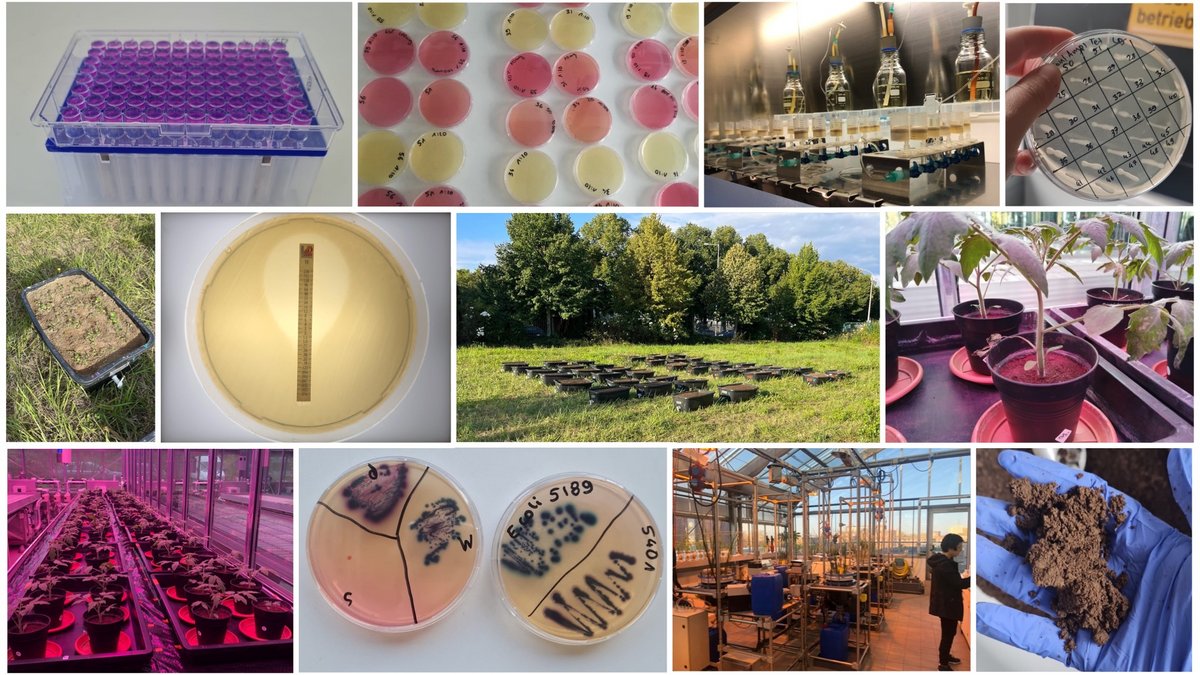
Our Research Focus
Addressing antimicrobial resistance (AMR) requires an integrated One Health perspective that considers human, animal, and environmental health as interconnected. While major efforts have targeted clinical and veterinary settings, the environment remains a critical yet underexplored component. Our research aims to close this gap.
Our working group investigates the degradation and environmental effects of antibiotics, with a particular focus on agricultural soils. We study both the antibiotics themselves and the antibiotic-resistance genes present in bacterial communities. Resistance genes are of special concern because they can replicate, spread through the environment, and—when transferred to pathogenic organisms—pose a serious risk to human and animal health.
Our Objectives
Track the fate and degradation of antibiotics in soil–plant systems and identify bacterial species capable of breaking them down.
Understand how antibiotics influence soil microbial activity and community dynamics.
Identify the drivers of persistence and transfer of antibiotic resistance genes in soil bacteria.
Assess potential risks that environmental antibiotic resistance may pose to human and animal health.
Explore strategies for removing antibiotics and resistance genes from manure, wastewater and soils.
Through this work, we aim to improve understanding of environmental AMR pathways and support the development of strategies to mitigate risks across ecosystems.