Specialisations

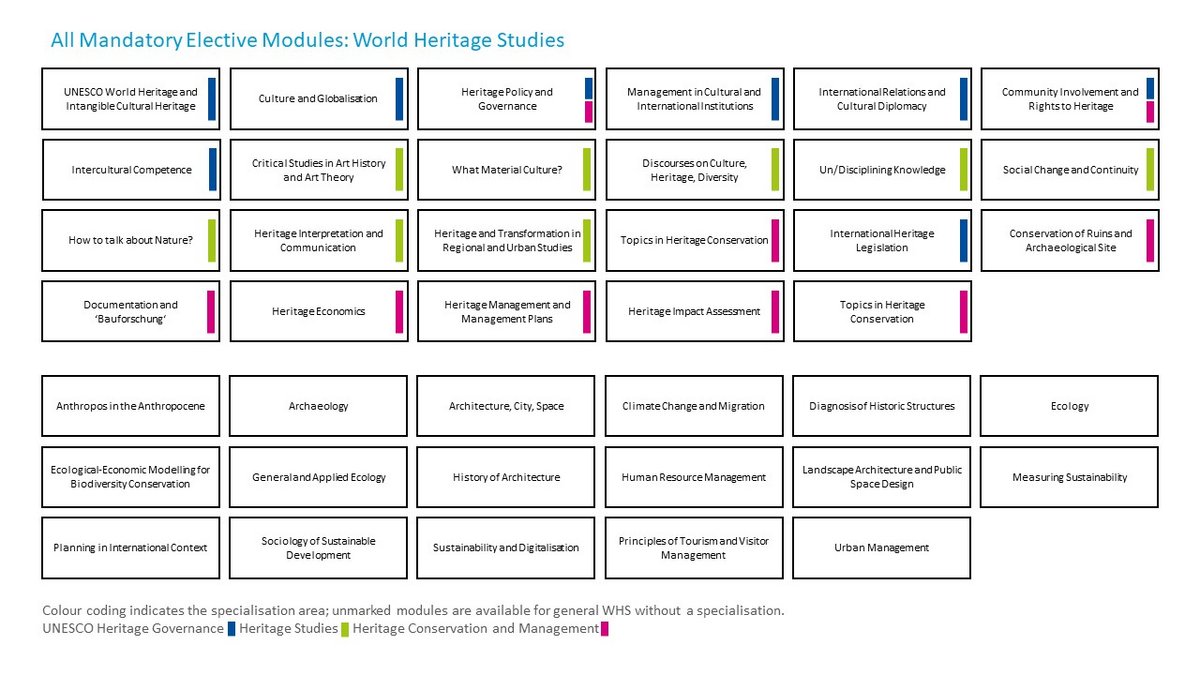
As part of the World Heritage Studies programme, students have the opportunity to specialise in one of our three focus areas:

  • UNESCO Heritage Governance
  • Heritage Studies
  • Heritage Conservation and Management

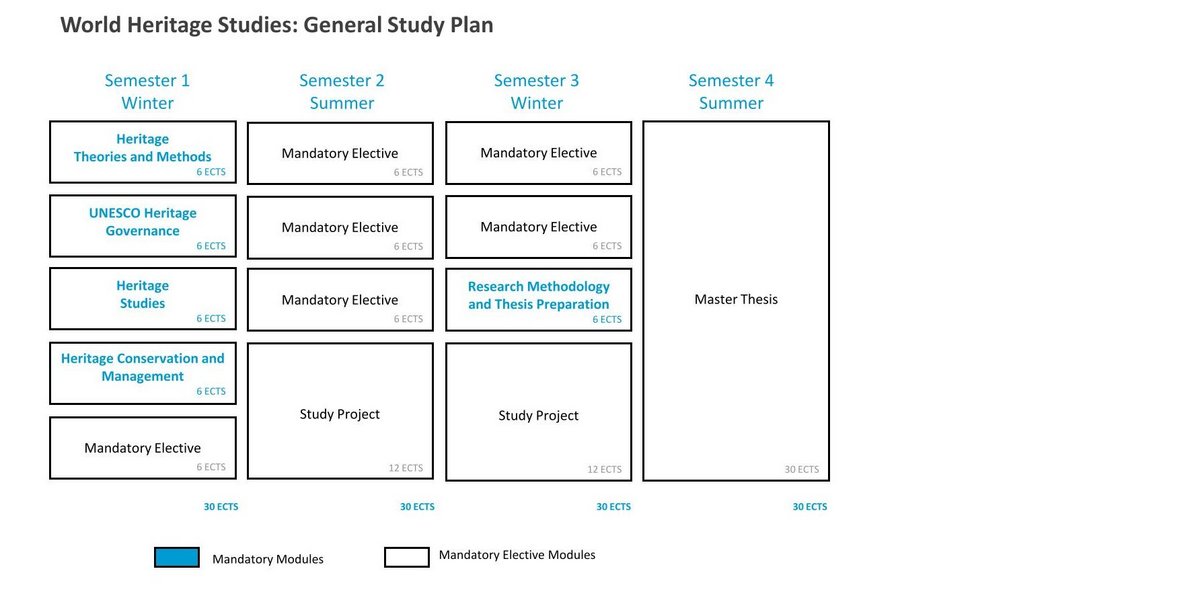
Students do not need to decide on a specialisation in the first semester and may take time to explore different areas of the curriculum. It is also possible to complete the programme without choosing a specialisation, in which case the degree is awarded in World Heritage Studies in general.

To obtain a specialisation, students must select three modules from the chosen focus area, complete a thematically related Study Project, and write a Master’s thesis aligned with the specialisation. Upon successful completion, the chosen specialisation will be officially noted on the degree certificate, highlighting the graduate’s expertise in the respective field.

Below is an overview of the modules available for each specialisation

Details of the specialisation

UNESCO Heritage Governance

The specialisation in UNESCO Heritage Governance examines how heritage policy is shaped and implemented within the framework of UNESCO and related international institutions. It explores international decision-making processes, legal and institutional structures, and the negotiation of heritage values in global contexts.
Students critically reflect on key principles such as Outstanding Universal Value, intergenerational responsibility and the role of heritage in diplomacy and peacebuilding, while analysing how global frameworks are translated into national and local practice.

Heritage Studies

The specialisation in Heritage Studies introduces students to reflexive and critical approaches to understanding heritage as a social and cultural construction. It engages with key theoretical debates and encourages students to question how heritage narratives are shaped by power, knowledge and positionality.
Particular attention is given to the ways in which global and local inequalities – including those related to gender, race and class – influence the production, interpretation and negotiation of heritage. Students develop the ability to work collaboratively across diverse perspectives while critically engaging with current research and contemporary debates in the field.

Heritage Conservation and Management

The specialisation in Heritage Conservation and Management focuses the history, theory and practice of conserving and managing heritage across diverse cultural and temporal contexts. Students engage with the conceptual foundations of architectural conservation and the evolving understanding of heritage from antiquity to the present day.
The emphasis lies on assessing the significance of historic buildings, sites and artefacts, and on developing strategies for their preservation, management and communication. Contemporary challenges – including the management of change, sustainable development and human rights considerations – are critically examined, equipping graduates to respond to complex social, political and environmental contexts in professional heritage practice.