Geopedological fingerprints of Raised Beds in Northwest Ireland - A preliminary study to understand the long-term effects of historical agricultural landscapes on present-day ecosystems
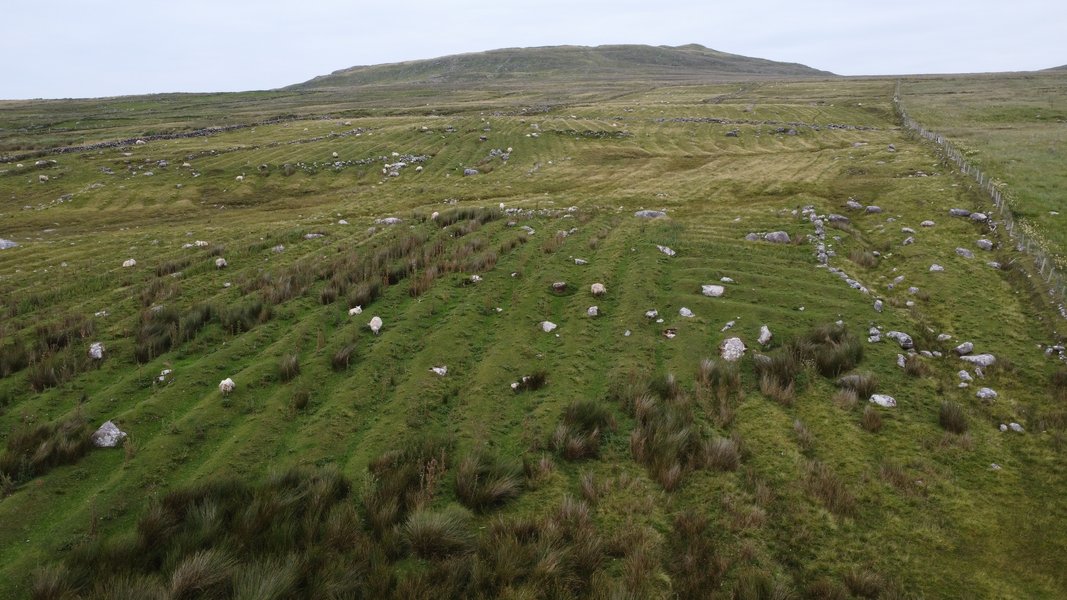
This preliminary study focuses on the investigation of historical field systems, known as Raised Beds (RBs), in Northwest Ireland. RBs are anthropogenic landscape forms that have been insufficiently described to date and have potential impacts on current soil properties and functions, thus exhibiting a so-called legacy effect. Historically, the creation of RBs aimed to improve soil conditions with regard to drainage and fertility. This was achieved by forming a linear, undulating surface structure on the fields: lower areas (furrows) facilitated soil drainage, while higher areas (ridges) served as planting spaces primarily for potatoes and oats. Morphologically, RBs resemble the ridge-and-furrow fields found in Germany. The entire system was re-established annually, with organic fertilizers (e.g., seaweed, manure) incorporated to enhance fertility. This practice likely dates back thousands of years, as evidenced by its simplicity. RBs were created through plowing, but predominantly through the use of specialized spades (so-called loys). The widespread use of RBs ended with a shift in Ireland’s agricultural strategy following the Great Famine (1845–1849), when the predominant potato monoculture was replaced by increased diversification of crops and livestock farming.
Today, RBs are recognizable in the landscape and on satellite and aerial imagery due to their characteristic undulating surface. Pedological and morphological studies on Irish RBs are largely absent, though preliminary investigations indicate significantly altered surface and soil properties. This preliminary study aims to identify specific morphological and geochemical fingerprints in RBs to develop well-founded research questions for a follow-up project.
Funding organisation: DFG, project number: 578235607
Funding period: 2026 to 2028
Funding amount: €76,092
Head: Dr A. Bonhage | Co-responsible. Prof. Dr T. Raab