
Aquatic-terrestrial coupling
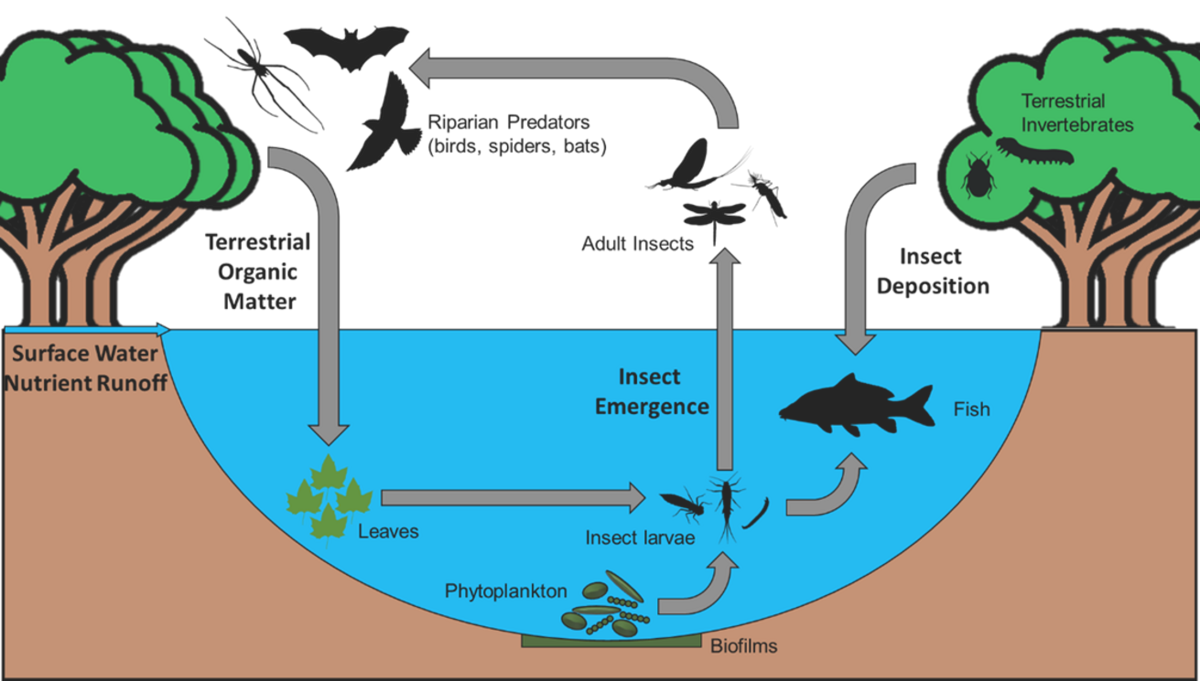
Nutrient transfer, biodiversity & resilienceAquatic and terrestrial ecosystems are ecologically connected to each other as organisms, materials, energy and nutrients continuously cross the boundary between the two habitats in both directions. For example, aquatic food webs are supported by the flux of subsidies from surrounding terrestrial ecosystems through the discharge of terrestrial organic matter from the surrounding catchment areas or the deposition of leaf litter and invertebrates from overhanging vegetation. Inversely, aquatic-derived subsidies can be exported into terrestrial food webs via flooding, fish predation, birds, or emergent aquatic insects. Emerging aquatic insects represent an important pathway in which freshwater ecosystems can support terrestrial food webs. As larvae, they feed in aquatic habitats and emerge as terrestrial adults that mate and reset the cycle. During their larval stage, aquatic insects incorporate essential biochemical nutrients that become available to riparian predators as they emerge into the terrestrial ecosystem as adults.
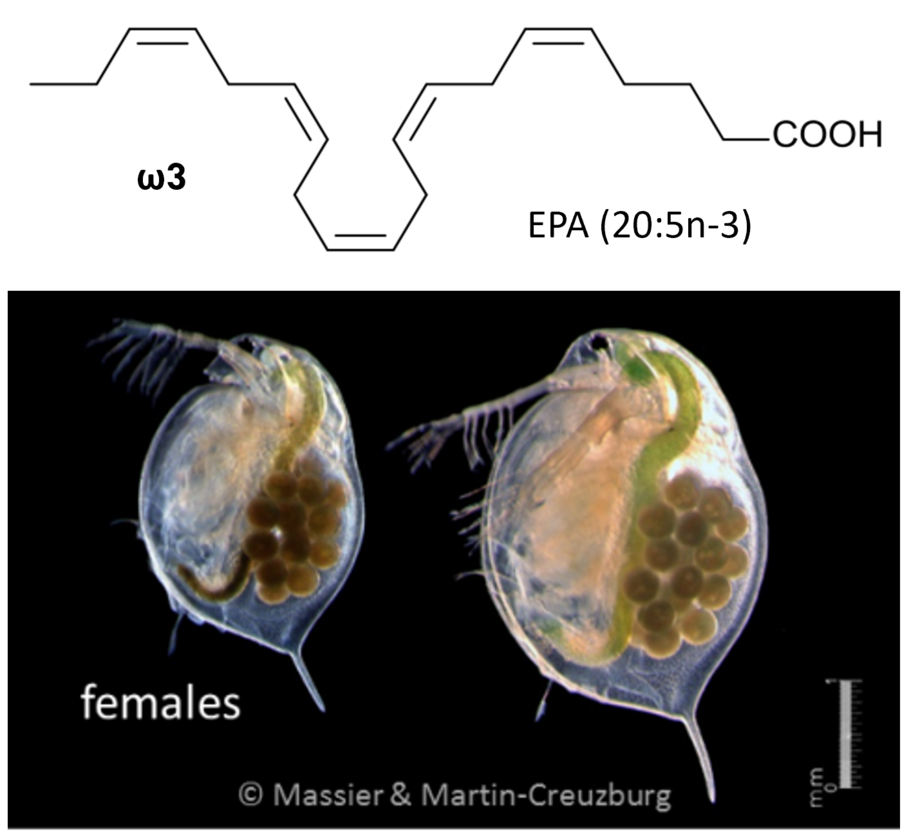
In contrast to land plants, microalgae (phytoplankton and biofilm) contain a high proportion of long-chain polyunsaturated fatty acids (LC-PUFA), which are transferred to higher trophic levels. LC-PUFA are therefore of aquatic origin and accumulate in the food chain. LC-PUFA such as eicosapentaenoic acid (EPA) and docosahexaenoic acid (DHA) play an important role in animal physiology as they influence the growth and reproduction of both aquatic and terrestrial consumers. In addition, they have many important cellular functions, such as maintaining membrane fluidity and acting as eicosanoid precursors. Consumers who cannot biosynthesise LC-PUFA from C18-PUFA precursors are dependent on a dietary supply of LC-PUFA. If there is a lot of EPA in the food, for example, consumers such as Daphnia have higher reproduction rates.
Emerging insects contribute significantly to the diet of predators in riparian areas. In contrast to terrestrial plants or insects, aquatic insects contain considerable amounts of LC-PUFA, which are important for the growth and reproduction of birds, bats and spiders, for example.
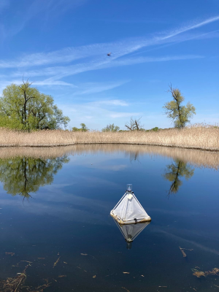
At the Department of Aquatic ecology, we seek to learn more about aquatic insects from freshwater ecosystems, their abundance in terrestrial ecosystems, and their potential importance to terrestrial predators in riparian areas. Quantifying the transfer of nutrients from water to land and determining the dependence of riparian terrestrial predators on aquatic nutrients are important for understanding the importance of aquatic ecosystems to terrestrial food webs. Current work includes studies on impaired estuaries and floodplains(special study programme ODER-SO), sampling of water bodies in agricultural areas (swamps), and research on aquatic-terrestrial coupling above the Arctic Circle.