
Theses
The Computer Engineering Group offers topics for theses in the area of integrated circuits, FPGAs, and video communications. For further information, please contact the academic staff directly.
Open Topics
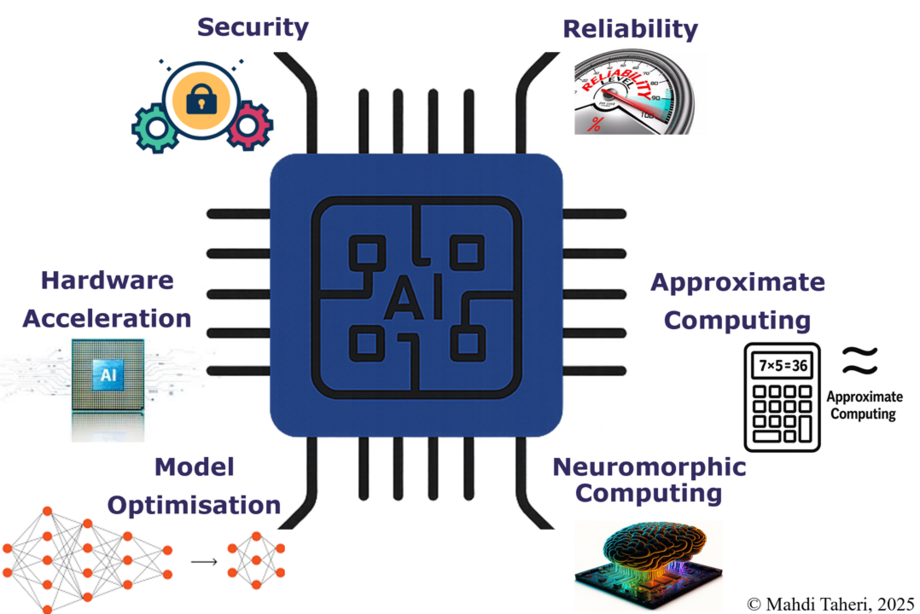
Shape the Future of AI – Master’s Thesis Topics Available
Type: Master’s Thesis
Betreuer:Dr. Mahdi Taheri
Kontakt:taheri(at)b-tu.de
Website:https://www.b-tu.de/en/technische-informatik/team/mitarbeiter/senior-mitarbeiter/dr-mahdi-taheri
Description:
Master’s thesis topics are available in several core areas of modern artificial intelligence and AI hardware, including:
AI Security
Hardware Acceleration for AI (FPGA, Softcore GPU/FGPU)
Reliability of AI Systems
Approximate Computing
Neuromorphic (SNN) Computing
Model Optimisation (Pruning, Quantisation, LLM/Transformer optimisation)
Depending on the selected topic, the work focuses on designing and optimising advanced AI models such as Transformers and LLMs for different applications, as well as developing energy-efficient, reliable, and secure hardware acceleration platforms. Research directions include hardware-aware optimisation, fault-tolerant architectures, approximate computing techniques, neuromorphic processing, and model compression strategies aligned with edge-AI and safety-critical requirements.
If you have your own topic, it is also negotiable.
Appointments can be arranged only via email request.
---------------------------------------------------------------------------------------------------

Challenges in 5G infrastructure digital twin implementation
- Title: Challenges in Implementing Digital Twin for 5G Infrastructure
- Type: Master thesis
- Supervisor: Dr. Hamid Zargariasl
- Description: Implementing 5G digital twins faces several challenges, particularly in managing the vast amount of data generated and ensuring low-latency communication. The integration of diverse technologies, such as antenna technology, radio frequencies, computer networks, IoT, and AI, requires seamless interoperability and standardized frameworks. Security and privacy concerns also arise due to the sensitive data exchanged between physical and digital environments. Additionally, the high cost of infrastructure and limited expertise in advanced 5G and digital twin technologies imposes further difficulties.
- Required skills:
- Basic knowledge of mobile communication and cellular networks
- Basic knowledge of computer networks
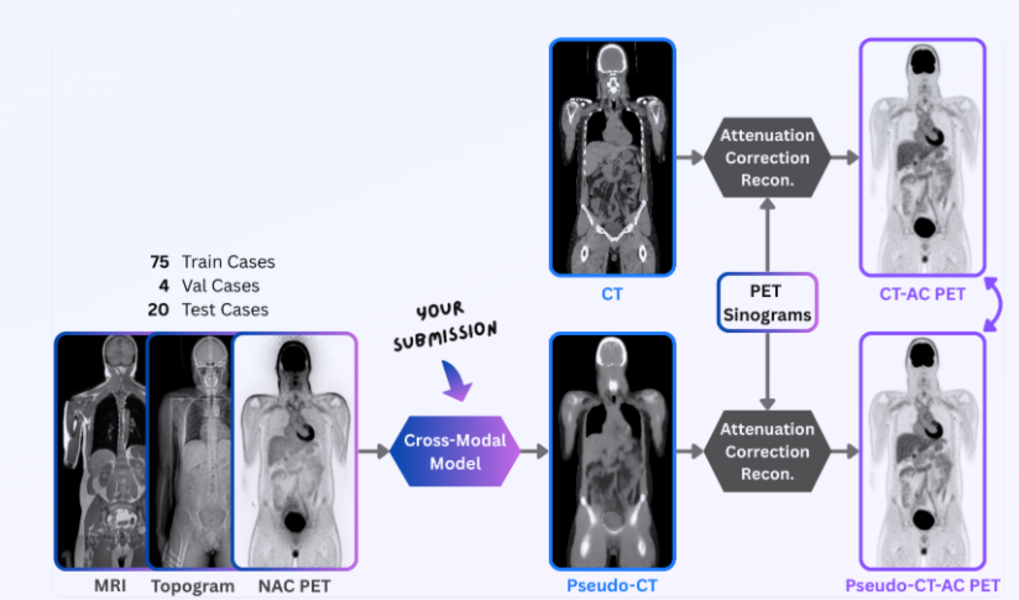
BIC-MAC: Big Cross-Modal Attenuation Correction
- Title: BIC-MAC: Big Cross-Modal Attenuation Correction
- Type: Master Thesis
- Supervisor: Alireza Siyavashi, Dr.-Ing. Christian Herglotz
- Constact: siyavash(at)b-tu.de
- Description: Accurate PET imaging requires attenuation correction (AC) — traditionally achieved via a CT scan. However, CT exposes patients to additional radiation, making it unsuitable for dose-sensitive populations such as children and pregnant patients. Combined PET/MRI scanners lack a CT component entirely, yet still require AC. There is a pressing clinical need for robust generative AI models that can synthesize CT images from alternative modalities.
Required Skills:
- Deep Learning for Image Processing
- 3D Imaging Techniques and deep undestanding of voxel and grid network
- Image Fusion & Restoration Methods.
- deep understanding of Monai, pytorch
Task:
▸Conduct a literature review on cross-modal image synthesis and CT synthesis from MRI/PET.
▸Implement and evaluate at least two generative models (e.g. diffusion, flow-based) for 3D CT synthesis.
▸Address the challenge of fusing spatially unaligned multimodal inputs (3D MRI, 3D NAC-PET, 2D Topograms).
▸ Evaluate synthesized CT quality and its downstream effect on PET attenuation correction using STIR-oss.
Ultra-Fast 4D Flow MRI Reconstruction
- Title: Ultra-Fast 4D Flow MRI Reconstruction
- Type: Master's Thesis
- Supervisor: Alireza Siyavashi, Dr.-Ing. Christian Herglotz
- Constact: siyavash(at)b-tu.de
- Description: Four-dimensional (4D) flow MRI enables detailed visualization of cardiovascular hemodynamics — measuring flow velocity, wall shear stress, and vorticity. However, current clinical workflows are severely limited by acquisition times of 30–60 minutes, making routine use impractical. Even accelerated methods still require 10–20 minutes, far above the desired sub-5-minute clinical window. No open benchmark dataset for 4D flow reconstruction currently exists, hindering algorithmic progress.
Required Skills:
- Deep undestanding of 3D imaging model: (nnUnet, Mamba)
- 3D Imaging Techniques and deep undestanding of voxel and grid network (data augmentation and diffusion models)
- Image Fusion & Restoration Methods.
- deep understanding of Monai, pytorch
Task:
▸Conduct a literature review on state-of-the-art deep learning methods for MRI reconstruction and 4D flow imaging.
▸Implement and evaluate at least two reconstruction algorithms under high acceleration factors (10×–50×) using the challenge dataset.
▸Optimize models for computational efficiency deployable on constrained hardware (NVIDIA A100 40GB).
▸Evaluate generalization across multiple clinical centers, scanner field strengths (1.5T / 3T / 5T), and disease types.
Noise Reduction & Signal Enhancement

- Title: Developing AI-Based or Adaptive Filtering Techniques for Noise Reduction in Ultrasound Signal
- Type: Master Thesis
- Supervisor: M.Sc. Priscile Suawa Fogou
- Description: Ultrasound signals are widely used in industrial, medical, and sensing applications. However, these signals often suffer from background noise and interference, which can degrade accuracy and reliability. Traditional filtering methods, such as bandpass filters or wavelet transforms, have limitations in handling complex noise patterns. This topic aims to explore AI-based and adaptive filtering techniques to improve the clarity and precision of ultrasound signals by dynamically reducing unwanted noise.
- Required Skills:
- Basic knowledge of signal processing
- Machine learning
- Programming (Python ideally)
Analysis of various RISC-V SoC configurations in baremetal and Linux development flow
- Title: Analysis of various RISC-V SoC configurations in baremetal and Linux development flow.
- Type: Bahelor Thesis
- Supervisor: Muhammad Amin Qureshi
- Email: qureshi(at)b-tu.de
- Description: RISC-V is an open-source modular Instruction Set Architecture based on Reduced Instruction Set Computer (RISC) design. Chipyard is an open-source framework for generating RISC-V Systems-on-a-Chip (SoCs) containing various generators like Rocket Chip, BOOM among others. Chipyard can tbe ported to FPGAs for development and prototyping of embedded software. The open-source design of RISC-V makes it highly customizable and scalable and many companies are investing in it to avoid hefty licensing fees attributed with other commercial SoCs.
Tasks:
Install the required tools including Chipyard and other dependencies on a host PC.
Generate various RISC-V configurations like multicore, with and without peripherals, heterogenous SoC like Rocket Core with BOOM Cores and various cache sizes and levels.
Baremetal and Linux flow
Simulate on QEMU / Verilator
Compile and run C-code (baremetal and with Linux) on the RISC-V. Preferably: Image and video processing tools like video codecs (e.g. HM), optical flow etc.
Flash the RISC-V core on the FPGA VC707 (optionally)
Perform analysis for nonfunctional properties like energy and time performance.
- Required Skills:
- Strong C-language skills
- Knowledge of processor architecture and assembly
Energy-Aware Video Streaming on Embedded Systems
Type: Bachelor / Master Thesis
Supervisor:M.Sc. Sayeh Janani, Dr.-Ing. Christian Herglotz
Contact: janani(at)b-tu.de
Description:
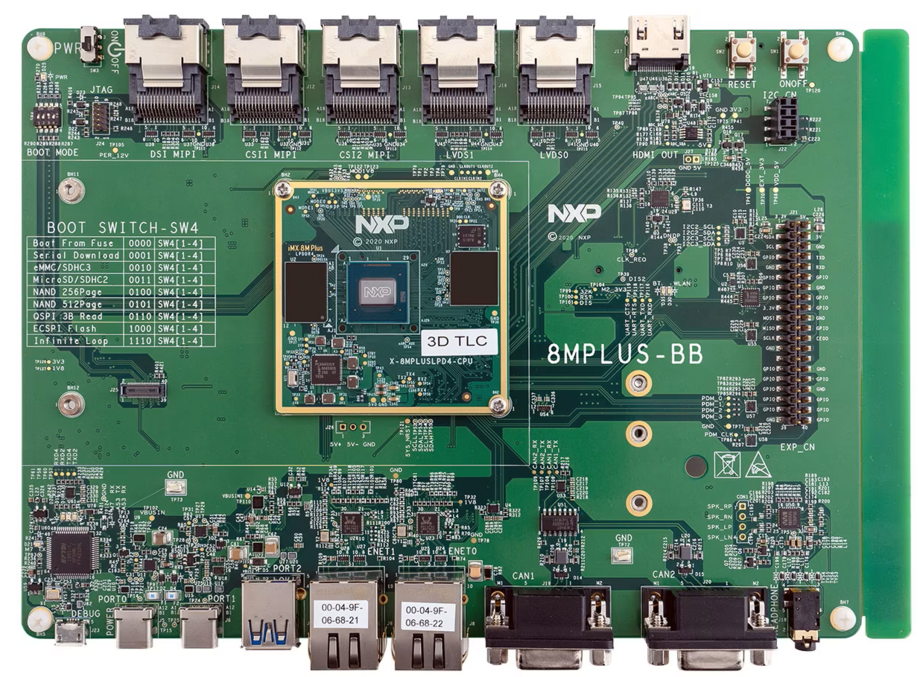
Video streaming has become one of the dominant sources of global data traffic and contributes significantly to overall energy consumption and environmental impact. Within the context of the MeReVeS project, this thesis investigates the energy consumption of video playback on embedded platforms.
The student will work with video sequences encoded using different parameters such as codec (AVC / HEVC/ AV1/ VVC), resolution, and bitrate, and evaluate their impact on power consumption during playback. The goal is to understand how video characteristics influence energy usage and to identify trends toward more energy-efficient streaming configurations.
For Master students, the topic can be extended by incorporating Dynamic Voltage and Frequency Scaling (DVFS) techniques. In this case, the student will analyze how adaptive CPU frequency and voltage settings influence energy consumption and performance, and explore simple strategies for energy-aware optimization.
Required knowledge:
- Basic understanding of computer systems or embedded systems
- Interest in multimedia systems and energy-efficient computing
- Programming skills (Python, MATLAB, or Bash)
- Familiarity with Linux systems is a plus