Geophysical Survey for Permafrost Mapping on Disko Island
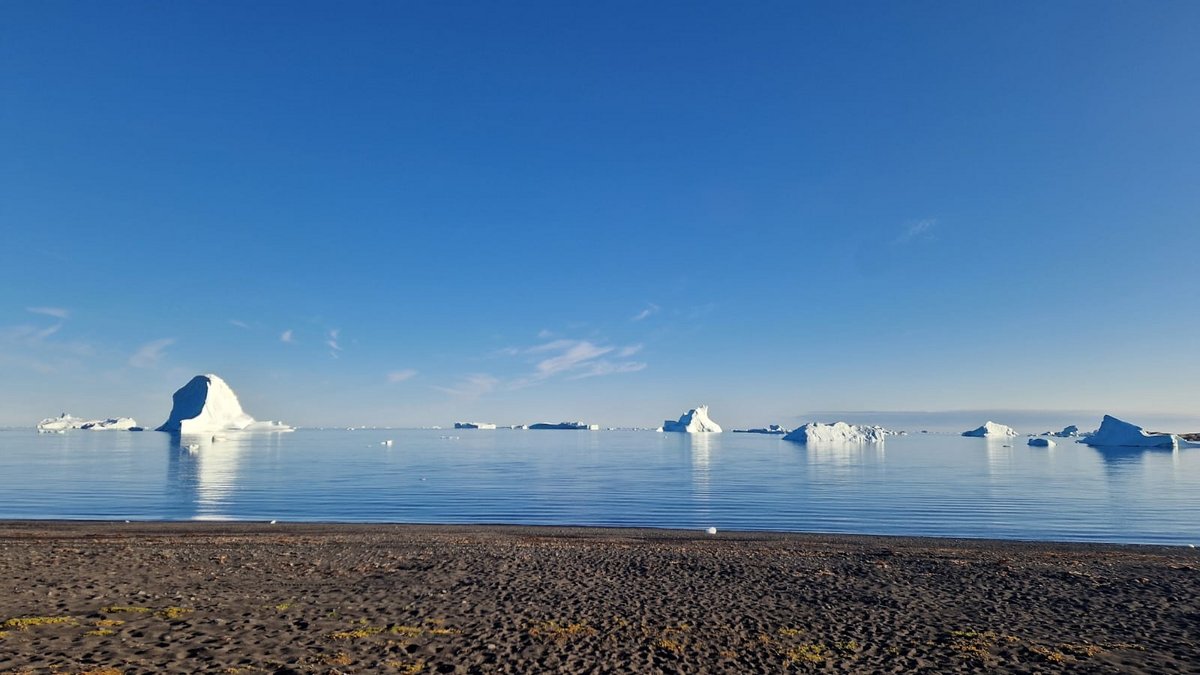
In August 2025, our research group took part in a field campaign on Disko Island, Greenland, supporting a project led by the Chair of Soil–Plant Systems at BTU. The campaign was carried out near the Arctic Station in Qeqertarsuaq and focused on improving the understanding of permafrost distribution and active-layer characteristics in Arctic environments. Our contribution consisted in applying Electrical Resistivity Tomography (ERT) as a complementary tool to the biological and soil-based investigations already underway, with the aim of gaining additional insight into subsurface layering focusing on the determination of active layer and permafrost thickness.
ERT measurements were conducted along several profiles covering different geomorphological settings, including moraine and wetland areas. Using a multi-electrode system (IRIS Syscal Pro Switch) and mainly Wenner–Schlumberger configurations, electrode spacings between 0.5 and 10 meters were selected to balance resolution and depth of investigation. The data were processed using both standard and robust inversion approaches, allowing frozen and unfrozen layers to be distinguished and the vertical extent of permafrost to be estimated.
The resulting resistivity models indicate a clear contrast between frozen and unfrozen materials. In moraine areas, permafrost was generally detected starting at about one meter below the surface, with thicknesses of several meters, whereas in wetland environments with peat ocurrences the frozen layer appeared shallower but with different depth extension The models suggest a complex subsurface structure with noticeable lateral variations over short distances. These variations are not totally understood and require further investigation.
The campaign shows the value of integrating geophysical methods into interdisciplinary Arctic research. Within the framework of an externally led project, ERT proved to be a useful and flexible tool for supporting permafrost studies and for bridging surface observations with subsurface processes under challenging field conditions.