
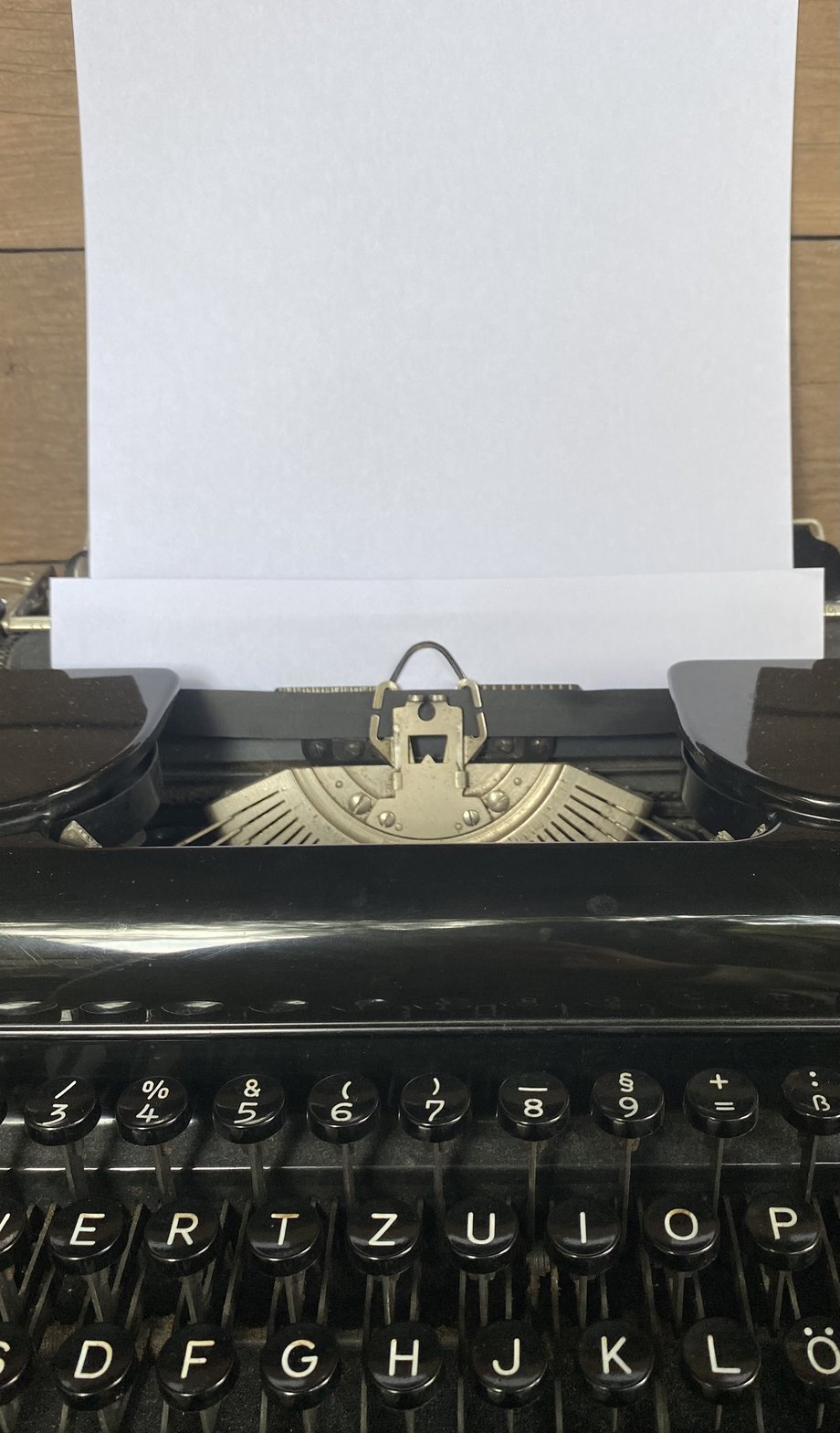
The writing of any academic paper is based on one’s own engagement with the content of a text: the information gathered must be both filtered and sorted, and initial thoughts on the structure of the text must be formed before the actual writing process can begin. Researching suitable literature, in particular, is time-consuming and laborious. A blank page is filled much more slowly through one’s own thinking and work than with the help of artificial intelligence. Almost at the click of a button, AI tools can generate entire lists of literature suggestions, sort and structure content, or find topics for term papers and dissertations, and do so with almost no input from the user. Turning to digital tools has become almost second nature. The question of whether these tools are actually needed, and whether solutions or results cannot be achieved without external help, is increasingly taking a back seat.
Yet independent thinking is worthwhile, as it promotes, amongst other things:
- the development of one’s own approaches and creative ideas,
- the evaluation of sources and others’ arguments for their accuracy, and
- the identification of connections and, ultimately, the act of thinking itself.
Sticking to the many small steps involved in writing – from initial research to proofreading and editing – is a lengthy and sometimes exhausting process. Yet it is only through this that one experiences the satisfying feeling of having achieved something on one’s own, after all the planning and countless challenges. Furthermore, skills such as endurance can be trained, or a deep engagement with a subject can be strengthened, in order to activate and further develop one’s own thought processes. After all, the most can be learnt when a project does not go as planned and, for example, the writing process comes to a standstill.
During your studies, you will be provided with the tools for academic work, which your lecturers will supplement with guidance on their proper use, so that further development and improvement can always take place. You should therefore be encouraged to trust your own knowledge and skills. Writing was invented by humans and, even if it is not easy for everyone to learn, it should always remain an important tool for humanity. You should therefore refrain as much as possible from using AI tools straight away, in order to preserve and develop your own abilities.
What’s more, you’ll be helping the environment at the same time. This is because, for artificial intelligence to generate content at all, vast amounts of data need to be processed. This data is stored in huge data centres, the construction of which relies on valuable raw materials such as lithium and rare earth elements. The extraction of such raw materials not only has consequences for the environment, but also raises ethical issues such as low wages and high risks for workers. Furthermore, AI models require a great deal of water and generate a significant amount of waste in the form of electronic scrap when they are replaced by newer systems; this waste is often disposed of in the world’s poorer countries. In addition, AI requests consume many times more electricity than requests in search engines or databases, as they must handle more computational operations. Consequently, an increase in electricity consumption by data centres is also to be expected.
You can find the authors’ works listed below, as well as further recommended reading on the subject, on the following websites:
Texts on academic writing:
- Hoffmann, Nora & Schmidt, Sarah (2026): KI-Nutzung im Studium. Der Wert des Schreibens. Bonn.
- Müller, Hans-Georg & Fürstenberg, Maurice (2025) (Hrsg.): DeutschGPT-Deutschunterricht im Dialog mit Künstlicher. Berlin.
- Salden, Peter & Leschke, Jonas (Hrsg.) (2023): Didaktische und rechtliche Perspektiven auf KI-gestütztes Schreiben in der Hochschulbildung. Bochum.
- Brommer, S., Berendes, J., Bohle-Jurok, U., Buck, I., Girgensohn, K., Grieshammer, E., Gröner, C., Gürtl, F., Hollosi- Boiger, C., Klamm, C., Knorr, D., Limburg, A., Mundorf, M., Stahlberg, N., Unterpertinger, E. (2023). In: Hochschulforum Digitalisierung (Hrsg.): Wissenschaftliches Schreiben im Zeitalter von KI gemeinsam verantworten. Diskussionspapier Nr. 27. Berlin.
Texts on the impact of AI on nature:
- Kompass: Künstliche Intelligenz und die Umwelt. Themenblatt.
- AW AlgorithmWatch gGmbH (2023) (Hrsg.): SustainMagazin. KI und ihre Folgen für die Nachhaltigkeit. Berlin.
- Gröger, Jens & Gailhofer, Peter (2025): KI auf Kosten des Klimaschutzes: Energiebedarf von Rechenzentren verdoppelt sich bis 2030. In: Öko-Institut (Hrsg.): Pressemeldung 14.05.2025.