
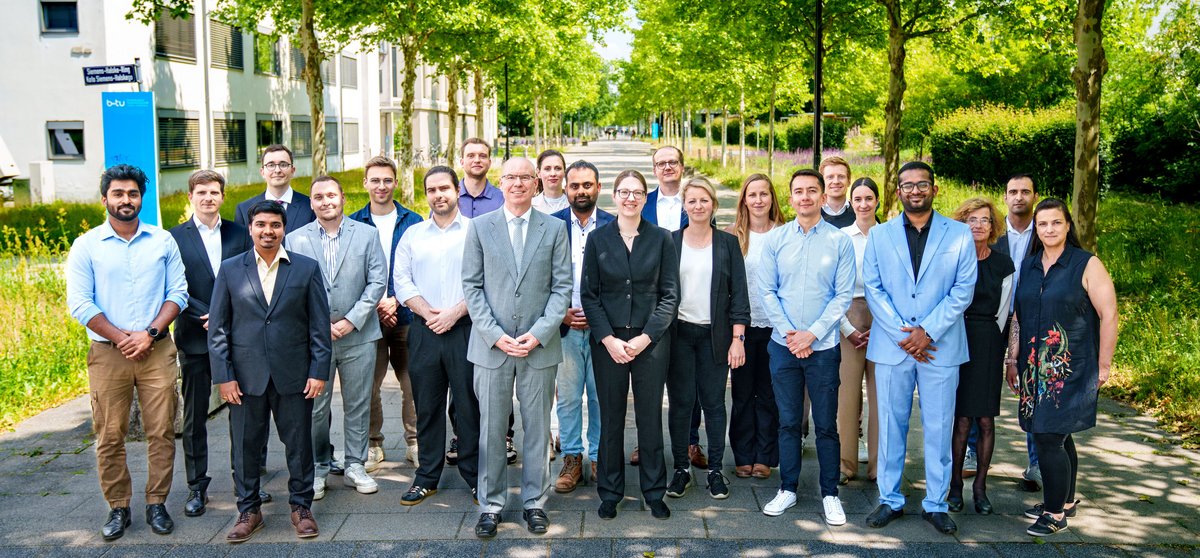
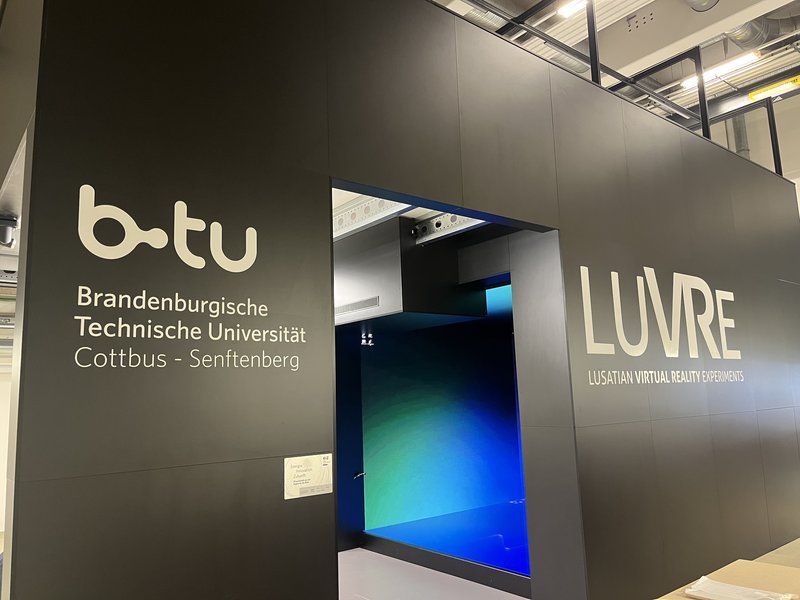
LUVRE is now open The grand opening of LUVRE – Lusatian Virtual Reality Experiments on Thursday marked the official launch of a new research facility for immersive energy research at the BTU Cottbus-Senftenberg.


We had the pleasure of celebrating this special milestone together with distinguished guests – including Federal Minister Dorothee Bär, Brandenburg’s Minister-President Dietmar Woidke, Minister for Science Dr Manja Schüle, Member of the Bundestag Maja Wallstein, BTU President Prof. Dr Gesine Grande, and our Head of Department Prof. Dr Felix Müsgens.
During the event, guests were given a presentation of the research work carried out by the EECON Lab at the EIZ Cottbus, as well as an insight into the new possibilities offered by our highly innovative LED-CAVE.
LUVRE combines immersive virtual reality with experimental energy economics research. The LED-CAVE (Cave Automatic Virtual Environment) enables studies into the perception and acceptance of energy and infrastructure measures. Planned wind turbines, hydrogen or CO₂ infrastructures can be experienced realistically in a virtual space. This creates new scientific bases for decision-making in planning, politics and the energy transition.
Special thanks go to the Federal Ministry of Research, Technology and Space (BMFTR), the Investment Bank of the State of Brandenburg (ILB) and all partners and stakeholders who have made this project possible.
For our entire team at the EECON Lab and at the Energy Economics chair, the completion of LUVRE is a very special moment. Following intensive planning, tendering and implementation, we are now very much looking forward to the first research experiments in the new annex.
New publication: Over 1 million photovoltaic systems in Germany have fallen into disrepair
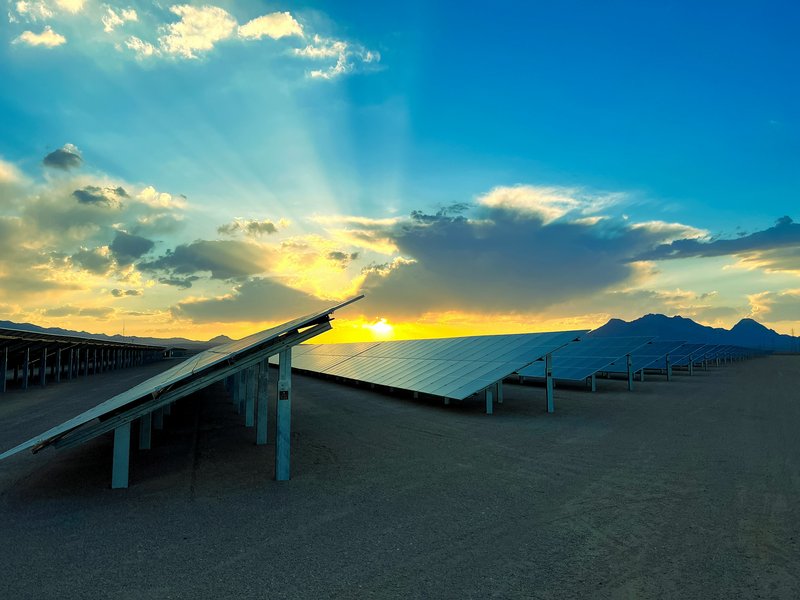
A new study by Diego A. Prieto Melo, Dr. Christin Hoffmann, Prof. Iain Staffell and Prof. Felix Müsgens has been accepted for publication in Energy Economics. The article entitled "From shine to decline: Degradation of over 1 million solar photovoltaic systems in Germany" provides new empirical insights into the long-term performance development of photovoltaic systems under real operating conditions.
The analysis is based on a unique data set of more than one million PV systems in Germany, which are observed over a period of up to 16 years and cover an installed capacity of around 35 GW. This large-scale empirical approach enables a much more robust assessment of degradation patterns than previous studies, which are usually based on smaller samples or shorter observation periods.
The results show that PV annexes have an average annual performance degradation of around 0.59 %. At the same time, the degradation rate decreases over time, which indicates that the power losses slow down with increasing age of the annexes. In addition, the influence of environmental factors becomes clear: extreme temperatures and air pollution have a significant negative impact on power generation.
Overall, the results suggest that frequently assumed degradation rates could overestimate the actual power losses in temperate climate zones such as Germany. This has important implications for investment decisions, energy policy design and the long-term modelling of energy systems.
A summary of the study has also been published in PV Magazine: www.pv-magazine.com/2026/03/18/survey-reveals-pv-systems-in-germany-outperform-lifespan-expectations/
The full article is available here: www.sciencedirect.com/science/article/pii/S0140988326001611