
ERT-Based Subsurface Investigation of the Baalbek Temple Complex
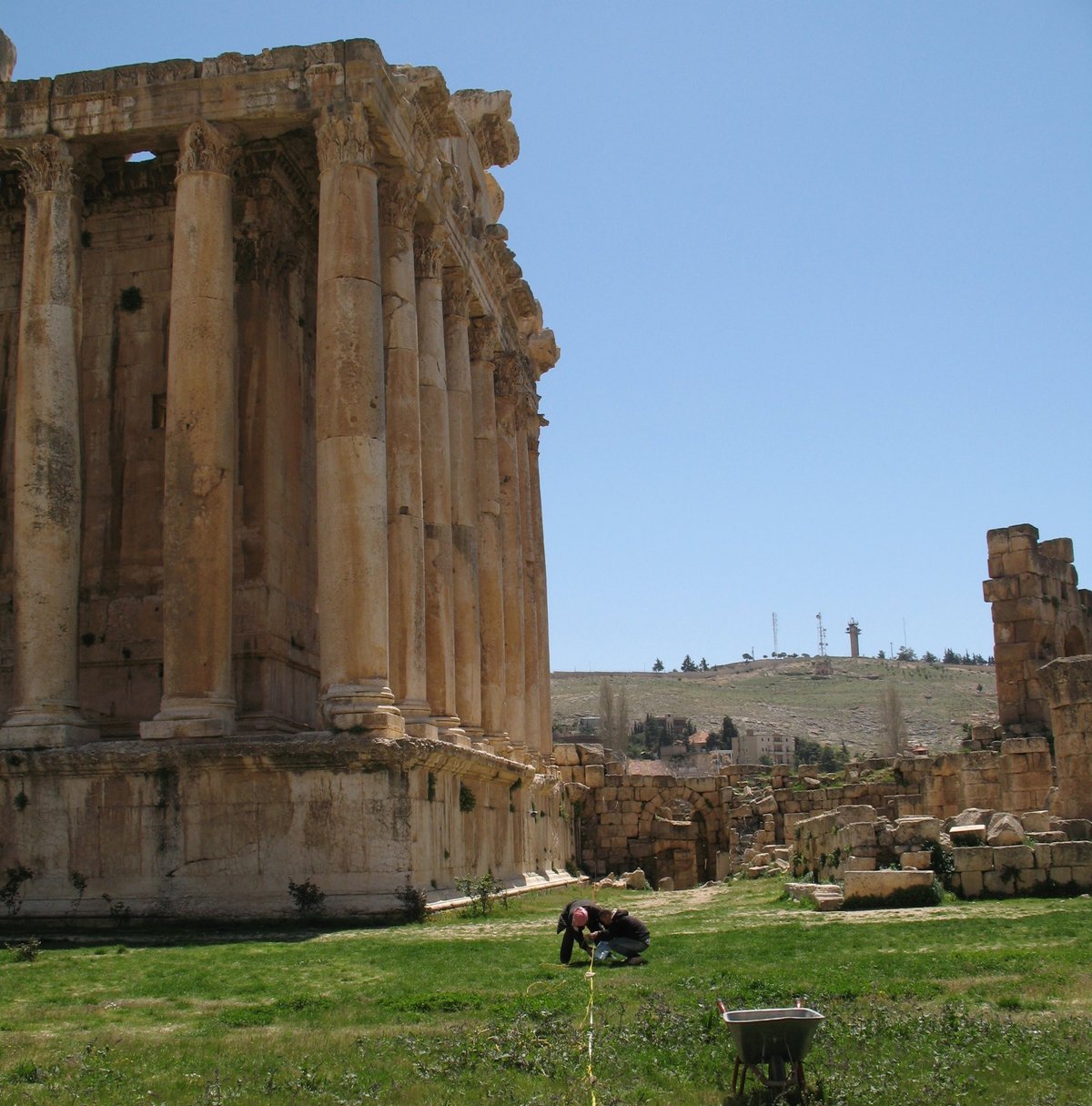
Geophysical investigations were conducted at the archaeological site of Baalbek, Lebanon, focusing on the subsurface of the Jupiter Sanctuary and its surrounding areas. The project aimed to improve the understanding of local geological conditions, to identify buried archaeological structures and to assist the clarification of the question: Why has the monument been erected at this location? by using non-invasive geophysical methods, with electrical resistivity tomography (ERT) as the primary tool.
A central objective was the characterization of the bedrock geometry and the transition between competent limestone and overlying unconsolidated deposits. This information is essential for interpreting construction strategies and subsurface conditions beneath the monumental architecture. In addition, the study targeted the detection of near-surface archaeological features, including foundations, walls, water-related structures and underground elements that are not accessible through excavation alone.
ERT profiles were acquired across key sectors of the temple complex, including the Jupiter Sanctuary, adjacent courtyards and surrounding architectural remains. The method enabled the investigation of both shallow archaeological structures and deeper geological features within a highly heterogeneous and anthropogenically modified landscape.
The results indicate a complex subsurface architecture characterized by discontinuous limestone bedrock, variable sediment thickness and well-defined resistivity contrasts associated with archaeological structures. Several anomalies correlate with known architectural elements, while others suggest previously undocumented subsurface features. The ERT data also provided improved constraints on bedrock depth and morphology, revealing a totally different topographical situation in ancient times where the sanctuary was located on an elevated, dominant spur of limestone over-looking the whole area while nowadays sedimentation has planed the area and masked the former topographic features.
The Baalbek project was initiated and carried out in close cooperation with the chair of Construction History of BTU and archaeological partners of the German Archaeological Institute DAI, Berlin and served as the basis for multiple Bachelor’s, and Master’s theses at BTU Cottbus. It demonstrates the value of ERT as a reliable and effective method for archaeological and geoarchaeological investigations in complex heritage sites.