
Bioleaching

Bacteria are attached on soil particles
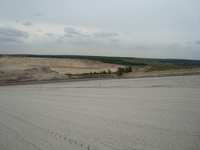
We could show that the soil that seems to be abiotic because not covered by green plants is a biotop for up to 107 bacteria per gram sand. Results of independent experimental approaches, e.g. cultivation or DNA isolation, support that view.
Bacteria oxidise iron
The energy metabolism of these microorganisms is linked to the oxidation of iron or sulfur. As carbon source only CO2 is needed. The Calvin cycle, known for the carbon fixation by plants, is used by them.
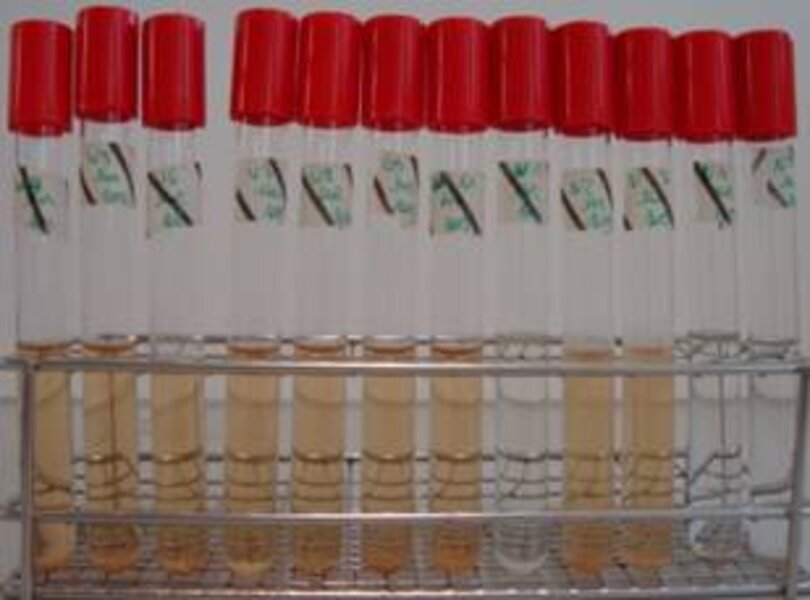
Cultivation of these iron or sulfor oxidising bacteria is possible with soluble iron, e.g. FeSO4, in tubes or shaking flasks. The growth is very slow but since the produced Fe (III) is chemically reacting to unsoluble ironhydroxide a brownish precipitate appears reporting the successful microbial catalyst.
DNA isolation from the sand samples with subsequent amplification of specific 16S rDNA loci that allow e.g. identification of iron and sulfur oxidizing species e.g.Acidithiobacillus ferrooxidans.
Molecular oxygen is needed
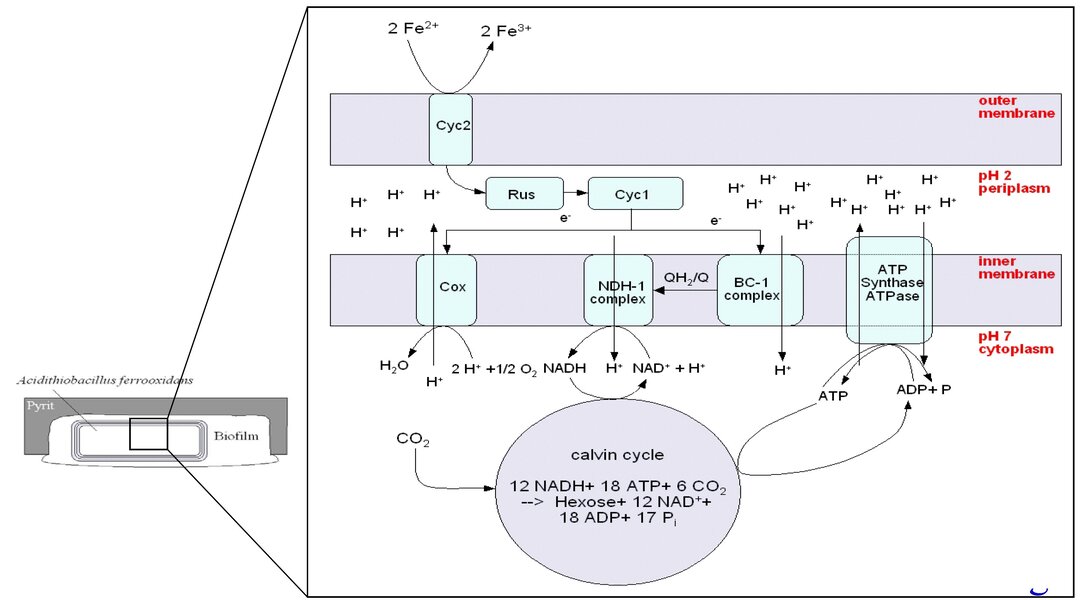
The model (adapted after Rohwerder et al.2003) explains the metabolism of an iron oxidising microorganism. It attaches to the pyrite surface and leaches a hole that allows close contact between microorganism and the sulfide surface being the source of energy. The oxidation of Fe(II) to Fe(III) is the start the transfer of the electrons to molecular oxygen the last step of the respiration under acidic conditions.