
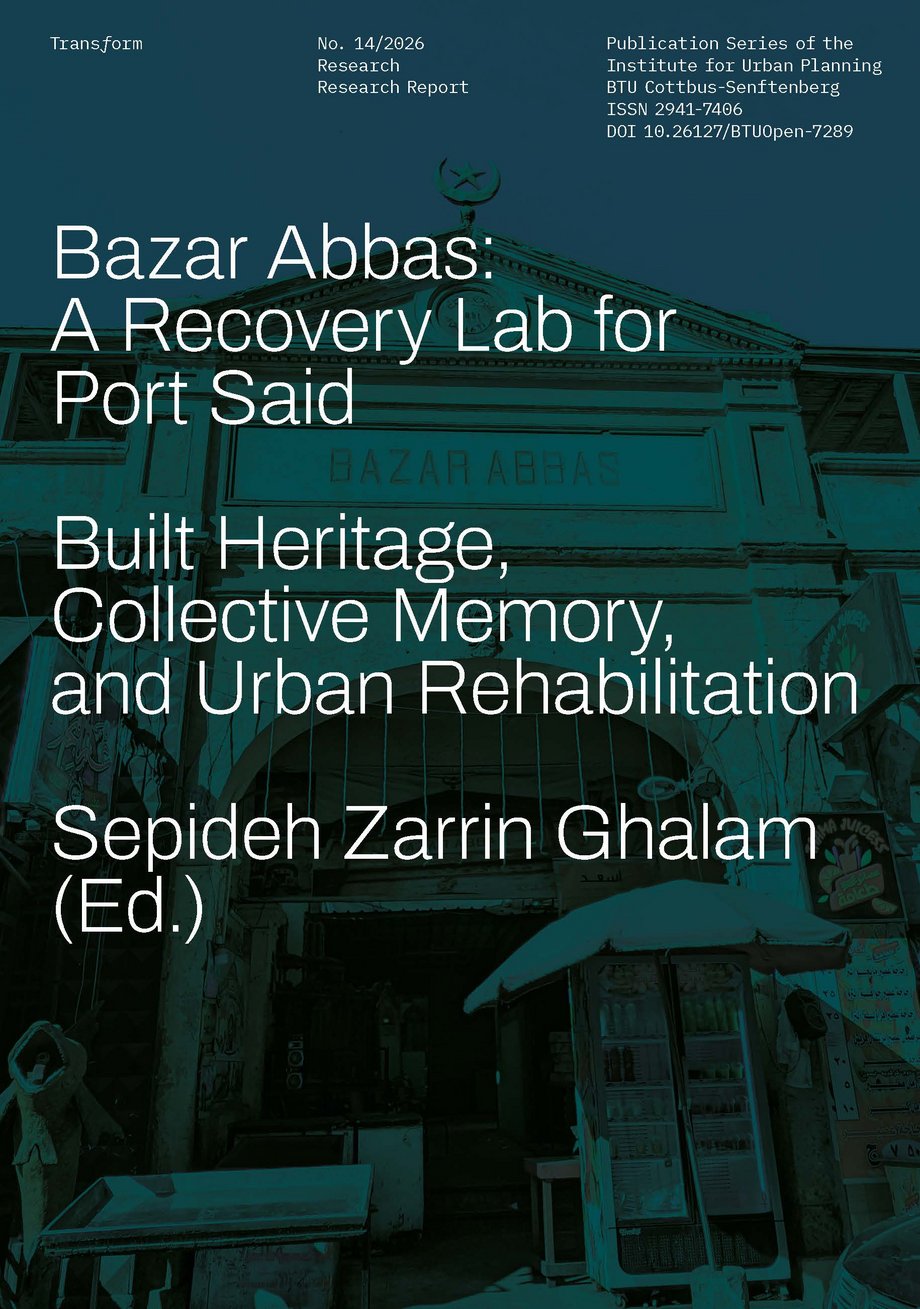
Bazar Abbas: a recovery lab for Port Said built heritage, collective memory, and urban rehabilitation
This publication documents the processes and findings of the ‘Bazar Abbas: Recovery Lab of Port Said’, a pilot initiative addressing the deterioration of Port Said’s historic urban landscape. By presenting these results, the publication aims to raise awareness of the city’s urban heritage and stimulate a broader discussion on sustainable recovery strategies. Founded as a cosmopolitan hub after the construction of the Suez Canal, Port Said’s dual urban structure represents a distinctive architectural and urban heritage. Founded as a cosmopolitan hub after the construction of the Suez Canal, Port Said’s dual urban structure represents a distinctive, yet vulnerable, architectural and urban heritage. The city’s urban fabric was profoundly shaped by successive wars and forced displacement following the post-colonial transition. Despite the profound impact of these events, however, Port Said has lacked a comprehensive recovery framework to address the resulting damage. Instead, the historic core has faced institutional neglect, with its heritage caught between shifting priorities and chronic underfunding. Today, the city is grappling with historical trauma and physical decay, as well as a development strategy that disconnects heritage from contemporary growth. In response, the Recovery Lab acts as a platform for exploration, bridging the gap between academic research and professional practice. Using the Bazar Abbas building as a living laboratory, the project has evolved from theoretical study to the implementation of site-specific pilot interventions. The Lab has tested a multidisciplinary toolbox ranging from 3D laser scanning to participatory engagement to demonstrate how tangible recovery can be achieved despite limited resources and archival gaps. Ultimately, this volume argues that cities with complex, layered histories require an incremental, tactical approach to rehabilitation. This methodology directly addresses intertwined challenges, including restricted funding, fragmented decision-making, and administrative hurdles. By treating heritage as a vital social asset and adopting a learning-by-doing approach, the Lab overcomes institutional paralysis to deliver results. This framework offers a resilient regeneration alternative that is grounded in the practical realities of Port Said and the collective agency of its residents.