Carbon Lab Factory Lausitz (CLFL)

Carbon fibre: a technology of the future – innovations for the Lusatia region
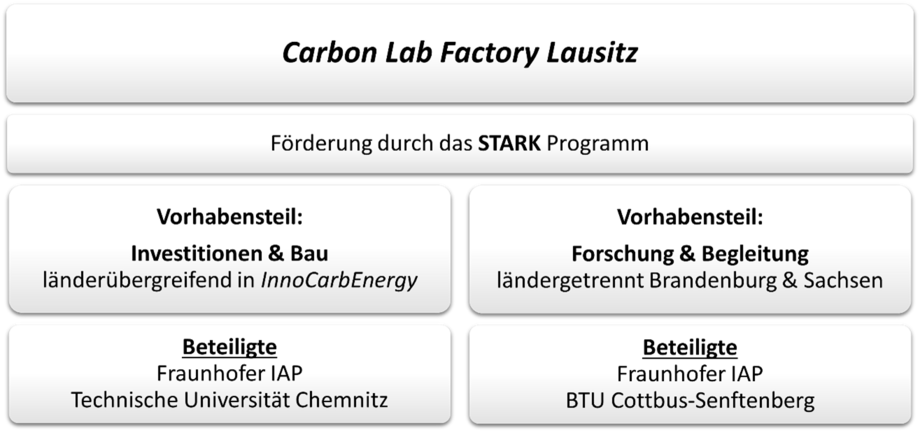
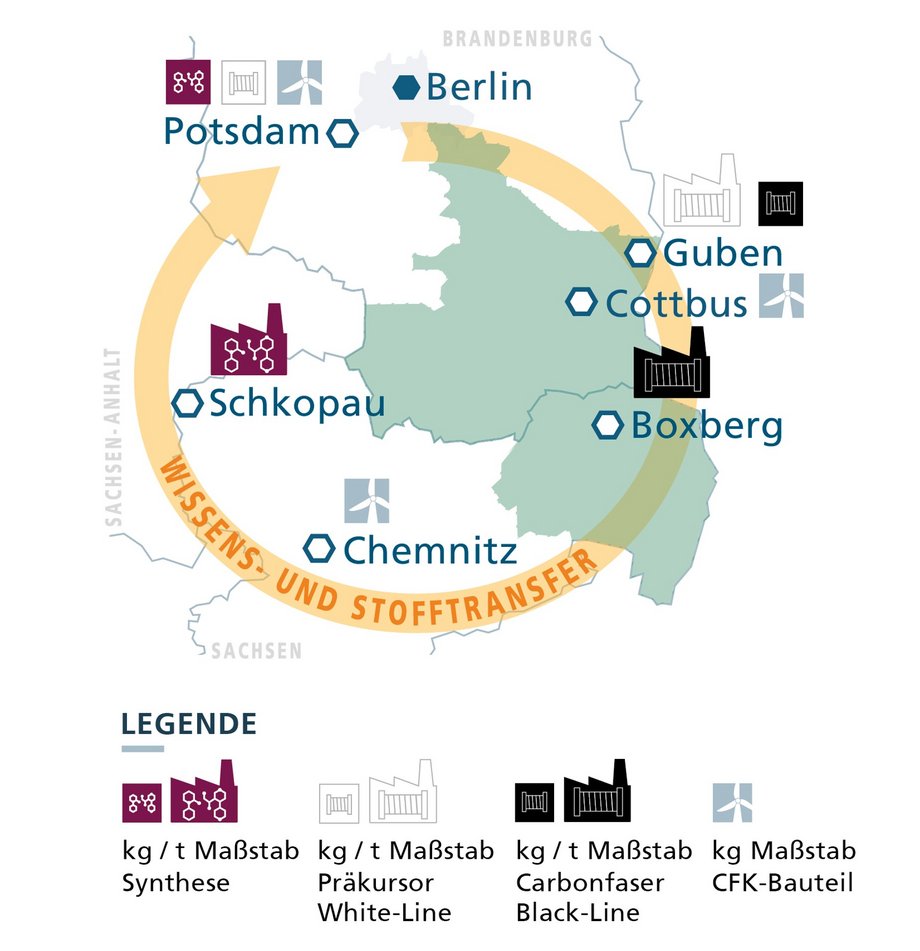
The “Carbon Lab Factory Lausitz” initiative is establishing a research centre in the Lausitz region that is unique in Europe, as part of the cross-state “InnoCarbEnergy Lausitz” initiative led by the Fraunhofer Institute for Applied Polymer Research. The aim is to develop sustainable and cost-effective carbon fibres, supported by a complete value chain – from Materials Research to component manufacturing. Planned projects include cost-effective PAN-based carbon fibres as well as environmentally friendly alternatives made from cellulose.
Carbon fibres combine low weight, enormous strength and corrosion resistance, thereby revolutionising lightweight construction and significantly reducing energy consumption in vehicles, aircraft and other applications. This not only contributes to reducing CO₂ emissions but also enables innovative solutions in the construction industry and wind power. At the same time, the development of cost-effective and sustainable carbon fibres opens up new market potential whilst reducing dependence on fossil resources – an important step for climate protection and global competitiveness. However, the widespread use of carbon fibres is limited by high production costs, which hinders applications in automotive engineering, wind power and the construction industry.
This infrastructure is intended to transform Lusatia into an international centre for carbon fibre research, fund structural change and drive forward sustainable innovation – a step towards climate protection and new economic prospects.
The construction project is accompanied by a research component to create the necessary conditions for a successful product. The BTU is developing sizing systems for the surface treatment of carbon fibres. The production and application of a sizing serve to protect and bind carbon fibres or filaments (filament bundles = rovings) during processing. Furthermore, adhesion in composites with plastics is ensured. The focus of the research is on the use of bio-based raw materials.
Furthermore, research is being conducted into environmentally friendly alternative material systems using bio-based raw and residual materials.
In addition, practical teaching and learning formats are being developed and continuously expanded for school pupils, teacher training students and trainee teachers. The focus is on laboratory practicals and training courses that provide an early insight into modern lightweight construction and carbon fibre technologies.