
Guest Lectures with Prof. Martin Gräbner – “Waste Gasification for Waste-to-Products” & (2) “Technology Assessment in an Engineering Context”


Date: Thursday 30th April 2026
Time: (1) 9:15 – 13:00 & (2) 15:30 – 19:00
Location: (1) ZHG – Hörsaal A & (2) LG 1A Hörsaal 1
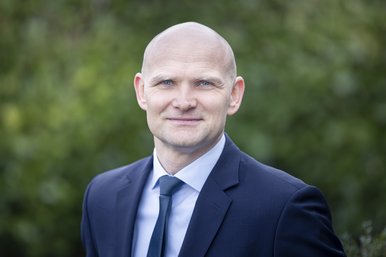
The Chair of Decarbonization and Transformation of Industry (DTI) at Brandenburg University of Technology Cottbus-Senftenberg (BTU) is pleased to host Prof. Dr.-Ing. Martin Gräbner – Director of the Institute of Energy Process Engineering & Chemical Engineering (IEC) and Professor for Energy Process Engineering at the TU Bergakademie Freiberg as well as Division Head (Freiberg – Circular Carbon Technologies) for Energy and Process Engineering at the Fraunhofer Institute for Ceramic Technologies and Systems IKTS – for 2 guest lectures on Thursday 30th April 2026. The first lecture will focus on what is waste gasification and how it could contribute to a circular carbon economy to facilitate Waste-to-Products, and the second lecture will focus on methods for the technological assessment of innovations and technologies.
Prof. Gräbner researches, develops and optimizes new processes for the energy and raw material transition. His R&D focus is on the creation of closed carbon cycles using renewable energies. This includes in particular the chemical recycling of residual materials (especially plastics), the production of synthetic raw materials and fuels (e.g. e-fuels) and the thermochemical production of hydrogen (e.g. from biogenic waste). His aim is the basic development of technologies up to industrial scale at the interface between plant engineering, the energy industry, waste management, the chemical industry, and metallurgy.
Before his appointment as Professor at IEC, he was Scientific Director at Air Liquide and was responsible for managing the global R&D strategy for exploratory projects and competence development in the field of syngas production, metal, cement, glass and CO2 capture. He was also Air Liquide’s delegate at the World Economic Forum for Waste Processing in the Low-Carbon Emission Technologies initiative. During his nine years at Air Liquide, he was based at the Frankfurt Innovation Campus (Germany) and had short-term assignments in China. Prof. Gräbner was recognized as Air Liquide’s International Senior Expert for gasification.
The first guest lecture is offered as part of the module 13234 “Communication of Science and Technology” and the second guest lecture as part of the module 14132 “Multidimensional Approaches for Technology Assessment” in SS 2026 by DTI.
The Plastics System: Transitioning from Linear Feedstock and Production Models to Circular Solutions Guest lecture with Dr. Katharina Schlegel Thummer from Plastics Europe
Date: Thursday, 16th April 2026
Time: 15:30 – 18:30
Location: LG 1A Hörsaal 1
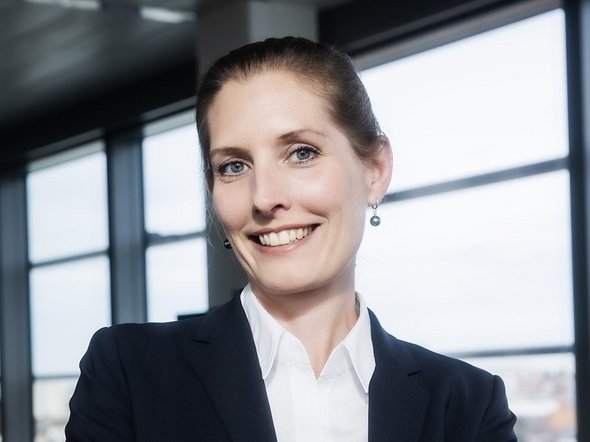

The Chair of Decarbonization and Transformation of Industry (DTI) at Brandenburg University of Technology Cottbus-Senftenberg (BTU) is pleased to host Dr. Katharina Schlegel Thummer from Plastics Europe to provide industry perspective of the multidimensional aspects which are associated with the sustainability transformation of the chemical industry to kick-start the first lecture of the module 14132 “Multidimensional Approaches for Technology Assessment” by DTI in the summer semester.
Dr. Katharina Schlegel Thummer joined Plastics Europe as Circularity Director in December 2021. She is responsible for circularity and End-of Life of plastics, Plastics Europe’s Fact & Figures as well as its work on Global initiatives. Prior to Plastics Europe, she has been active in different functions in research and market development at BASF and Bayer CropScience. In her online guest lecture, she will provide BTU students with an overview of the chemical sector (focus plastic production), and what decision-makers are confronted with (i.e., what they have to consider along multiple dimensions) in their evaluation of alternative transformation options towards sustainable plastic production, in addition to sharing insights into where the sector is standing today and its outlook for the future.